What You Need to Know
Lesotho’s economy is projected to grow at a sluggish rate of 1.5% in the 2027/28 financial year. However, the agricultural and manufacturing sectors are expected to see growth due to improved livestock practices and operational factories. The Finance Minister highlighted ongoing efforts to diversify exports, despite challenges in the textile industry due to AGOA impacts.
Africa-Press – Lesotho. Although the economy is projected to grow sluggishly at 1.5 percent in the 2027/28 financial year, according to medium-term projections, the agricultural and manufacturing sectors are expected to register growth.
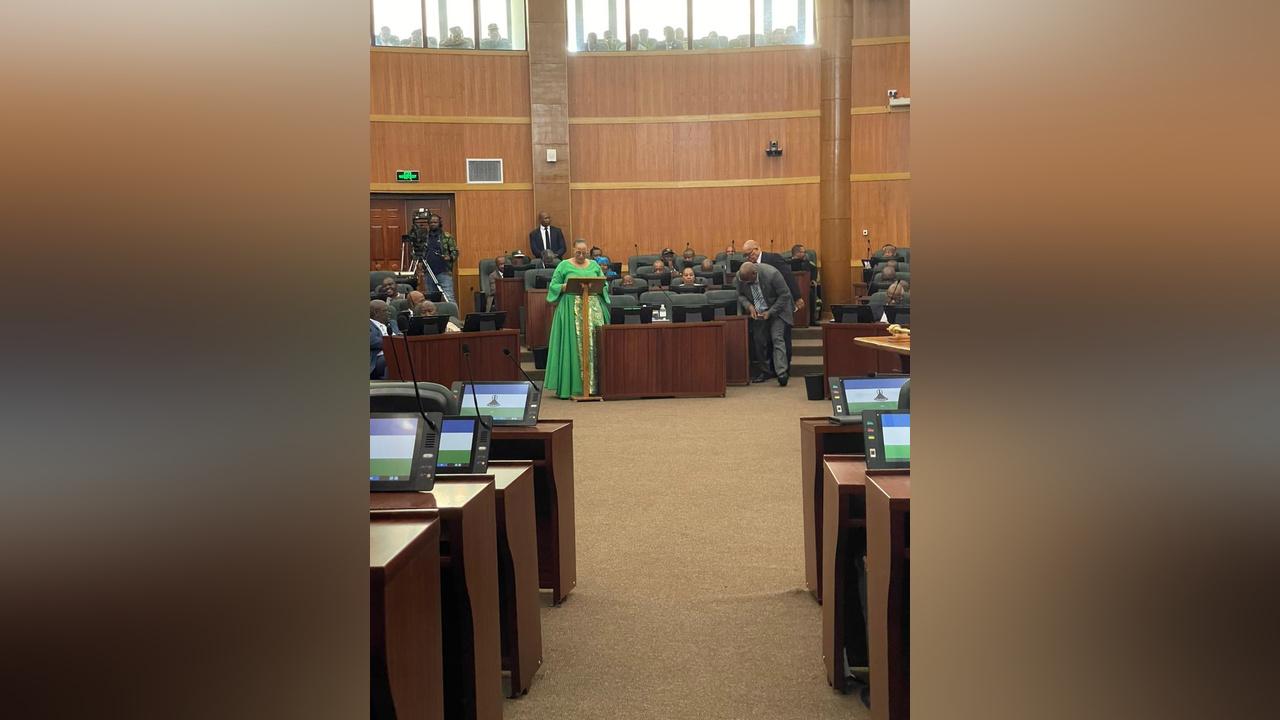
This was said by the Minister of Finance and Development Planning, Dr. Rets’elisitsoe Matlanyane, while presenting the 2026/2027 Budget Estimates before a joint sitting of Parliament under the theme: “Accelerating Economic Transformation: Building Resilience.”
Dr. Matlanyane indicated that growth in the agricultural sector will be anchored by improved livestock breeding practices, coupled with anticipated favourable weather conditions for crop production.
She further noted that in the manufacturing sector, operational factory shells in Tikoe and Belo are expected to benefit the textile and other manufacturing industries.
She added that there are ongoing efforts to diversify exports into regional and European markets.
However, the Minister cautioned that the expected gains from these initiatives will not fully offset the decline in firms affected by the African Growth and Opportunity Act (AGOA), resulting in a worsening outlook for the textile industry.
On mining, Dr. Matlanyane said the sector continues to face pressure due to global price slumps, oversupply and increasing competition from synthetic diamonds. “Mining fell sharply, with estimates showing a contraction of around 3.5 percent,” she said, noting that pressures in the sector are likely to persist until global demand and prices stabilise, potentially limiting near-term growth.
Meanwhile, global economic growth is projected to remain broadly steady at around 3.25 percent over the medium term.
Lesotho’s economy has historically relied on agriculture and textiles, with significant contributions from these sectors to employment and GDP. The government has been working on initiatives to enhance agricultural productivity and manufacturing capabilities, aiming to create a more resilient economy. However, external factors such as global market conditions and trade agreements significantly influence these sectors’ performance, necessitating ongoing adaptation and strategic planning to ensure sustainable growth.