By: Maseipone Mokhethi
Africa-Press – Lesotho. The significance of preserving cultural heritage is one that Basotho across different spectrums, locals and diaspora are advocating for beyond bicentennial though urbanisation inclusivity cannot be ignored as well.
This article investigates how best culture, with re-introduction of ‘Thakaneng,’ can be strengthened in an attempt to build resilient Basotho children in today’s dynamic world.
Considering that the Head of State, King Letsie III celebrates 11 years in 2025 as African Union (AU) Nutrition Champion, the article will further relate and interrelate different concepts ranging from SDG two on ending hunger, achieving food security and improved nutrition through sustainable agriculture by 2030.
Additionally, Agenda 2063 which acknowledges culture and tourism as driver of development, forging innovation, creativity and tourism will be intertwined.
Explaining some of the key concepts highlighted above, the Principal Chief of ‘Maroala,’ Berea district which had the honour to host the King’s 62nd birthday in 2025 indicates ‘Thakaneng,’ remains part of Basotho village setup, where children are educated on important cultural practices and life skills. “This is an essential part of growing children in a way that augments respect and educating them about community,” Chieftainess ‘Mamajara Molapo explains.
She echoes that ‘Thakaneng’ has a remarkable role in child development as Basotho children are natured and nurtured from a young age. “Through different plays, children engage in traditional activities that promote physical, mental development and resilience. They network with peers, interact with elders, fostering social skills and community connection,” She stresses.
Furthermore, she says it is during such gatherings that children are told stories that embodies Basotho history, bringing children close to their customs while also making them learn, have hands-on experiences such as “playing house” (mantloane) or otherwise cook nutritious local meals such as ‘nyekoe, motoho and likhobe guided by either grandmothers, mothers or sisters.’
Therefore, she said beyond bicentennial, she chooses to bring into life the idea of ‘Thakaneng’ at her place where children, young and old gather, taught about the importance of preserving cultural heritage beyond 200 years of Basotho existence.
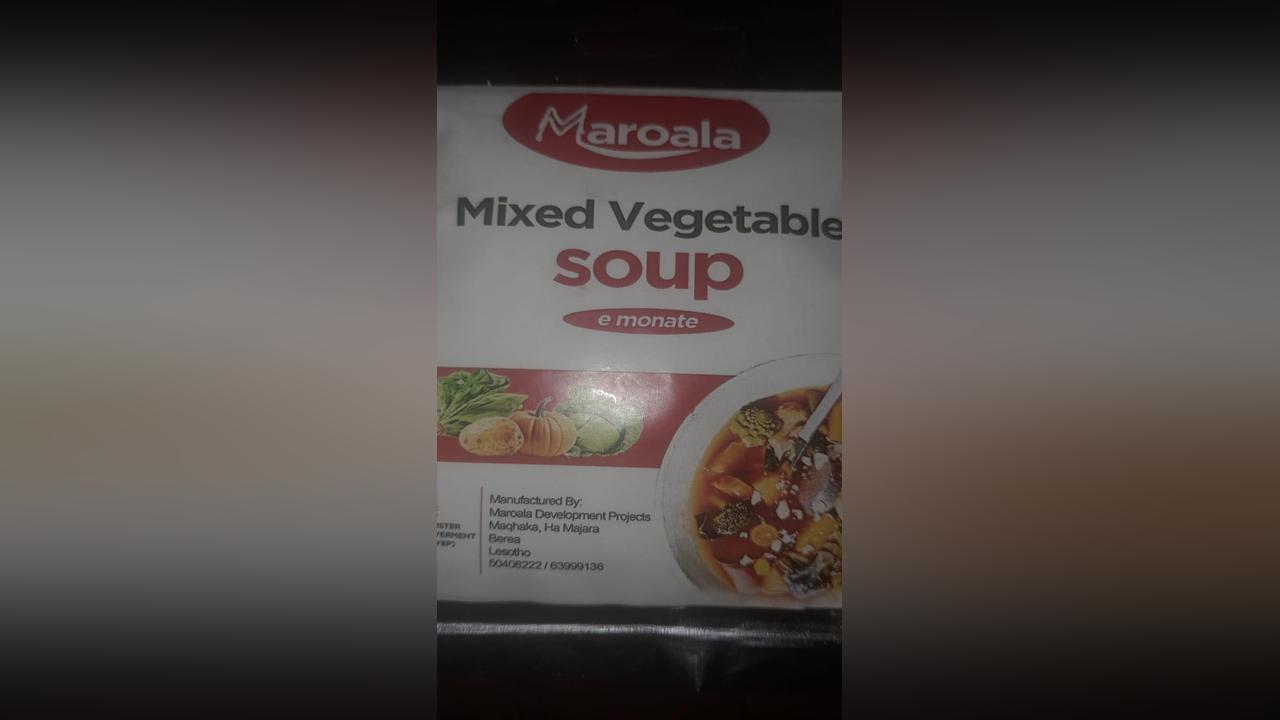
“Through these regular meetings, we have managed to make soup of our own, the plan is to sell, eat healthy and learn life skills as well as to embrace the idea of having our own Head of State as Nutrition Champion.”
The Principal Chief notes that in this era of high unemployment rate, with the Prime Minister having declared it a state of emergency among the youth, the need to also tackle the burden of malnutrition-undernutrition that threatens survival and growth of children is vital hence these regular gatherings.” She adds.
In the very same heart of Berea district, a vivacious narrative unfolds, one that intertwines Agenda 2063 and the SDG’s through Kome Caves dwellings, a National Heritage Site promoting prosperity, where nutrition, culture, and tourism converge to create a brighter future.
One of the grand children who looks after this place, Mr. Kabelo Kome mentions the place has moulded, groomed resilient men and women who were groomed through ‘Thakaneng,’ in the very same caves, a Basotho initiative that exists even today.
His words were cemented by the recent Global Nutrition Report showing Lesotho has made progress towards achieving the target for stunting, however 34.6 percent of children under five years are still affected, which is reported to be higher than the average for the Africa region standing at 30.7 percent. Furthermore, the report states that Lesotho shows limited progress towards achieving the diet-related non-communicable disease (NCD) targets.
Just recently, the Ministry of Health (MoH) held a campaign advocating for Basotho to be mindful of non-communicable diseases, particularly hypertension which can be managed by maintaining the available vegetable diets found at homes (gardens).
Therefore, Mr. Kome accounts that the need to reconsider, rethink about ‘Thakaneng’ as a concept, one of the services under Kome is vital even in attracting tourists across the world.
“Beyond bicentennial, in solidarity we can be able to go modern still not forgetting where we come from.” He notes that Kome offers a space where growing boys and girls are taught to prepare locally and in a culturally manner, food that can help to promote food security, ease attainment of both SDG’s and Agenda 2063 while also attracting tourists.
This is to say, World leaders adopted the 2030 Agenda for SDG’s which includes a set of 17 SDG’s to end poverty, fight inequality and injustice, and tackle
climate change by 2030. These new SDGs, and the broader sustainability agenda, go much further than the goals, addressing the root causes of poverty and the universal need for development that works for all people.
Agenda 2063 anticipates that by 2063 African countries will be amongst the best performers in global quality of life measures. This will be attained through strategies of inclusive growth; job creation; increasing agricultural production; investments in science, technology, research and innovation; gender equality; youth empowerment and the provision of basic services including health, nutrition, education, shelter, water and sanitation.
“One of the special things about Kome, lies a tree named ‘Lekhasi,’ believed to act against evil at all odds, these are things our children must be educated on so that we build the love for values and habits of Basotho culture including patriotism.’’
In the very same vein, a local History Teacher, Mr. Monkhoe Bale says the new journey after 200 years lie on the hands of today’s youth who have all the talents, skills and creatives to sell Lesotho locally and internationally bearing in mind Basotho culture.
One such move is driven holistically by a group of ‘Sotho Kids’ who went as far as Europe during Basotho New Year Month known as ‘Phato ea Makoatle,’ (August) to showcase Basotho cultural heritage to sell the country abroad.
Efforts such as Sothokids Culture Agency aim to promote and preserve Basotho culture, including traditional practices and values, for future generations. By embracing their heritage, Basotho children can grow into confident and culturally informed future leaders.
“The journey has been a success, it is one that we anticipate attracting more and more tourists’ locally to grow the country economically and otherwise,” Sotho Kids member, Umali Themba has said.
On one hand, Chairlady of the Lesotho College of Education (LCE) Board, Mrs. Keratile Thabana calls this year’s batch of teachers including others already on the fields to teach and not cheat learners education.“As the college celebrates 50 years of its existence in 2025, the need to unfold, go back to the classroom and equip Basotho children culturally and otherwise remains key.”
On the other hand, a traditional Healer who opted for anonymity agrees that these are modern times but Lesotho as land of the forefathers from Morena Moshoeshoe I until October 04, 2025 when Lesotho will be commemorating 59th independence has its own way of healing, feeding and above all remain unique from other countries of the world.
“As we move to the diamond jubilee – 2026, it is imperative that we be consulted and show other nations of the world, the Basotho in us for future references,” He emphasises.
The role of cultural heritage is one that Basotho across different sectors cannot ignore if the Mountain Kingdom and her people are to prosper.