Africa-Press – Liberia. Dr. Moniba says the choice before us is clear: continue the same budgetary patterns that recycle poverty and inequality, or insist on a transformational system that will build a New Liberia
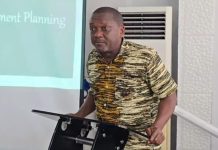
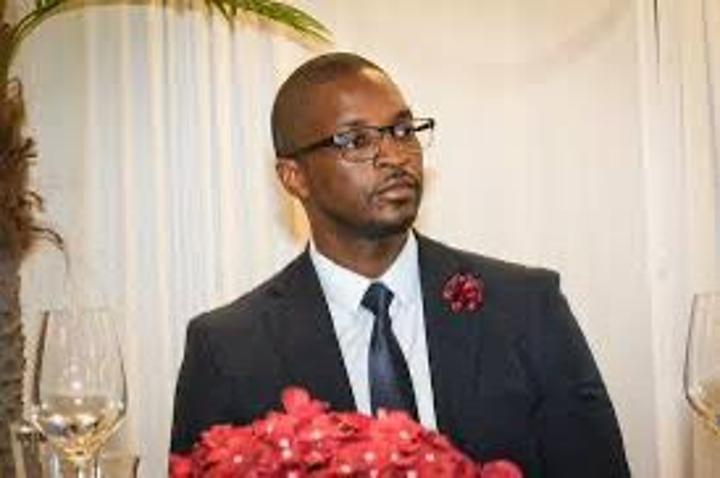
Monrovia- Dr. Clarence Moniba has called on the 55th Legislature to redirect millions of dollars from committee hearings, entertainment, and gift expenses toward science lab projects to advance the country’s human capital development.
Moniba’s plea, which was contained in remarks at the Center for Intellectual Exchange (CEIO) on Dec. 4, comes as the drafted 2026 budget of US$1.2 billion allocated US$6,830,237 for Legislative Committees and US$748,002 for Entertainment, Representation, and Gifts.
According to Moniba, considering the high salaries of lawmakers at US$8,000, it is a complete waste of scarce resources for lawmakers to be allocated a whopping US$748,002 just for Entertainment, Representation, and Gifts when that money could go toward constructing and operationalizing at least three science labs for US$200,000.
He also argued that by lawmakers reducing funding for Legislative Committee operations from $6,830,237 to $3 million, US$3,830,237 would be saved in the process, freeing up money for at least 19 labs.
The proposed cuts, Dr. Moniba noted, would reduce the Legislature’s budget from $51,710,390 to approximately $47.1 million, representing a significant reallocation of public resources toward education infrastructure that is essential for the country’s long-term development.
“I am here appealing to our lawmakers to make the bold and courageous decisions to eliminate $748,002 allocated for Entertainment, Representation, and Gifts and reduce funding for Legislative Committee operations from $6,830,237 to $3 million,” said Dr. Moniba. “The resulting combined savings of approximately $4.6 million would be used for constructing and operationalizing approximately 23 science laboratories in the first year at US$200,000 per facility, and over three years, about 90 labs could be constructed and operational.”
Moniba’s proposal comes amid growing concerns about Liberia’s science education foundation as nearly all of the country’s secondary schools operate without functional science laboratories, forcing students to learn chemistry, physics, and biology solely through textbook instruction.
Experts say the lack of laboratory facilities continues to directly impact student performance and interest in science subjects. Students complete secondary school without conducting basic experiments or using standard scientific equipment — experiences considered fundamental to science education.
Dr. Moniba’s calculations show that the US$4.6 million in proposed savings could construct and equip approximately 23 science laboratories in the first year at US$200,000 per facility. Sustained over four years, the reallocation could establish more than 90 science labs across Liberia’s 15 counties, ensuring thousands of Liberian students have access to science in practice.
“When students cannot see scientific principles in action, science becomes abstract memorization rather than practical problem-solving,” said Dr. Moniba. “This creates a workforce gap that affects every sector of our economy, from healthcare to agriculture to infrastructure development.”
Moniba argued that if Liberian lawmakers are serious about ensuring the budget benefits future generations of this country, they need to cut waste in their budgets and redirect resources to projects that build and strengthen Liberia’s human capital in education.
He characterized current spending patterns as undermining the country’s workforce potential, which he says is currently among the lowest in the West African region. Moniba noted that “human capital development” — the process of improving a population’s health, knowledge, and skills– holds the key to Liberia’s economic growth and poverty reduction.
Moniba’s proposal comes as Liberia works to rebuild its education system, which ranks among the weakest in sub-Saharan Africa. The country’s literacy rate stands at approximately 48 percent, with schools lacking science labs and adequate teaching materials.
“The choice before us is clear: Continue the same budgetary patterns that recycle poverty and inequality, or insist on a transformational system that will build a New Liberia,” Moniba said.
For More News And Analysis About Liberia Follow Africa-Press