Africa-Press – Liberia. Liberia-Guinean authorities have praised a locally driven cross-border development effort that has linked communities in Guinea and Liberia, as leaders and residents renewed calls for the construction of a permanent bridge over the Nié River.
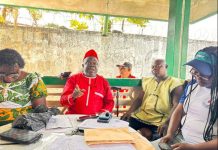
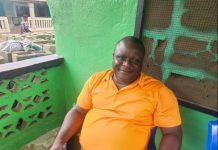
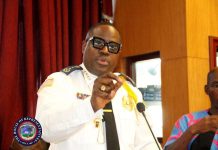
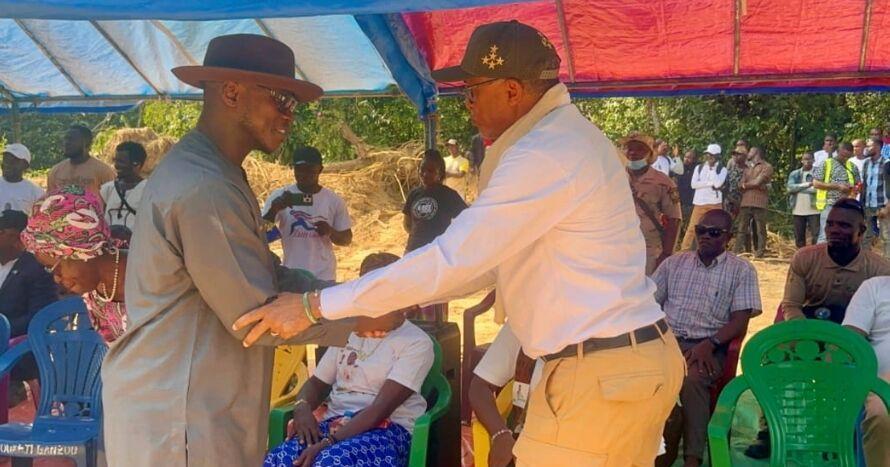
At a ceremony held early on Sunday, 21 December 2025, along the banks of the river, Guinea’s Minister of Pre-University Education and Literacy, Jean-Paul SEDY, recognized the contribution of Liberian community advocate Quanuquanei Alfred Karmue and Bong County Superintendent Loleyah Hawa Norris for their roles in connecting Yassata in Guinea with Dissaï in Liberia.
The Guinean delegation said the breakthrough was made possible after road-building equipment was allowed to cross from Liberia into Guinea — a move facilitated by Superintendent Norris and coordinated by Mr Karmue. The result is a continuous road network reaching the Nié River on both sides of the border.
“We are here to recognise cooperation and leadership,” Minister SEDY said. “This effort goes beyond road construction. It represents solidarity, development and a shared commitment to peace between Guinea and Liberia.”
Officials said the project underlined the value of cross-border cooperation and community-led development. Minister SEDY noted that the physical link to the river was achieved through local initiative rather than prolonged waiting for state intervention.
He said the road was helping to rebuild long-standing family, cultural and trading links that were disrupted by colonial-era borders, while also acknowledging the role of Guinean security forces in maintaining stability along the river.
“This is not simply a bridge between two villages,” he added. “It is a bridge between Guinea and Liberia, and potentially between West African nations, built on peace, unity and development.”
The minister praised Mr Karmue for mobilising communities and partners instead of waiting for bureaucracy to act. He said Guinea’s leadership, including President Mamady Doumbouya, would be informed of the initiative.
Speaking at the proposed site of the future bridge, Mr Karmue placed the moment within the wider vision of regional integration promoted by Liberian President Joseph Nyumah Boakai.
“Borders are not meant to divide us,” he said. “They are meant to connect us. What we see today is the beginning of those words becoming reality.”
Pointing to the Nié River, he said it had long symbolised separation but could now represent opportunity. He explained that the project grew out of years of cooperation between border communities, including the early Panta road advocacy campaigns, during which Guinean and Liberian residents jointly took part in road awareness marches.
“As development progressed in Liberia, our brothers and sisters in Guinea asked for help to link their side,” Mr Karmue said. “With the support of the superintendent, the machinery crossed the river, and the roads were finally joined.”
With road networks now connected on both sides, attention has shifted to the construction of a permanent bridge over the Nié River.
“If we were able to build the road, we can also build the bridge,” Mr Karmue said. “That bridge will remove the hardship our people still face because of the river.”
He described the proposed Joseph Nyumah Boakai Unity Bridge as both a practical necessity and a national symbol, comparing it to iconic landmarks elsewhere in the world. He said the structure could stand as a reminder of unity, peace and shared prosperity for future generations.
Mr Karmue said the initiative aligned with President Boakai’s ARREST Agenda, which prioritises roads and agriculture as pillars of economic growth. However, he stressed that development should not be viewed through a political lens.
“This is not about politics,” he said. “It is about responsibility. Development belongs to everyone.”
Guinean officials welcomed Liberia’s openness, describing the project as an example of cooperation between communities with shared histories.
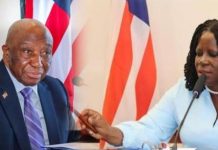
Representing Liberia, Superintendent Norris conveyed greetings from President Boakai and Vice President Jeremiah Koung. She said the road and the proposed bridge reflected the reality of border communities whose lives have long crossed national lines.
“Our people have traded, married and lived together for generations,” she said. “No one should continue to suffer because of a river.”
She described Mr Karmue as a committed developer and urged continued collaboration to complete the bridge and maintain the road.
Panta District Commissioner Gban Dakai Paye said the visit into Guinea highlighted the unity between the two countries. “Liberians and Guineans are one people,” he said, expressing confidence that the benefits of the road — and eventually the bridge — would be felt across the region.
Residents of Yassata and Dissaï welcomed the new road, saying it had already improved trade and movement. However, many stressed that the absence of a bridge still posed serious risks.
“We have waited many years for this connection,” said Fatoumata, a trader in Yassata. “Trading is easier now, but we are still waiting for the bridge.”
In Dissaï, resident Korto Togbah said river crossings remained dangerous during the rainy season, urging both governments to prioritise the bridge.
Mary Mulbah, a local mother, said the final step was critical for safety and daily life. “The road is there,” she said. “Now we need the bridge so our people can move freely and safely.”
Community elder Moussa Camara echoed the appeal. “The road has changed a lot,” he said. “But the river still separates us. The Unity Bridge will turn this road into alifeline. We hope the authorities act quickly.”
For More News And Analysis About Liberia Follow Africa-Press