Africa-Press – Liberia. In a society emerging from years of fragility, reforming any national institution is never simple, especially when that institution enforces the law. The Liberia National Police (LNP) today stands at a defining moment in its history: an institution under intense scrutiny, targeted by misinformation, and often misunderstood. Yet beneath the noise lies a deeper truth that these attacks are the clearest proof of transformation taking root. The LNP is not being attacked because it is failing; it is being attacked because it is changing.
Breaking with the Past: For decades, policing in Liberia struggled with deep structural and cultural challenges from limited resources and political interference to weak internal accountability systems. These realities left scars on public trust. But over the past few years, the LNP has embarked on a steady journey of reform to professionalize the service, strengthen internal discipline, and rebuild legitimacy in the eyes of citizens.
This process has required uncomfortable changes: restructuring command systems, enforcing ethical standards, expanding human-rights training, and ending impunity within the ranks. Such actions inevitably threaten those who profited from disorder. The resistance faced by the police today is not new it is the echo of systems that fear accountability.
Restoring the Rule of Law in Practice, Not Theory: The LNP’s renewed focus on the rule of law means that investigations and arrests are guided by evidence, not influence. That shift has unsettled both the politically connected and the socially powerful. In a society where personal connections once defined justice, enforcing the law without fear or favor is revolutionary.
The result has been predictable: when police hold a high-profile figure accountable, one political side calls it persecution; when another is investigated, the accusations reverse. Yet, this cyclical criticism is precisely what confirms that the LNP is now operating on principle rather than politics. The institution is learning to serve the Republic not a faction.
Transparency and Accountability as Institutional Culture: The LNP has made deliberate efforts to open its work to public scrutiny. Press briefings, media updates, and professional standards investigations have become standard practice. This transparency is uncomfortable for some because it exposes what secrecy once concealed.
However, openness is the only way to restore public confidence. The police cannot demand trust in silence; they must earn it through consistency, truth, and accountability. Every official statement, every investigation update, every disciplinary action reflects the LNP’s determination to prove that policing in Liberia can be both firm and fair.
Community-Centered Policing for a Modern Liberia: At the heart of the institution’s reform agenda lies a new philosophy: “Policing by consent, not coercion.” The LNP has begun integrating community policing, Do No Harm, Conflict Sensitivity, and Anti-Fragility principles into training, operations, and partnerships.
This approach views policing not as domination, but as service. It empowers communities to become partners in maintaining peace rather than spectators of enforcement. From Grand Cape Mount to Nimba, and from urban Monrovia to rural Montserrado, these initiatives are bridging divides and reducing mistrust. Such a change is gradual but irreversible. Liberia’s police service is learning that legitimacy grows not from the barrel of authority, but from the consent of those it serves.
Confronting Misinformation and Institutional Fatigue: Reform also brings with it a new challenge: disinformation. In an era of instant communication, every police action whether lawful arrest, crowd control, or investigation, risks being distorted before facts are verified. False narratives spread faster than truth, and online outrage often overshadows real accountability work being done quietly and professionally.
This is the modern battlefield of reform: a fight not only against crime, but also against cynicism. Yet, the LNP continues to respond with restraint, evidence-based communication, and transparency even when the narrative is politically weaponized. Such composure is not weakness; it is maturity.
Reform Is Never Comfortable: The Liberia National Police understands that transformation is rarely celebrated by those it affects. Stronger internal controls mean fewer shortcuts. Professional standards mean tougher consequences. A merit-based system means fewer favors. Each of these represents progress for the nation and discomfort for those invested in the old ways.
The attacks, criticism, and misrepresentation the LNP faces today are, in many ways, the price of progress. No institution grows stronger without testing its limits. No democracy becomes stable without strengthening the arm that upholds its laws.
A Force in Transition and in Service: The LNP’s reform is not about personalities; it is about systems. It is about building a police force that is transparent in conduct, accountable in leadership, and humane in enforcement. It is about ensuring that the next generation of Liberian officers inherit a service worthy of respect.
Yes, the road is long, and the criticism is fierce. But the Liberia National Police stands firm. It will continue to uphold the Constitution, protect lives and property, and serve the nation with professionalism because a country cannot advance faster than the integrity of its institutions.
Reflection
The attacks on the Liberia National Police are not symptoms of decline they are signs of growth. They reveal that an institution once shaped by politics and fear is now being reshaped by principles and courage. Liberia’s journey toward the rule of law depends on this transformation — and it deserves both national and international support.
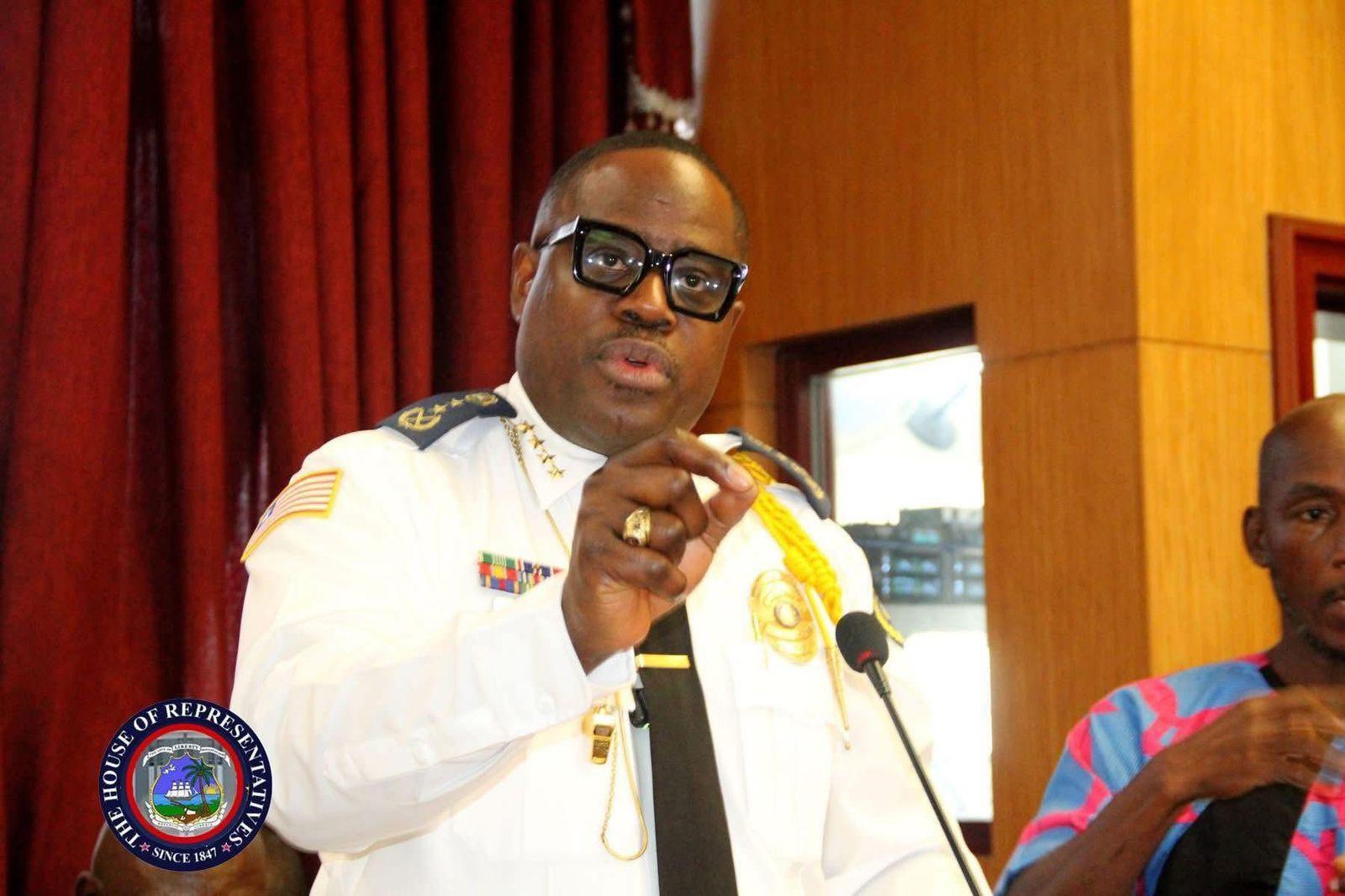
Col. Gregory O.W. Coleman currently heads the Liberia National Police as Inspector General.
For More News And Analysis About Liberia Follow Africa-Press