Africa-Press – Liberia. Monrovia — Prominent opposition leaders Alexander B. Cummings and Tiawan S. Gongloe have sharply criticized efforts by the House of Representatives of Liberia to expel Yekeh Kolubah (District #10, Montserrado), describing the move as politically motivated and inconsistent with democratic norms.
The two opposition figures “descended” on the Legislature with strong statements, warning against what they termed selective justice and an attempt to silence dissenting voices within the country’s democratic space.
Kolubah is currently under investigation following a communication from his colleague, Sumo Mulbah (District 3, Montserrado County), urging plenary to expel him for allegedly claiming that a disputed border land belongs to Guinea. The House of Representatives has since mandated its committee on Rules, Order and Administration to review the complaint and submit recommendations on the matter.
‘Hypocrisy’ in Move to Expel Kolubah
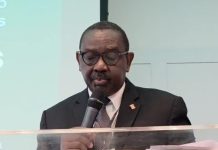
Cummings, a former presidential candidate and political leader of the Alternative National Congress, describes the move as “hypocrisy” and a dangerous test of the country’s commitment to free speech.
In a strongly worded statement posted on his official Facebook page, Cummings acknowledged that he often disagrees with Kolubah’s rhetoric but stressed that democratic principles must protect even controversial voices.
“Our commitment to free speech is not tested by the words we like, but by those that unsettle us,” Cummings said, arguing that Kolubah’s remarks should not be used as a pretext for political retaliation.
The House of Representatives has since mandated its committee to review the complaint and submit recommendations on the matter.
Cummings and Gongloe’ statements comes a day after Deputy Speaker Thomas P. Fallah has indicated that disciplinary action against Kolubah is a must.
“There will be action on this (Rep. Kolubah’s alleged action). But that’s the politics. This is the tradition we have to change in our country today,” he said. “I heard some of them saying Yekeh did it yesterday. He used the same tactics to insult, attack and brought the George Weah government down, why they can’t forget about Yekeh? But is that the legacy we want to set? We should continue to be in a cycle? Because you insulted me yesterday so today I should come and insult you? What lessons we want to give to our kids? No, I disagree with that. If he did it yesterday, there must be a room for change so that the next generation can come and say no.”
Kolubah, once a strong supporter of Joseph Nyuma Boakai and Vice President Jeremiah Koung, played a visible role in their electoral campaign and was a vocal critic of former President George Weah and the Coalition for Democratic Change (CDC).
However, since breaking ranks with the ruling bloc, Kolubah has emerged as a fierce critic of the Boakai administration and is now aligned with the opposition CDC.
Critics claim the push to expel him may be politically motivated, aimed at silencing his anti-government stance rather than solely addressing his comments on the Liberia–Guinea border dispute.
Cummings also noted that the push for expulsion is politically motivated, pointing to Kolubah’s vocal criticism of the current Unity Party-led government. He noted that similar behavior by Kolubah was tolerated during the Coalition for Democratic Change administration, when the lawmaker was seen as a necessary dissenting voice.
“The same firebrand politics once defended cannot now be condemned simply because they target the current regime,” Cummings stated.
He further argued that expelling Kolubah would undermine the will of voters in District #10, who elected him to a six-year term in the 2023 elections. According to Cummings, while the legislature has the authority to expel members, such power should not be exercised “loosely nor as a tool for vengeance.”
Cummings also warned of the financial implications of a potential by-election, noting that Liberia lacks the resources for such an exercise at a time when citizens are grappling with economic hardship.
“Expelling Yekeh will not change the price of gasoline, stabilize electricity from Liberia Electricity Corporation, or reduce the cost of goods and services,” he said. “It will only soothe some egos, cost taxpayers more money, and further undermine our young democracy.”
He urged lawmakers backing the expulsion to instead focus on policies that directly improve the lives of Liberians, including healthcare, education, and access to safe drinking water.
“Liberians deserve better,” Cummings added.
‘Dangerous Legal Misstep’
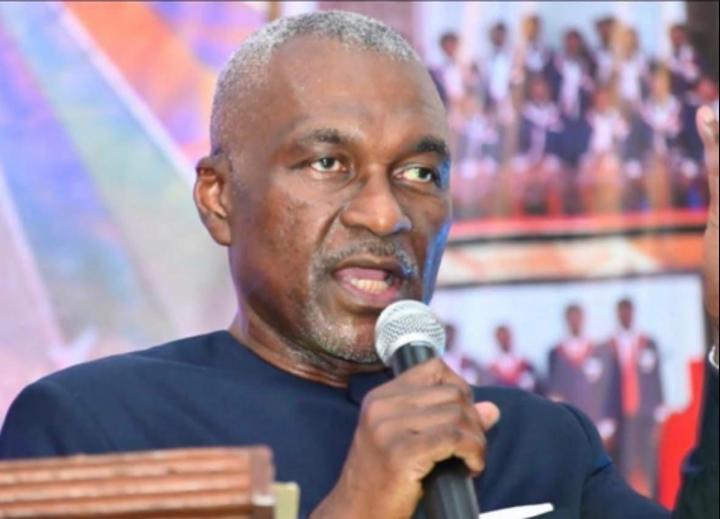
For his part, prominent Liberian human rights lawyer and former Solicitor General, Tiawan Saye Gongloe, cautioned the House of Representatives against pursuing the impeachment or expulsion of Montserrado County District #10 Representative Yekeh Kolubah, describing the move as constitutionally flawed and a threat to the rule of law.
In a detailed legal commentary, Gongloe said attempts to remove Kolubah over allegations of treason reflect a fundamental misunderstanding of Liberia’s legal framework and risk undermining the doctrine of separation of powers.
“The Legislature is not a criminal court and cannot determine guilt or innocence for such an offense,” Gongloe asserted, stressing that treason is strictly a criminal matter that must be handled through the judicial system.
The situation escalated after Liberia’s Police Inspector General urged lawmakers to take action against the outspoken legislator.
But Gongloe rejected that approach, insisting that if authorities believe Kolubah committed treason, the proper legal path is clear: arrest, charge, and prosecution before a court of competent jurisdiction.
“To proceed otherwise is to blur the lines between political authority and judicial power,” he warned, adding that such actions could set a dangerous precedent for the misuse of legislative authority.
Drawing from his own experience as former Solicitor General, Gongloe noted that even sitting lawmakers accused of crimes were subjected to due process rather than political removal.
“That is how accountability works in a constitutional democracy,” he said.
Gongloe, who also lectures at the Louis Arthur Grimes School of Law, emphasized that governance must be anchored in the law, not political convenience.
“Politics without the control of the law is chaos,” he stated, warning that subordinating legal principles to political motives weakens institutions and endangers democracy.
He further underscored the importance of protecting freedom of speech, noting that controversial statements by lawmakers do not automatically amount to treason. He referenced U.S. Senator Bernie Sanders as an example of a public official who has openly criticized government actions without facing criminal charges.
On the substance of Kolubah’s alleged claims regarding the Makona River boundary, Gongloe called for a fact-based approach rather than political reaction. He urged President Joseph Nyuma Boakai to establish an independent commission of inquiry to investigate the matter.
He cited the precedent set by former President William R. Tolbert Jr. following the 1979 Rice Riots, when a commission was established to probe the causes and implications of the unrest.
According to Gongloe, such a commission would allow Kolubah and other stakeholders to present evidence, enabling the government to establish the facts and make informed decisions.
“If the House proceeds to impeach or expel Hon. Kolubah on this basis, it would be a serious legal misstep that undermines constitutional order,” Gongloe warned.
He urged Liberian authorities to uphold the rule of law, emphasizing that “the law must guide politics—not the other way around.”
Rep. Mulbah Defends House Authority to Discipline Members
In response to Cllr. Tiawan Gongloe, Rep. Sumo Mulbah defended the authority of the House of Representatives to discipline, suspend, or expel its members, citing constitutional backing.
Mulbah argued that under Article 38 of the 1986 Constitution of Liberia, the Legislature possesses clear authority to regulate its internal affairs, similar to how the judiciary oversees the conduct of legal practitioners.
He maintained that, within the doctrine of separation of powers, expulsion from the Legislature is fundamentally an internal disciplinary process and should not be conflated with impeachment.
“The act of expulsion, when conducted in line with constitutional procedures, is an exercise of internal governance,” Mulbah stated, noting that such action requires a two-thirds majority vote of the House.
Responding directly to Gongloe’s assertion that the Legislature is not a court of law, Mulbah emphasized that courts traditionally avoid вмешing in legislative disciplinary matters, often treating them as “political questions.” However, he acknowledged that judicial review could arise if constitutional boundaries are exceeded or due process rights are violated.
Mulbah, who is the chief proponent of the communication seeking an investigation into Yekeh Kolubah, also defended the role of the Liberia National Police in petitioning the House.
Contrary to Gongloe’s position, he argued that the Inspector General of Police has the constitutional right to bring matters before the Legislature, particularly those concerning national security, citing Article 15 of the Constitution.
According to Mulbah, such petitions form part of a broader framework of inter-branch cooperation aimed at maintaining national stability.
He added that issues involving threats to territorial integrity or potential civil unrest may warrant legislative scrutiny or disciplinary measures against elected officials.
Mulbah further explained that communications from law enforcement agencies are processed through the House’s committee system, ensuring that petitions are vetted for merit before being presented to the full plenary for consideration.
For More News And Analysis About Liberia Follow Africa-Press