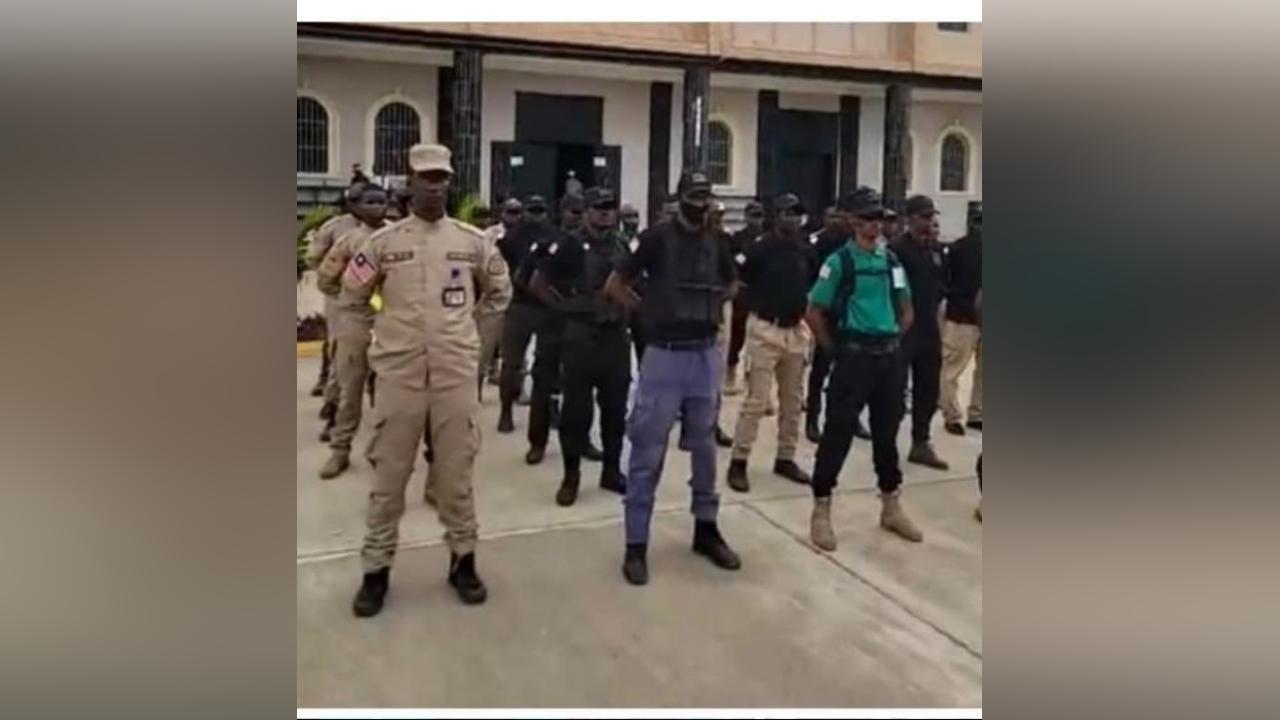
Africa-Press – Liberia. A trending video circulating on social media has sparked national debate following the emergence of a group identifying itself as the National Fula Security of Liberia (NFSL).
The footage, which shows members presenting themselves as a security formation, has triggered concerns about legality, oversight, and the rule of law. While critics warn of the dangers of “unauthorized militias,” some voices within the Fulani community insist the NFSL is merely a community watch initiative — not an armed faction — raising urgent questions about the boundaries of civic security in Liberia.
Constitutional Prohibition
Liberia’s 1986 Constitution speaks directly to such matters.
Article 80(b) prohibits any political party or organization from “organizing, training, or equipping any group to use physical force or coercion for political objectives.” Organizations found in violation risk denial or revocation of registration, reinforcing the principle that only state-sanctioned security institutions are authorized to operate within the Republic.
Legal observers note that the provision was designed to prevent the proliferation of private militias and preserve national security under centralized state control.
Fulani Forum Pushes Back
In response to mounting criticism, a Fulani Forum issued a social media statement rejecting comparisons between the NFSL and extremist organizations.
“While we appreciate your concern for the rule of law, comparing a community-based organization to ‘Boko Haram’ is not only inaccurate but dangerously inflammatory,” the Forum stated. “We must be careful not to let healthy civic questioning turn into ethnic profiling.”
The Forum maintained that the NFSL is not a militia.
“Community Watch, Not a Militia. The National Fula Security of Liberia (NFSL) is not an ‘armed faction’ or a ‘militia,’” the statement emphasized.
According to the Forum, community watch groups and private security initiatives are common across Liberia and typically operate in coordination with the Liberia National Police.
“In many parts of Liberia, ethnic and local communities form watch groups or private security firms to protect businesses and neighborhoods from petty crime, always intended to work in coordination with the Liberia National Police,” the statement added.
The Forum further argued that questions surrounding registration or naming fall within government administrative processes.
“If there are questions regarding its specific nomenclature or licensing, these are administrative matters for the Ministry of Justice, not evidence of an ‘emerging terrorist group,’” the statement read.
It also underscored the Fulani community’s long-standing presence in Liberia, describing it as peaceful, entrepreneurial, and law-abiding.
“To suggest otherwise based on a name is a reach that undermines national unity,” the Forum said.
Despite defending the group’s legitimacy, the Forum welcomed government oversight, stating that national security should remain centralized.
Ministry of Justice Monitoring Situation
FrontPageAfrica contacted the Ministry of Justice for comment. The Ministry acknowledged it is monitoring developments but had not issued an official statement as of press time.
However, sources within the Ministry confirmed that the NFSL is not legally registered in Liberia.
Ambassador Bah Rejects Group’s Legal Standing
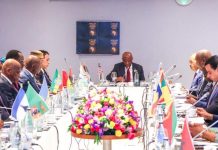
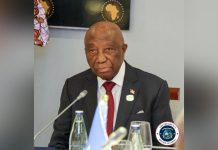
Also weighing in on the issue, Presidential Special Envoy on Investment and prominent Fula community leader Mohammed Bah publicly rejected the group’s legal standing.
“No ethnic group in our country has the right to establish its own security structure — especially one branded or presented as a form of ‘national security,’” Bah wrote. “The concept of national security is reserved solely for the Republic of Liberia and its legally established state security institutions.”
Bah disclosed that he personally engaged with the group’s leadership and urged its disbandment.
According to him, organizers indicated their intention was to provide protection for mosques and businesses within the community. However, he cautioned that the name “Fula National Security” was inappropriate and potentially destabilizing.
“It sends the wrong message. It creates unnecessary alarm. It risks portraying our peaceful Fula community as operating outside the bounds of national law and unity,” Bah explained.
He added: “Let me be clear: the naming was inappropriate, the branding was inappropriate, and steps have been taken to ensure the group is disbanded.”
Security Under the Republic
Liberia’s security framework is constitutionally designed to remain unified under the authority of the Republic. While communities may seek lawful protection for places of worship and businesses, such arrangements must be coordinated with recognized state security agencies.
Bah emphasized that ethnicity must never be framed in ways that suggest separation from the national security structure.
“We must remain committed to peace, legality, and national cohesion,” he said. “Liberia belongs to all of us, and our security must always remain one and indivisible under the Republic.”
Larger Implications
The controversy underscores broader concerns about the potential rise of unauthorized security formations in a country still consolidating peace and democratic governance.
While supporters describe the NFSL as a community-driven initiative aimed at crime prevention, critics warn that parallel structures — even if well-intentioned — risk blurring the line between lawful civic engagement and unconstitutional security activity.
The Ministry of Justice is expected to clarify its official position in the coming days. For now, constitutional provisions remain clear: the authority to organize and operate security forces in Liberia rests solely with the state.
For More News And Analysis About Liberia Follow Africa-Press