Africa-Press – Liberia. Former leaders of the Press Union of Liberia (PUL) have raised a stark alarm that Liberia is “gradually descending into conflict,” warning that unchecked political agitation, violent protests, and growing media lawlessness could plunge the fragile post-war nation back into instability.
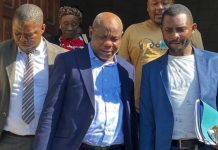
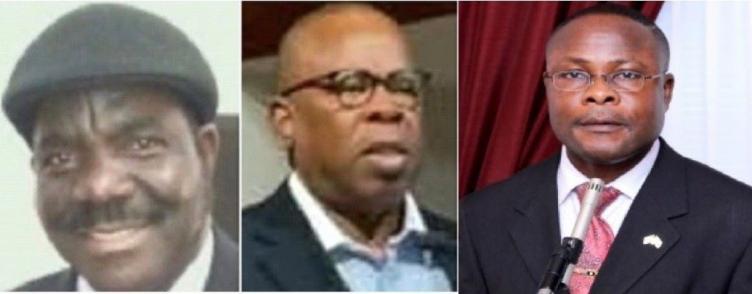
In a press statement released Saturday from Philadelphia, Emmanuel D. Abalo, Isaac D. E. Bantu, and Gabriel I. H. Williams—former leaders of the PUL—said the current trajectory of political discourse and confrontation poses a serious threat to national peace, barely two decades after Liberia emerged from a brutal 14-year civil war that claimed between 200,000 and 300,000 lives and left the country in ruins.
The former PUL leaders pointed to the December 18, 2024 burning of the historic Capitol Building as a defining example of how political tension can easily spiral into violence and massive property destruction. The blaze, estimated to have caused US$8.6 million in damage, occurred amid attempts to remove Counsellor J. Fonati Koffa as Speaker of the House of Representatives. Koffa and several opposition lawmakers are currently facing prosecution in what the statement described as a “politically charged trial” over their alleged roles in the incident.
According to the signatories, recent anti-government demonstrations have further heightened concern, particularly where protests have degenerated into clashes with police, vandalism of vehicles, and injuries to civilians. They cited the December 17, 2025 protest in Monrovia as a troubling illustration of growing lawlessness around political actions.
Beyond street-level confrontations, the former PUL leaders warned that Liberia is fast becoming “the Wild West of social media,” where falsehoods, threats, and reputational attacks are broadcast with impunity. They expressed alarm that such content is often amplified by local media reports and fueled by partisan online platforms aligned with both the ruling Unity Party (UP) and the opposition Congress for Democratic Change (CDC).
The statement also criticized the tone of public discourse by some government officials, noting what it described as an emerging norm of derogatory, vulgar, and threatening public utterances directed at critics and journalists. As an example, the former PUL leaders recalled remarks attributed to Speaker of the House Richard N. Koon in November, in which he threatened to “grab and jail journalists,” a comment for which he later apologized following widespread public condemnation.
The signatories said both the Boakai administration and the CDC-led opposition bear “the greatest responsibilities” for the rising political tension, accusing actors on both sides of supporting unprofessional social media platforms that promote insults, hate speech, and propaganda. They expressed particular concern that senior government officials are regular panelists on some of these platforms, thereby lending them legitimacy.
The former PUL leaders further criticized successive governments for neglecting mainstream public institutions such as the Liberia Broadcasting System (LBS) and the Ministry of Information, Cultural Affairs and Tourism (MICAT), while allegedly funding unprofessional social media operatives. They warned that this approach undermines credible journalism and weakens the state’s ability to manage public expectations.
Against the backdrop of recent military coups across West Africa, the statement cautioned that Liberia cannot afford to drift back toward military rule or civil conflict due to leadership failures, worsening economic hardship, and persistent allegations of corruption. While acknowledging President Joseph Nyuma Boakai’s international achievements, including Liberia’s election as a non-permanent member of the United Nations Security Council, the former PUL leaders said domestic policy shortcomings—particularly controversies surrounding the national budget—continue to fuel public discontent.
They argued that the Boakai administration has failed to clearly communicate its achievements since taking office and recommended the engagement of seasoned professional journalists to help craft a coherent communications strategy around the government’s ARREST Agenda. The statement also urged that leadership positions at MICAT, LBS, and other key public information offices be filled by individuals with professional journalism backgrounds rather than “political talking heads.”
In addition, the former PUL leaders called on President Boakai to prioritize competence, professionalism, and integrity in public appointments, and to establish a special economic policy think tank to advise the presidency on fiscal challenges and provide relief to economically deprived citizens.
The statement condemned what it described as admitted acts of misinformation and political propaganda by certain social media figures, warning that such practices erode public trust and damage the already struggling mainstream media sector. While urging journalists to remain faithful to professional ethics, the former PUL leaders said they would not hesitate to engage international partners—including the Committee to Protect Journalists (CPJ), the National Democratic Institute (NDI), and the National Endowment for Democracy (NED)—to seek sanctions against political actors who threaten peace or attack the media.
They also called on the government to publicly release the resolution from the first Liberia Annual National Diaspora Conference held in the United States in September 2025, expressing surprise that the outcome of the government-funded conference remains unpublished.
For More News And Analysis About Liberia Follow Africa-Press