TINA S. MEHNPAINE
Africa-Press – Liberia. The US government has expressed its readiness to impose “sanctions” on anyone whose activities undermine the credibility of Liberia’s October 10 polls.
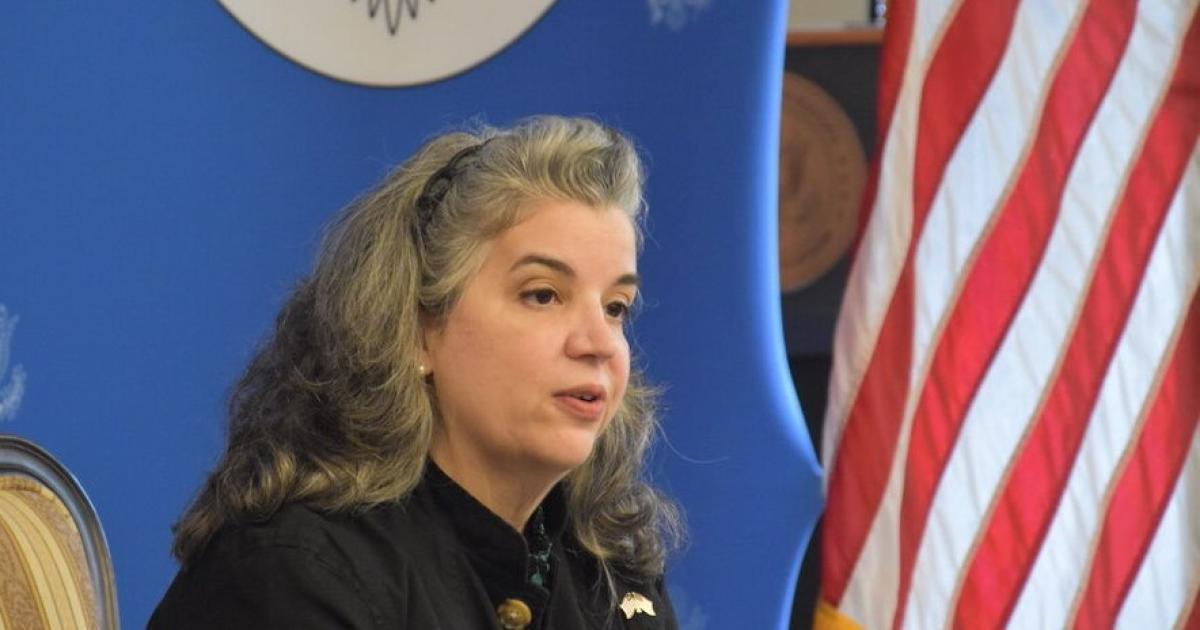
The stern warning, according to Catherine Rodriguez, the Charge d’Affaires of the U.S. Embassy, comes as the U.S. wants to make it clear that it would not tolerate any democratic backsliding as the upcoming elections are crucial towards consolidating the country’s democratic gains.
“The United States,” Rodriguez said, “is prepared to assist in efforts to keep these elections free, fair, and peaceful by holding accountable anyone responsible for engaging in activities to undermine the democratic election process in Liberia through additional measures such as sanctions.”
While specifics of the sanctions were not outlined by Rodriguez, it is believed that they could entail visa restrictions and possible financial penalties against those found guilty of election interference.
The US and the wider international community which have been closely monitoring the political landscape to ensure a transparent and fair electoral process, considered the October polls as a pivotal moment for Liberia to safeguard its peace and democracy.
This election cycle, which is the fourth in the country’s postwar history, will be the first to be organized and administered in the absence of the United Nations mission force, which left the country in 2018.
If the US follows through with its threats, it would come just as it imposed a travel ban on some Sierra Leonean officials accused of meddling in their country’s electoral proceedings.
The move follows the disputed June elections, which Western observers say lacked transparency even though some local and regional observers, including the African Union (AU) and Economic Community of West African States (ECOWAS), declared the election free and fair.
U.S. Secretary of State Antony Blinken on September 1, noted that the U.S. will impose visa restrictions on officials who were allegedly involved in the manipulation and rigging of the electoral process, as well as those involved in alleged acts of intimidating voters, election observers, and civil society activities.
The U.S., Rodriguez noted, is calling on the government to ensure that the October polls are “fair, free, and peaceful elections,” and should “hold accountable” anyone who would “attempt to disrupt it.”
Rodriguez added that it is the responsibility of the government and its officials to also ensure that investments including “money, personnel, and organizational resources to protect citizens, candidates, polling stations, and election workers from intimidation or harm” are made to protect the elections and its outcome.
“The eyes of the world are focused on these elections and how they are managed. The United States, as a longstanding partner of Liberia, along with the international community, has been working closely with the NEC to make sure that all election observers have full access to polling stations during election day, as well as access to the vote tallying.
“The U.S. Embassy through USAID is directly supporting both international and domestic election observer missions, as well as our own mission observing the election process across the country,” Rodriguez said.
Meanwhile, the US envoy has noted that while the Biden administration is not happy seeing officials sanctioned for corruption contesting for public office, it cannot do much more as Liberia’s Sovereign country.
The purpose of the U.S. sanctions, Rodriguez added, was meant to serve as a deterrent tool of corruption and possible human rights; it is only the Liberian government [that] can prosecute the corrupt officials in accordance with Liberian laws.
“The purpose of the sanctions is to change behavior and be used as a deterrent of corruption and possible human rights abuse but at the end of the day, Liberia is a Sovereign country and it should deal with these corrupt officials in accordance with the Liberian laws,” she said.
Rodriguez’s position comes more than a year after the Biden administration sanctioned three former senior officials of President Weah’s administration for their involvement in public corruption in Liberia.
Those sanctioned were Nathaniel McGill, a former Minister of State for Presidential Affairs and Chief of Staff to the President; Sayma Syrenius Cephus, the former Solicitor General; and Bill Twehway, the former Managing Director of the National Port Authority.
The three officials who had denied the claim were close confidants of the President and had resigned their positions after the US sanction. McGill and Twehway are now contesting for the Margibi and Rivercess County senatorial seats, respectively, on the ticket of the ruling Coalition for Democratic Change.
McGill, who was a powerful figure in the Weah administration tenure was sanctioned for bribing “business owners, received bribes from potential investors, and accepted kickbacks for steering contracts to companies in which he has an interest” during his term in government.
He was also accused of manipulating “public procurement processes to award multi-million dollar contracts to companies in which he has ownership” and used government funds allocated to other Liberian government institutions to run his own projects.
As for Cephus, he was sanctioned for receiving bribes from people in exchange for having their court cases dropped and has also shielded money launderers and helped clear them through the court system.
Twehway was sanctioned for orchestrating the diversion of US$1.5 million in vessel storage fee funds from the NPA into a private account and formed a private company to which he later unilaterally awarded a contract for loading and unloading cargo at the Port of Buchanan.
For More News And Analysis About Liberia Follow Africa-Press