Africa-Press – Liberia. Liberia’s House of Representatives has passed the long-anticipated Ivanhoe Atlantic Concession and Access Agreement, setting the stage for Senate concurrence in the coming days. But beyond the legislative milestone, this vote carries a deeper regional message: Liberia is ready to fulfill the vision of cross-border cooperation enshrined in the 2019 Implementation Agreement between Liberia and Guinea — a treaty that both nations ratified to enable free movement of goods, shared infrastructure, and mutual prosperity.
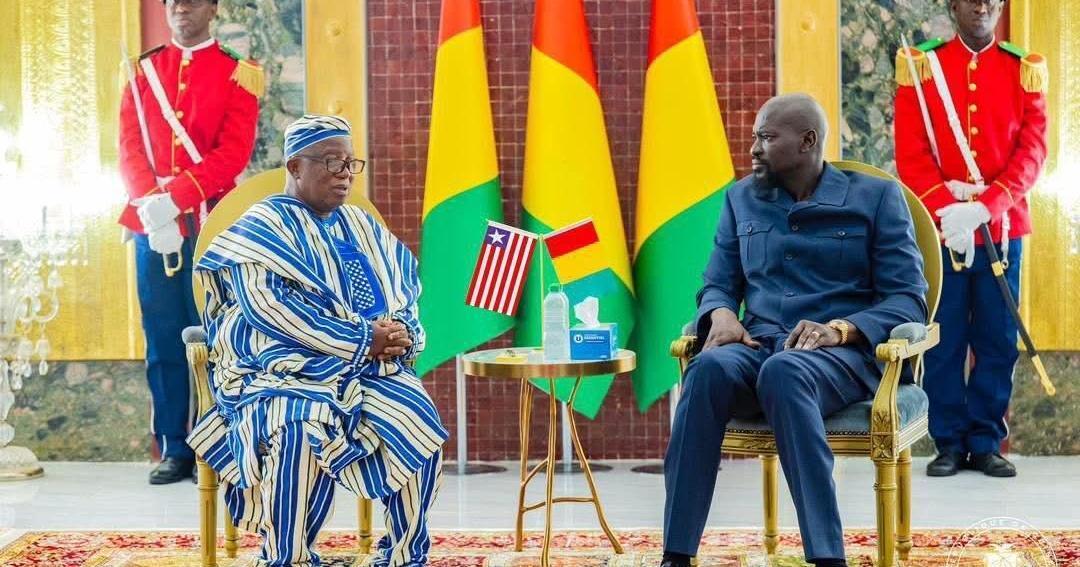
The timing is significant. For the first time in years, both countries now have full diplomatic representation in each other’s capitals. In October 2025, Liberia’s newly appointed Ambassador to Guinea, H.E. Forkpa Gizzie, presented his credentials in Conakry, pledging to deepen bilateral relations and expand trade and economic cooperation between the two neighbors. His remarks echoed the very spirit of the Implementation Agreement—“the free movement of goods, services, and persons across our shared borders.”
This renewal of diplomacy complements a parallel moment on the Liberian side. Earlier, in July 2024, Guinea’s Ambassador to Liberia, H.E. Aboubacar Sylla, presented his Letters of Credence to President Joseph Nyuma Boakai, Sr., who warmly welcomed him and reaffirmed Liberia’s commitment to strengthening bilateral ties within the Mano River Union (MRU).
“We must collaborate with our neighbors to foster prosperity, peace, and security,” President Boakai said, underscoring Liberia’s “unwavering dedication to promoting peace and fostering open relations with all nations.”
That statement, made more than a year before the House’s decisive vote, now rings prophetic. The Concession and Access Agreement (CAA), driven by Ivanhoe Atlantic, is not merely an investment contract — it is the first real operationalization of the Liberia–Guinea Implementation Agreement ratified by both governments in 2020 and 2021.
The bilateral framework, signed in October 2019 and later validated by both nations’ legislatures and constitutional courts, was designed to let Guinean mining companies — especially those in the Nimba Mountain range — export their iron ore and other natural resources through Liberia’s Yekepa–Buchanan rail and port corridor. It also guarantees Liberia the right to share in the benefits through infrastructure usage, fees, and expanded trade.
For years, however, that agreement remained largely dormant, in part because Liberia lacked a full ambassador in Guinea since 2019. That diplomatic gap raised questions about coordination and commitment. Now, with full representation restored on both sides, the pieces are finally falling into place.
The passage of the Ivanhoe Atlantic Agreement breathes life into the Implementation Agreement’s core vision — regional integration through shared infrastructure. It aligns with Article 1.2 of the treaty, which commits both countries to promoting “the shared use of transport infrastructure… to bolster mining development, contribute to sub-regional integration, and strengthen the socio-economic development of both countries.”
It also fulfills Article 6.2, which recommends the use of “an independent operator” for rail management — ensuring that no single company monopolizes the corridor, a major concern in Liberia’s recent policy debates.
In this light, the House’s approval is as much a domestic decision as it is a regional signal — to Guinea, to ECOWAS, and to the world — that Liberia is ready to honor its commitments and lead the way in building a multi-user, cross-border infrastructure system that benefits both nations.
With the Senate expected to concur soon, Liberia and Guinea stand on the threshold of something their predecessors envisioned more than half a century ago. The first Transit Agreement between the two countries was signed in 1973. The Implementation Agreement of 2019 — and now, the Ivanhoe CAA — represent the next, decisive step toward making that vision real.
Ambassador Gizzie’s appointment, following years of diplomatic silence, gives Liberia a stronger voice in Conakry at precisely the right time. His presence ensures that coordination, trust, and transparency will no longer be left to chance. “The future of Liberia and Guinea is intertwined,” Gizzie said in October, “and our shared prosperity depends on how well we work together.”
With both ambassadors now in place, President Boakai’s government has a clear diplomatic channel to drive what the bilateral treaty once only promised: the free and fair flow of trade, investment, and opportunity between two nations that share more than a border — they share a destiny.
In the coming days, as the Senate gives its concurrence, the world will be watching to see whether this generation of leaders can finally turn a 50-year-old vision into a working corridor of commerce and cooperation — one that truly embodies the spirit of the Mano River Union: peace, prosperity, and shared progress.
For More News And Analysis About Liberia Follow Africa-Press