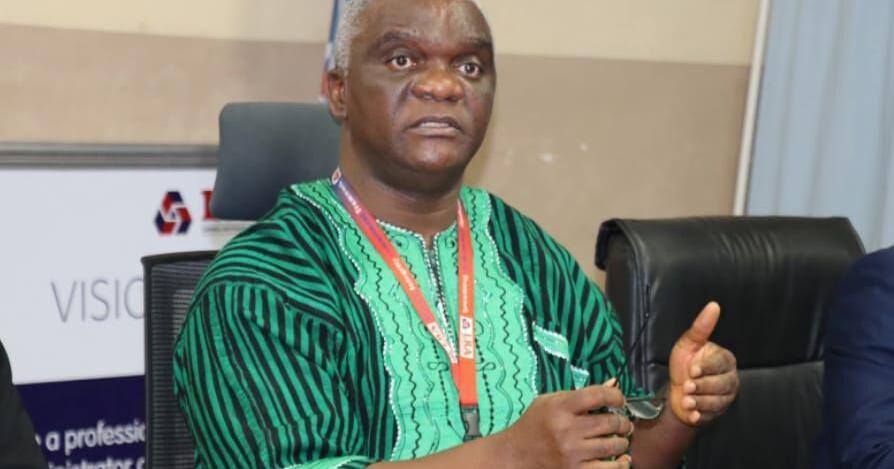
Africa-Press – Liberia. The Commissioner General of the Liberia Revenue Authority (LRA), James Dorbor Jallah, has openly called for the immediate introduction of staff incentive packages, warning that Liberia risks undermining its own revenue gains if the men and women responsible for record-breaking collections remain unmotivated.
Speaking during a press engagement in Monrovia following the Authority’s historic revenue performance, Commissioner General Jallah disclosed that the LRA collected approximately US$818 million in domestic revenue for fiscal year 2025, surpassing its annual target for the second consecutive year—a feat he described as unprecedented in Liberia’s revenue history.
However, Jallah cautioned that sustaining and expanding these gains would be impossible without deliberate investments in human capital, enforcement systems, and compliance reforms.
“You cannot continue to demand excellence from people without recognizing their contribution,” Jallah told reporters. “The staff of the Liberia Revenue Authority delivered beyond expectation. They worked under pressure, with limited resources, and yet surpassed the national target. There must be a system that rewards performance.”
According to the LRA boss, reports circulating about performance bonuses are not baseless, but the absence of clarity and implementation has left many employees demoralized.
He acknowledged staff concerns and emphasized that incentives are not luxuries but essential tools for institutional efficiency.
“If we want integrity, professionalism, and sustained performance, incentives must be part of the conversation,” he said. “Motivation matters. When staff feel valued, compliance improves, enforcement improves, and revenue improves.”
Jallah stressed that Liberia’s revenue achievements were not accidental but the result of tightened enforcement, increased taxpayer education, and the dedication of frontline workers across customs posts, ports, borders, and domestic tax offices nationwide.
The Commissioner said the delay in implementing staff incentives is a serious concern. “When you penalize staff for misconduct, the law allows it. But when they perform exceptionally, the law also provides for rewards. Yet we are not able to implement it. This is becoming a difficulty for me as the leader of LRA,” he added.
Jallah further clarified the scope of the requested incentives: “We are not asking for the world. We are asking for just one additional month’s salary as a bonus for our staff. One month’s payroll is about US$1.1 million, and given our 2025 performance, this is a reasonable request to recognize their efforts.”
The Commissioner highlighted that LRA staff often work around the clock to achieve targets. “I literally mean 24 hours a day. As of December 23, some of our teams were sequestered to ensure collection and reconciliation over the holidays. We work Saturdays, Sundays, and holidays to meet national revenue goals.”
Beyond staff incentives, Jallah outlined key initiatives aimed at strengthening revenue collection and compliance ahead of the 2026 target of US$1.176 billion.
He said the LRA plans to expand real estate tax enforcement, increase public awareness, and leverage digital technologies, including e-invoicing systems that allow real-time reporting of business sales.
“For instance, if a property costs $25,000 to $50,000, the real estate tax should only be around $25 or $30. Many people fail to comply simply because they are unaware of their obligations. We are rolling out public education campaigns and leveraging technology to make compliance easier,” he said.
“There are properties across this country—high-value properties—that are not paying taxes. That is not sustainable,” Jallah said. “We are not talking about imposing new taxes; we are talking about enforcing existing laws.”
He noted that billions of Liberian dollars are lost annually due to non-compliance in property taxation, weak valuation systems, and outdated records, especially in urban centers.
“If we fix real estate compliance alone, Liberia’s revenue profile will change significantly,” he added.
The Commissioner General further announced plans to deepen technology-driven reforms, including expanded automation, digital filing, e-invoicing, and data integration across government institutions to improve compliance monitoring.
“Technology is not optional anymore. Manual systems allow loopholes. Automation closes those gaps,” Jallah said. “Our focus is to make compliance easy for honest taxpayers and very uncomfortable for defaulters.”
He also revealed that the LRA is intensifying enforcement at ports and border points, where under-declaration and smuggling continue to deprive the state of critical revenue.
“Every dollar that escapes the system is a dollar denied to education, healthcare, and infrastructure,” he emphasized.
Jallah reiterated that the Authority’s enforcement strategy will be balanced with taxpayer engagement, noting that voluntary compliance remains the most sustainable path to revenue growth.
“We are not enemies of taxpayers. Our responsibility is to ensure fairness. Those who comply should not carry the burden for those who refuse to do so,” he said.
As Liberia continues its post-conflict economic recovery and budget expansion, the LRA Commissioner warned that ambitious national development plans must be matched by domestic resource mobilization.
“We cannot continue to depend solely on donors. Domestic revenue is the backbone of sovereignty,” Jallah stated. “But that backbone must be strengthened by motivated staff, strong systems, and firm enforcement.”
Jallah also spoke about the LRA’s plans to automate revenue operations at key points, including ports and fuel terminals, using scanners and online reporting systems. “This will significantly reduce leakages and improve efficiency, ensuring we capture all due revenue,” he explained.
Addressing concerns about staff numbers, the Commissioner said the agency remains understaffed despite exceeding targets. “Even after dismissing 46 employees for misconduct, we are still operating well below the number of staff needed to maximize revenue collection. If we had the full complement, we could collect billions, not just hundreds of millions.”
On the rollout of Value Added Tax (VAT), Jallah confirmed that Liberia is preparing to implement VAT starting January 2027. “We have trained our tax collectors, brokers, and practitioners. This year will be intensive, as we train the full ecosystem, including media stakeholders, to ensure smooth implementation.”
He used the occasion to call on policymakers and stakeholders to support incentive reforms for revenue workers, arguing that rewarding performance is not a cost but an investment in national stability.
“When revenue institutions work, the country works,” Jallah declared.
Finally, Commissioner Jallah stressed that staff incentives are not optional but essential for Liberia to meet ambitious 2026 revenue targets.
“With proper motivation and resources, our teams can achieve far more. We can collect US$2 billion instead of US$1.2 billion, we can cover recurring expenditures and invest heavily in infrastructure and national development. Incentivizing staff is a critical part of this equation,” he concluded.
For More News And Analysis About Liberia Follow Africa-Press