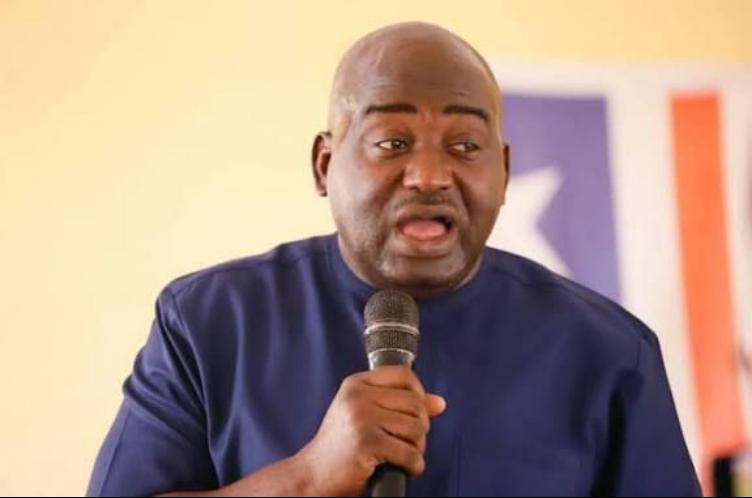
Africa-Press – Liberia. The ongoing legislative scrutiny of a proposed US$363.9 million financial bill—intended to fund major road construction projects along Liberia’s western and northern corridors—has taken a dramatic turn, as Nimba County District #7 Representative Musa Hassan Bility has formally alerted the Liberian Senate to what he describes as serious constitutional and procedural breaches in the bill’s journey through the House of Representatives.
In a communication dated December 2, 2025, addressed to Senate President Pro Tempore Nyonblee Karnga-Lawrence and members of the Senate, Rep. Bility warned that the upper chamber risks endorsing a financial instrument that was never properly debated, voted on, or passed by the House—the chamber constitutionally mandated to originate all revenue and financial bills.
Rep. Bility said his concerns were first raised on November 5, 2025, in a letter to House Speaker Richard Nagbe Koon, followed by a reminder on December 2. Both communications, he noted, remain without resolution, prompting his appeal to the Senate.
According to Bility, available House records show that while the bill was formally submitted and read before Plenary, it was merely referred to the relevant committee and never returned for debate or voting.
“Since that referral, the bill has not been reported back to Plenary, has not been debated, and no individual vote of members has been taken,” he emphasized.
Despite this, Bility says there are clear indications that the bill is being treated as though it had been duly passed by the House and forwarded to the Senate—a situation he argues constitutes a grave violation of Article 34(d)(i) of the Liberian Constitution. The provision requires that all revenue or financial bills originate in and be passed by the House before Senate action.
He cautioned that if the Senate proceeds to final passage, it risks becoming entangled in “a process tainted by serious constitutional and procedural irregularities.”
In the spirit of transparency and legislative integrity, the Nimba County lawmaker is requesting that the Senate formally demand evidence from the House to confirm that the bill went through the mandatory stages of passage. These records, he said, should include order papers reflecting every stage of the bill, plenary minutes showing debate, the committee’s report as laid before Plenary, and official communication transmitting the bill to the Senate after an individual vote.
He further urged the Senate to refrain from any final approval until it is fully satisfied that these constitutional steps were properly followed.
Rep. Bility stressed that his communication should not be viewed as an attempt to stall infrastructure development.
“This is a call to ensure development is pursued within the four corners of the Constitution… so the Liberian people can have confidence that their resources are committed only through lawful, transparent, and accountable processes,” he wrote.
With the Senate now formally notified, the controversy heightens growing scrutiny around legislative procedure and the integrity of bill processing within the 55th National Legislature. The Senate’s next steps could determine whether the multi-million-dollar financing initiative advances—or becomes mired in a constitutional showdown between the two chambers.
The US$363.9 million financial bill at the center of the unfolding legislative dispute is part of the Boakai administration’s flagship push to expand and modernize Liberia’s road network, particularly along the western and northern corridors. These corridors connect key economic hubs, including border points leading to Guinea and Sierra Leone.
Improving these routes has long been considered vital for trade, agricultural movement, and regional integration.
The financing package—reportedly sourced through a mix of concessional loan arrangements and infrastructure financing partners—was submitted to the House of Representatives earlier this year as part of a broader infrastructure strategy aimed at reducing travel time, lowering transport costs, and stimulating rural economies.
Under Article 34(d)(i) of the Liberian Constitution, all revenue and financial bills must originate in the House before being transmitted to the Senate for concurrence. The bill was introduced and read before the House Plenary and then referred to the Committee on Ways, Means, Finance & Budget for scrutiny.
However, the bill has been dogged by controversy since its referral. Several lawmakers, including Rep. Musa Hassan Bility, have argued that after the referral, the bill appeared to progress informally or “off the record,” without the constitutionally required debate, committee report, or individual vote in Plenary. These concerns intensified when Senate committees began reviewing the bill, suggesting that it had already been passed by the House.
The administration has touted the road-financing instrument as a transformative initiative that will boost national development, but critics warn that any procedural breach in the bill’s passage could not only undermine legislative integrity but also expose the government to legal and political challenges.
As the Senate weighs its next steps, the fate of the US$363.9 million road bill now hangs between Liberia’s development ambitions and a widening debate over constitutional compliance and legislative transparency.
For More News And Analysis About Liberia Follow Africa-Press