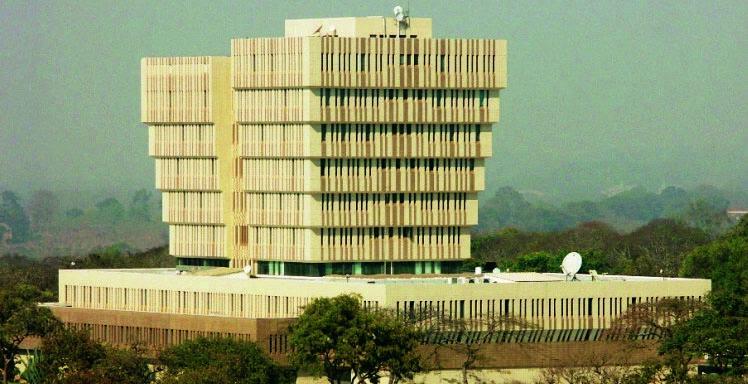
Africa-Press – Malawi. As foreign exchange remains scarce, the Reserve Bank of Malawi (RBM) has said individuals, companies, and organisations seeking United States dollars must channel their requests through their respective commercial banks rather than the central bank.
In a statement released on Saturday, RBM Deputy Governor for Economics and Regulation Henry Mathanga said the central bank had noted a rise in requests for meetings from private sector players and members of the public seeking assistance with foreign exchange allocation.
He observed that, in line with its legal mandate, the central bank provides banking services only to the Government of Malawi and licensed financial institutions.
According to Mathanga, commercial banks are best placed to support both private sector entities and individual clients by offering a full range of banking services, including the facilitation of foreign exchange.
He added that RBM acknowledges the foreign exchange challenges currently affecting the economy and appreciates the concerns being raised by stakeholders during this period.
– Advertisement –
However, some business captains on Saturday told Times Business that they asked for meetings with RBM officials after failing to be assisted by commercial banks.
A joint African Development Bank, World Bank and United Nations report titled ‘No Time to Waste: Policy Priorities for Malawi’s Recovery’ notes that Malawi is experiencing its most severe foreign exchange and balance-of-payment (BoP) crises since independence.
The report states that these crises have sharply slowed economic activity, increased the cost of living and led to widespread shortages of fuel, fertiliser, pharmaceuticals and other essential goods.
It further notes that accessing foreign exchange is difficult even on the parallel market, where rates exceed the official rate by 150 percent, the second-largest spread worldwide.
This marks Malawi’s fourth BoP crisis in 30 years. Previous episodes in 1992, 1997, 2012, and 2022 severely slowed the country’s development.
Each crisis began under a managed or fixed exchange-rate regime alongside major external imbalances, with recovery only commencing after significant external adjustment, namely a steep decline in imports, coupled with a more flexible exchange-rate policy.
According to the report, resolving Malawi’s BoP crisis will require comprehensive reforms and sustained efforts to reverse years of economic distortions
For More News And Analysis About Malawi Follow Africa-Press