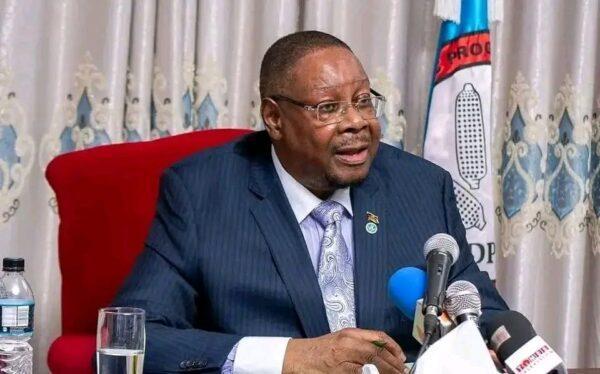
Africa-Press – Malawi. President Arthur Peter Mutharika (APM) has broken his long-standing promise to keep Malawi’s Cabinet lean after expanding it from 24 to 28 ministers, even as he moved to honour another pledge—frequent reshuffles and internal reconfiguration of power within the executive.
The latest Cabinet reshuffle, announced through a presidential press release, confirms that despite repeated assurances of cost-conscious governance, the size of Cabinet has grown through the appointment of four additional deputy ministers. The development exposes a widening gap between rhetoric and reality, reinforcing criticism that the idea of a lean Cabinet exists more in speeches than in practice.
At the same time, the reshuffle has been used as a tool to discipline, contain and recalibrate power among senior political figures—revealing a presidency more focused on consolidation than service delivery.
Alfred Gangata, once one of the most visible and vocal figure as Minister of State, has had his ministry chopped off and moved to the Ministry of Natural Resources —a shift widely interpreted as a political demotion rather than a promotion. Analysts say Gangata had grown increasingly prominent and confident, prompting what appears to be a deliberate move to “cut him down to size.”
“This was not leadership development; it was political discipline,” said one analyst. “A sideways exile dressed up as redeployment, and a warning to anyone confusing visibility with power.”
In another significant move, Chimwemwe Chipungu has been transferred to the Ministry of Labour, part of broader ministerial changes that have reshuffled portfolios without necessarily expanding influence. While presented as routine redeployments, the changes collectively suggest a presidency carefully managing ambition within its ranks.
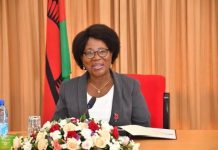
The reshuffle has also quietly neutralised the Vice President, Jane Ansah, with Disaster and Risk Management removed from her office. The decision effectively narrows the scope of her authority, sending what observers describe as a blunt message: do not act independently—wait for instruction. Though still constitutionally in office, the Vice President’s operational command has been deliberately reduced.
Similarly, the Second Vice President, Enock Chihana, has seen his influence sharply curtailed. Mombera University, previously under his control, has been shifted to the Ministry of Education, ostensibly for better supervision. Political observers interpret the move as a calculated effort to keep the Second VP away from large budgets and strategic leverage—containment rather than coordination.
Despite the removal of one ministry, the appointment of four new deputy ministers has pushed Cabinet numbers upward, reinforcing criticism that this administration achieves “subtraction through addition.”
In the final analysis, the reshuffle appears less about improving service delivery and more about tightening political control. It paints the picture of a presidency moving early to consolidate authority, manage rivals, and govern cautiously—prioritising control over confidence, and loyalty over latitude.
As economic pressures persist and public scrutiny intensifies, the swelling Cabinet is likely to fuel renewed debate over whether President Mutharika’s commitment to lean governance has been quietly abandoned, even as the machinery of power continues to grow.
Here is the full list:
1. President and Commander In-Chief of the Malawi Defence Force and Malawi Police Services, His Excellency Professor Arthur Peter Mutharika
2. First Vice President, Right Honourable Dr. Jane Ansah, SC, JA Rtd.
3. Second Vice President, Right Honourable Enoch Kamzingeni Chihana
4. Minister of Finance, Economic Planning and Decentralization, Honourable Joseph Mwanamvekha, MP
5. Minister of Agriculture, Irrigation and Water Development, Honourable Roza Fachi Mbilizi, MP
6. Minister of Education, Science and Technology, Honourable Bright Msaka, SC
7. Minister of Justice and Constitutional Affairs , Honourable Charles Mhango
8. Minister of Foreign Affairs and International Cooperation, Honourable George T. Chaponda, MP
9. Minister of Health and Sanitation, Honourable Madalitso Baloyi, MP
10. Minister of Local Government and Rural Development, Honourable Ben Malunga Phiri, MP
11. Minister of Industrialisation, Business, Trade and Tourism, Honourable George Patridge
12. Minister of Transport and Public Works, Honourable Jappie Mhango, MP
13. Minister of Homeland Security, Honourable Peter Mukhito
14. Minister of Gender, Children, Disability and Social Welfare, Honourable Mary Navicha, MP
15. Minister of Energy and Mining, Honourable Jean Mathanga, MP
16. Minister of Natural Resources, Honourable Alfred Gangata, MP
17. Minister of Lands, Housing and Urban Development, Honourable Chimwemwe Chipungu, MP
18. Minister of Labour, Skills and Innovation, Honourable Joel Chigona, MP
19. Minister of Youth, Sports and Culture, Honourable Patricia Wiskes, MP
20. Minister of Information and Communications Technology, Honourable Shadrick Namalomba, MP
21. Minister of Defence, Honourable Feston Kaupa, MP
22. Deputy Minister of Homeland Security (Operations), Honourable Norman Chisale, MP
23. Deputy Minister of Gender, Children, Disability and Social Welfare
Honourable Martha Ngwira, MP
24. Deputy Minister of Education, Science and Technology
Honourable Francis Foley, MP
25. Deputy Minister of Agriculture, Irrigation and Water Development
Honourable Thoko Tembo, MP
26. Deputy Minister of Natural Resources, Honourable Chipiliro Mpinganjira
27. Deputy Minister of Industrialisation, Business, Trade and Tourism, Honourable Edgar Tembo
28. Deputy Minister of Health and Sanitation, Honourable Charles Chilambula, MP
For More News And Analysis About Malawi Follow Africa-Press