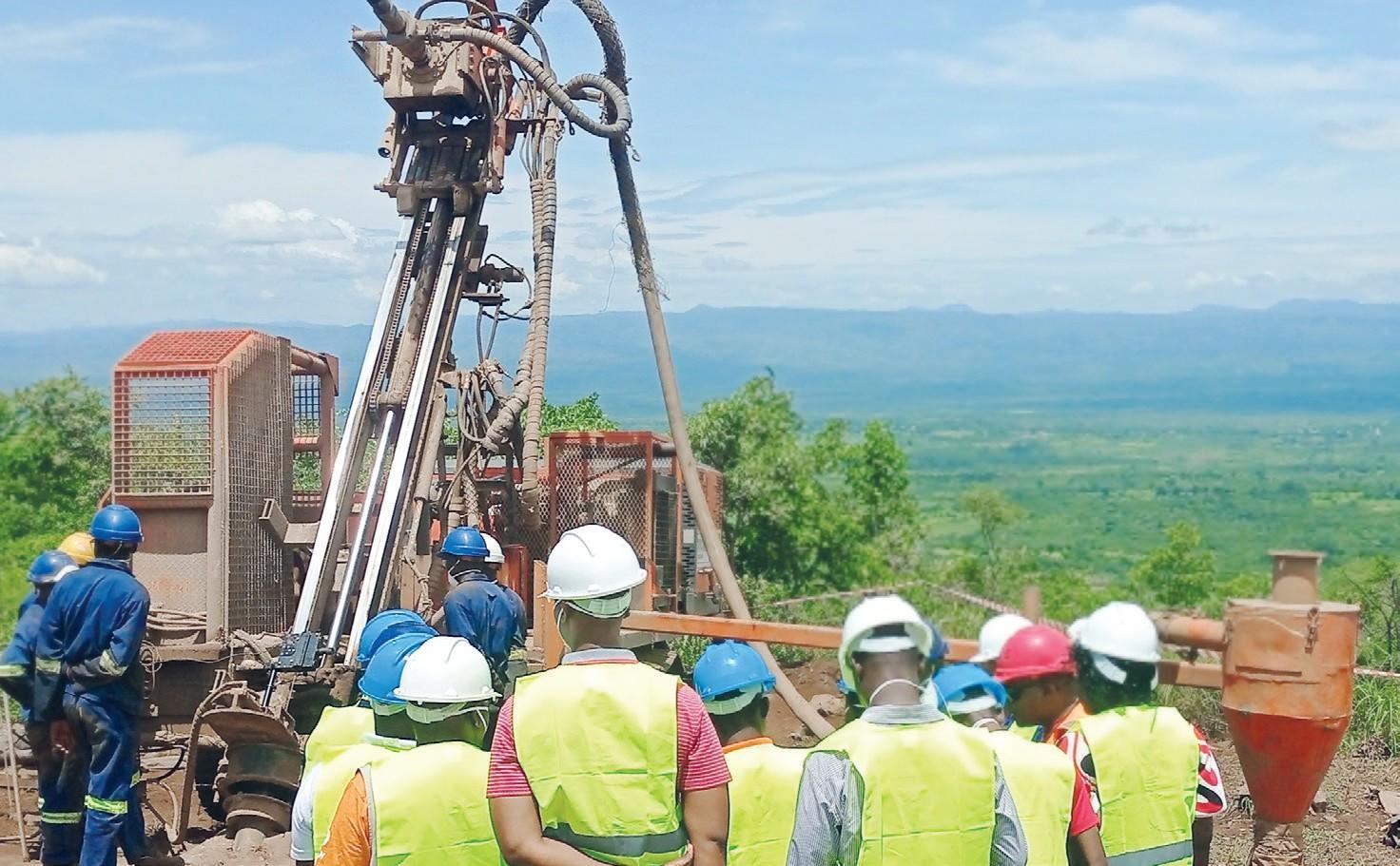
Africa-Press – Malawi. Balaka is fast emerging as a strategic industrial hub after Lindian Resources Limited secured a massive $100 million (about K120.8 billion) financing package to fully fund the development of the Kangankunde Rare Earths Project—marking one of the most significant mining investments in Malawi’s modern economic history.
The funding, raised through the sale of 133.33 million shares to Australian and international investors at $0.75 (K906.45) per share, ensures a debt-free development pathway for the project. It fully covers stage one construction costs, while also unlocking early momentum for expansion phases that will later be financed through project-generated cash flows—an arrangement that significantly reduces financial risk and strengthens long-term viability.
The Australian Securities Exchange-listed company says the capital injection guarantees completion of stage one up to first concentrate production, alongside partial funding of stage two development and the establishment of a Mixed Rare Earth Carbonate (MREC) facility—an essential downstream processing component that adds value to Malawi’s mineral output.
Lindian Resources chairperson Robert Martin described the overwhelming investor response as a strong endorsement of both the company’s global outlook and the strategic importance of Kangankunde in the rapidly expanding rare earths supply chain. He emphasised that the project will reach production without relying on debt financing, describing this as a major milestone that positions the operation on a “clean and resilient balance sheet” from the outset.
“This capital allows us to accelerate stage two, bring forward key development activities and materially reduce execution risk,” Martin said, adding that the financing also strengthens the company’s downstream ambitions through the MREC facility.
Lindian Resources executive director Zac Komur confirmed that phase one production is expected to commence between October and November 2026, with key off-take agreements already secured to support early revenue generation. He said the company is well positioned to transition from development into production, supported by strong global demand for rare earth minerals, particularly those used in electric vehicle manufacturing, renewable energy systems, and advanced technologies.
According to projections, stage two construction is expected to begin by the end of 2026, with full expanded production targeted for 2028—placing Kangankunde among emerging global suppliers of critical minerals.
The development is being hailed as a breakthrough moment for Malawi’s mining sector, with industry stakeholders saying it aligns with global efforts to diversify rare earth supply chains away from dominant producers such as China.
Grain Malunga said the project’s advancement reflects years of groundwork and signals imminent foreign exchange inflows for the country. “The project has proven successful over the past decade, and it is encouraging that it will soon start generating foreign exchange for the country,” he said.
Once fully operational, the Kangankunde Rare Earths Project is projected to generate around $114 million (about K200 billion) annually over a 40-year lifespan. Output is expected to grow from 15,000 metric tonnes to 50,000 metric tonnes per year, driven by strong global demand for dysprosium and terbium—key elements used in electric vehicle magnets and clean energy technologies.
Government is also expected to benefit significantly through royalties estimated at $5.56 million (about K9.7 billion), alongside corporate taxes and related fiscal revenues.
The project’s progress has been further supported by earlier strategic agreements, including a partnership with Iluka Resources of Australia, which provided an initial $20 million (about K35 billion) stage-one investment and a binding off-take arrangement—helping trigger the final investment decision and accelerating development timelines.
With strong investor backing, confirmed production timelines, and growing global demand for rare earth minerals, the Kangankunde project is increasingly being viewed as a transformative economic engine for Malawi. Beyond Balaka, the development signals a broader shift—positioning Malawi not just as a mineral producer, but as an emerging player in the global critical minerals supply chain powering the world’s transition to clean energy and advanced technology.
For More News And Analysis About Malawi Follow Africa-Press