Africa-Press – Malawi. Blantyre’s fragile water system is now at the centre of a tightening regulatory crackdown after the Blantyre Water Board (Blantyre Water Board), in partnership with the National Water Resources Authority, moved to seal 162 commercial boreholes operating without licences—an intervention that exposes a deeper crisis of regulation, revenue loss, and growing threats to public water safety.
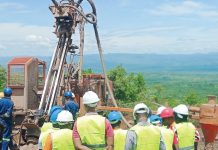
At the heart of the operation is a troubling trend: large commercial, institutional, and industrial users abandoning the public water supply system in favour of private boreholes. While this shift has allowed businesses to cut costs, it has simultaneously drained BWB’s revenue base, weakened system sustainability, and created an unregulated groundwater boom now forcing urgent state intervention.
Officials and sector documents indicate that many of the targeted boreholes were drilled and operated outside the required licensing framework, effectively bypassing regulatory oversight. The result, authorities warn, is not only financial strain on the utility but also an escalating environmental and public health risk.
Senior officials from the National Water Resources Authority (National Water Resources Authority) say the enforcement action is legally grounded in the Water Resources Act of 2013, which vests all water resources in the State and requires abstraction permits for commercial groundwater use. Authorities argue that sealing boreholes is justified where operators fail to obtain permits, operate illegally, or pose risks to long-term water sustainability.
NWRA public relations officer Masozi Kasambala said unregulated abstraction is no longer a technical issue—it is a national water security threat. He warned that uncontrolled drilling in urban environments like Blantyre increases the risk of contamination from waste and sanitation systems, while also accelerating the depletion of underground aquifers.
“These impacts directly undermine the objectives of the Water Resources Act, which emphasises sustainable use, protection and equitable allocation of water resources,” he said.
Beyond legal violations, water experts are painting a more alarming picture of a system under silent collapse. Excessive groundwater extraction, they warn, is reducing aquifer recharge capacity, lowering water tables, and weakening yields for both households and businesses. In already stressed townships, this is translating into inconsistent supply and growing dependence on unsafe alternative sources.
Water resources specialist Brighton Chunga, a senior researcher in water modelling at Mzuzu University, warned that uncontrolled pumping is destabilising the natural balance between groundwater and surface water systems.
He also raised concern over illegal interconnections between boreholes and the Blantyre Water Board network, a practice he said can trigger pressure imbalances that contaminate piped water supplies.
“Some systems are being connected in ways that compromise pressure stability and may contaminate public supply networks,” he warned, adding that proper regulation under existing water laws is being widely ignored.
While environmental risks are central to the enforcement drive, the financial strain on BWB is equally severe. According to government data and sector reports, the utility is losing a significant share of high-value customers—those in commercial and industrial sectors who now rely on private boreholes.
This migration has worsened BWB’s already fragile financial position. The utility continues to struggle with high operational costs and a heavy debt burden, including billions owed to electricity supplier Escom, while also battling years of losses driven by non-revenue water and delayed tariff adjustments.
The 2024/25 State-Owned Enterprises report identifies BWB as one of the most financially constrained utilities in the country, warning that continued customer loss could further destabilise its operations if corrective measures are not enforced.
Experts note that the National Water Resources Authority had earlier issued a public notice requiring all borehole owners—including legacy installations—to obtain abstraction licences. However, compliance has remained low, with hundreds of commercial users failing to regularise their operations within the given timeframe.
Water Users Association of Malawi executive director Vitumbiko Mkandawire backed the enforcement action, warning that failure to comply undermines national water planning systems and exposes users to long-term risks.
He stressed that regulation is not punitive but protective, arguing that unlicensed abstraction ultimately destabilises both supply security and environmental sustainability.
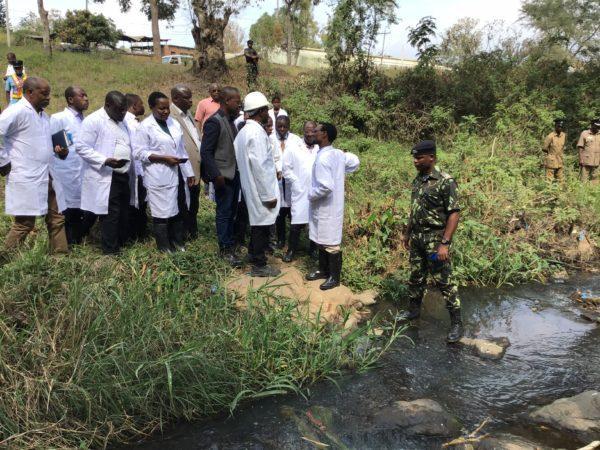
The crackdown also revives long-standing concerns about water quality in Blantyre. Past investigations and studies have linked unsafe water sources to widespread public health risks, including diarrhoeal diseases that continue to claim thousands of lives annually in Malawi, according to health estimates.
Experts warn that contamination risks are heightened when borehole systems are poorly constructed or illegally connected to public networks, increasing the likelihood of microbial and chemical contamination.
However, not all stakeholders are convinced the enforcement alone will solve the crisis. Financial analysts caution that sealing boreholes without ensuring a reliable and affordable public alternative could push businesses further into informal and unregulated water systems.
They argue that long-term stability will depend on whether BWB can rebuild trust through improved service delivery, infrastructure investment, and cost-effective tariffs.
For now, the sealing of 162 boreholes signals a turning point—one that exposes a system where regulation, survival economics, and public health are colliding in real time. As enforcement begins, Blantyre is left facing a hard question: whether this crackdown will restore order—or simply push the crisis underground.
For More News And Analysis About Malawi Follow Africa-Press