Ephraim Nyondo
Africa-Press – Malawi. Malawi is standing on the edge of its most dangerous financial cliff in decades, a new Public Finance Review by the World Bank has warned—painting a sobering picture of an economy squeezed by unsustainable debt, chronic deficits, and systemic governance failures that threaten national stability.
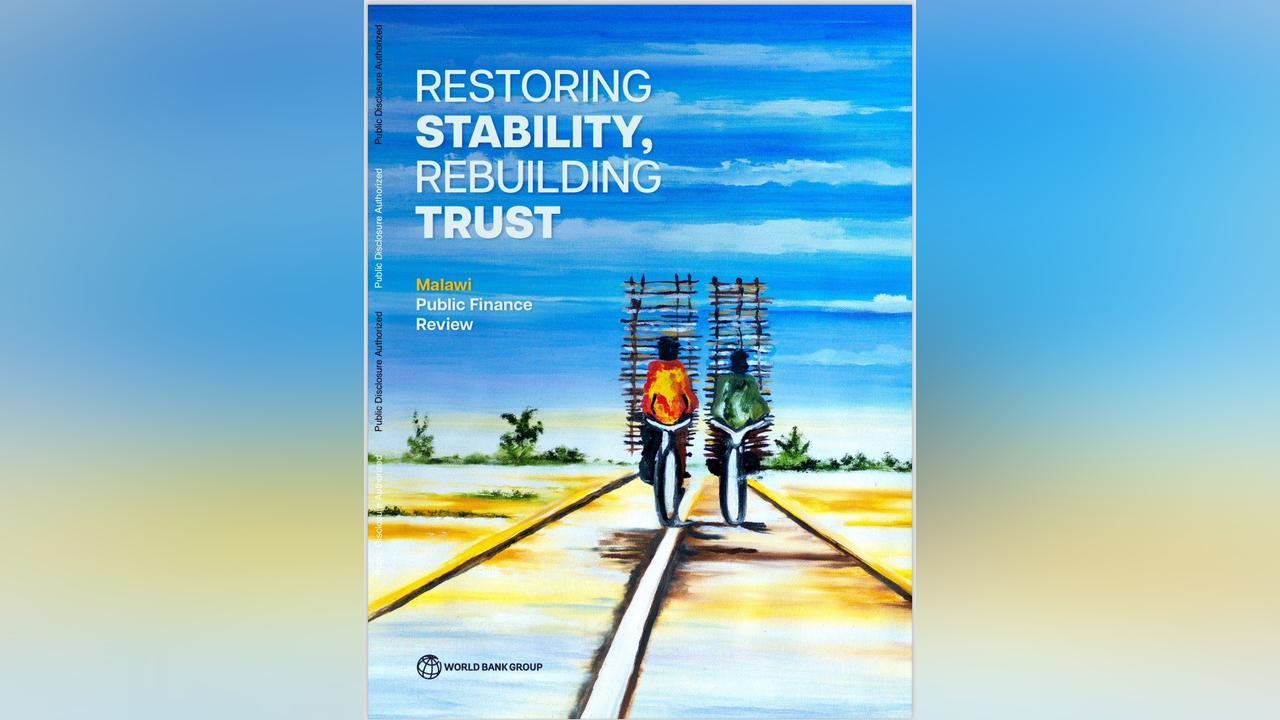
The report, titled “Restoring Stability, Rebuilding Trust,” reveals that years of mounting fiscal and external pressures—supercharged by shocks since 2019—have plunged the country into its most severe economic crisis in recent history. Per capita GDP has fallen in four of the past five years. Poverty is rising, inflation remains stubbornly high, and public confidence in economic institutions has sharply eroded.
But the most striking message in the document is this: Malawi has reached a point where inaction is no longer an option. Any further delay in tackling the crisis risks tipping the nation into irreversible economic decline.
A Vicious Cycle Draining the Economy
According to the review, Malawi’s fiscal deficit is among the largest in Sub-Saharan Africa, consistently overshooting approved budgets and violating regional benchmarks. The deficit is financed largely through expensive borrowing and Reserve Bank money creation—a combination that fuels inflation, erodes the value of the kwacha, and deepens the cost-of-living crisis.
Rising debt-service payments—already consuming more than half of domestic revenue—are crowding out funding for development sectors such as health, education, roads, and social protection. For a country already battling widespread poverty, the implications are grave.
“Malawi is caught in a vicious cycle,” the report warns. “Rigid expenditures and debt repayment obligations are squeezing out investments needed to spur growth and strengthen resilience.”
Exchange Rate Distortions and Costly Subsidies
The report also shines a harsh light on Malawi’s foreign exchange regime, describing it as distorted, opaque, and economically damaging. The Reserve Bank’s forex operations have incurred enormous losses—over MWK 700 billion in 2023 alone—forcing government to issue promissory notes for recapitalization.
Fuel subsidies, which stem from delayed adjustments to pump prices, are another burden. These implicit subsidies disproportionately benefit the rich, not the poor. Worse, they have created billions in arrears that will haunt the fiscus for years.
Public Spending: High, Rigid, and Inefficient
Government spending has nearly doubled over a decade—from 16% to over 30% of GDP—yet service delivery has not improved in equal measure. The public wage bill has grown to more than 6% of GDP, fuelled by unchecked workforce expansion, inconsistent promotions, and widespread allowance abuse. The report identifies deep inefficiencies in Public Financial Management (PFM) systems, with the Integrated Financial Management Information System still not fully used. Weak procurement, unvetted projects, and low execution rates undermine development spending.
The result? Billions lost to leakages, delays, and poor planning.
Revenue Performance: Growth, but Not Enough
On the revenue side, Malawi’s tax-to-GDP ratio has climbed to nearly 15%—but still falls short of the 17% target set by the Domestic Resource Mobilization Strategy. Frequent tax policy reversals, excessive exemptions, and fragmented administration have limited progress. The report estimates that Malawi loses 1.4% of GDP every year through tax incentives—many of which lack economic justification. Reforms such as digital invoicing, rationalizing tax incentives, and tightening compliance could raise revenue by up to 6.5% of GDP, the World Bank says.
State-Owned Enterprises: Big Losses, Bigger Risks
Another pressure point is Malawi’s troubled state-owned enterprises (SOEs). Several—particularly in the energy and water sectors—are technically insolvent, posting massive losses and depending on federal bailouts.
In 2024 alone, aggregate SOE performance swung from a MWK 543 billion profit to a MWK 47.6 billion loss.
The report warns that without urgent governance reforms—professional boards, transparent reporting, and commercial discipline—SOEs will continue draining public coffers while failing to deliver reliable services.
Mining: A Promise, Not a Miracle
Malawi’s emerging mining sector could offer a future lifeline, potentially generating up to US$ 200–500 million annually by the 2030s. But the report cautions against unrealistic expectations. Poorly negotiated mining agreements, tax loopholes, weak monitoring, and administrative gaps could dramatically reduce the country’s revenue share. “The risk of a ‘presource curse’ looms large,” the report notes, warning that early celebration could spur reckless borrowing before actual revenues materialize.
A Call to Courage
In its concluding message, the World Bank warns that Malawi’s runway for action is shrinking fast. “Persistent imbalances, depleted buffers, and mounting fiscal risks leave Malawi more vulnerable than ever before,” the report says. “The next shock could have catastrophic implications.”
Yet the report is not without hope. It insists that with decisive leadership, Malawi can reverse its trajectory, rebuild trust, and reclaim a sustainable economic future. For now, Malawi stands at a crossroads. The months ahead will reveal whether the nation chooses the hard road of reform—or the far harder consequence of avoiding it.
Source: Malawi Nyasa Times
For More News And Analysis About Malawi Follow Africa-Press