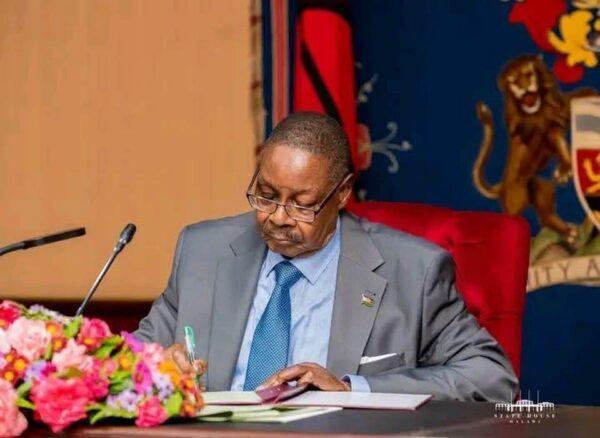
Africa-Press – Malawi. President Peter Mutharika deserves praise for the decisive step to cut the number of principal secretaries (PSs) from over 80 to 38, a move that shows courage, discipline, and fiscal responsibility at a time when Malawi’s economy cannot afford waste. For years, the bloated civil service has drained public resources, with salaries, fuel allocations, and vehicle entitlements siphoning billions that could have gone to schools, hospitals, and development projects.
Thanks to the reduction, government is set to save close to K2.2 billion annually in salaries and fuel. Even the lowest-paid PS, earning K1.7 million per month, represents a saving of millions when multiplied across redundant positions. Fuel allocations alone, at 500 litres per PS per month, meant that 80 PSs were consuming nearly 480,000 litres annually, costing the state over K2.3 billion per year. Cutting the numbers to 38 now brings consumption to 228,000 litres, saving about K1.3 billion annually. Vehicle costs, previously projected at K34 billion for 80 Prado TXs, are now almost halved to K16.15 billion. These are not small amounts—they are resources that Malawi can now redirect toward essential services and economic recovery.
Beyond the financial impact, this reform restores logic and efficiency in the civil service. Chief Secretary Justin Saidi noted that many positions were previously unestablished, created only to inflate the payroll. By realigning senior positions with actual functional needs, the government is not just saving money; it is sending a clear message that technical competence, accountability, and performance matter. No longer can underperforming officers be shuffled from ministry to ministry without consequence; the culture of impunity is being challenged.
The timing could not be more crucial. Malawi faces a wage bill that consumes 90 percent of domestic revenue and over 21 percent of total expenditure, high inflation, and persistent forex shortages. A leaner, disciplined civil service will ease this pressure and allow government to focus on stabilising the economy, delivering services, and driving development.
Analysts and governance stakeholders have rightly welcomed this move. Political analyst George Chaima observes that a disciplined civil service aligned with leadership vision improves performance and accountability. Benedicto Kondowe, chairperson of the National Advocacy Platform, calls it a bold step that can sharpen mandates and accelerate decision-making—provided it is implemented transparently and on merit.
President Mutharika’s reforms show that tough decisions, when rooted in logic and the public interest, can produce tangible benefits. Malawi now has an opportunity to turn leaner government structures into stronger, more efficient delivery mechanisms. The challenge ahead is to ensure that these savings and efficiencies translate into improved services, better governance, and real impact for Malawians.
This is not just a paper exercise. It is a move that can save billions, restore discipline, and signal to all Malawians that government can act decisively in their interest. For a country hungry for efficiency and accountability, trimming the civil service is a step in the right direction—and Mutharika deserves credit for taking it.
For More News And Analysis About Malawi Follow Africa-Press