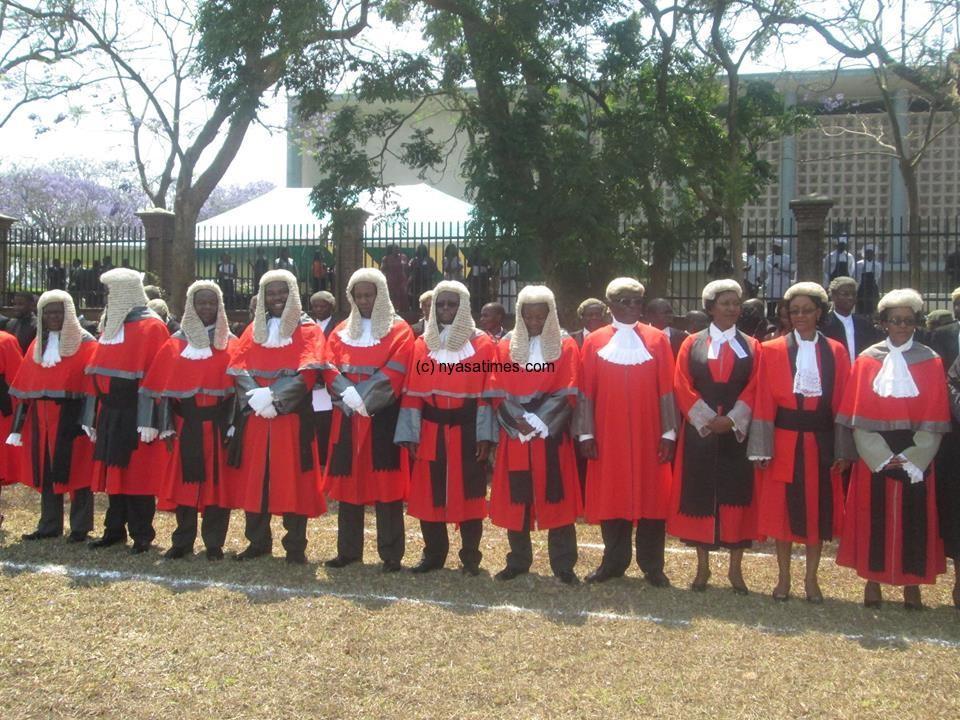
Africa-Press – Malawi. On the benches of the High Court and Supreme Court sit some of Malawi’s finest jurists. Many have served with distinction for years, penning judgments that have advanced the law and occasionally pushed the country forward. But let us be crystal clear: wigs do not make them holy, nor infallible. They are human, subject to bias, error, and—sometimes—dangerous complacency.
For far too long, public scrutiny of the judiciary was treated as sacrilege. To question, to challenge, to even hint that a judgment might be flawed was deemed inappropriate, almost irreverent. Commentators and ordinary citizens were ridiculed or silenced, as if raising a concern was “farting loudly in a cathedral.” This culture of untouchability has insulated the bench from accountability, fostering a dangerous perception that the mere wearing of robes confers moral perfection.
We must reject that notion. Judges are not gods. They do not operate above the law. Their decisions impact real lives, livelihoods, and the very fabric of justice in our country. When a ruling contradicts fairness, undermines public trust, or serves political expediency over principle, the public has not only a right but a duty to speak out. Fearless critique is not contempt. Calling out judicial missteps, questioning motives, or exposing errors does not demean the institution—it strengthens it.
Yet, let us be honest: the judiciary itself has often blurred the line between legitimate authority and arrogance. Too many times, courts have acted as if critique is a personal attack rather than a public safeguard. And too often, judgments—sometimes stunningly out of touch with reason, fairness, or national interest—have gone unchallenged until crises force attention. Public debate is not optional; it is essential. Without it, courts risk becoming insulated chambers where power is exercised in secret, and where “justice” is dictated more by the weight of the wig than the merit of the argument.
It is time to normalize robust public engagement with judicial work. Citizens must read judgments, dissect reasoning, and speak their minds without fear. The judiciary should welcome this scrutiny, because legitimacy does not rest on robes, benches, or pomp—it rests on performance, fairness, and accountability.
The challenge is delicate but urgent. There is a thin line between scandalous insult and valid critique, but we cannot allow that line to become a shield behind which mistakes and abuses hide. Malawi cannot afford to revere wigs over wisdom. It is past time that we, the public, call out judicial failings boldly, demand transparency, and insist that robes do not confer infallibility.
The message is simple: respect the office, but never mistake the robe for righteousness.
For More News And Analysis About Malawi Follow Africa-Press