By Ephraim Nyondo
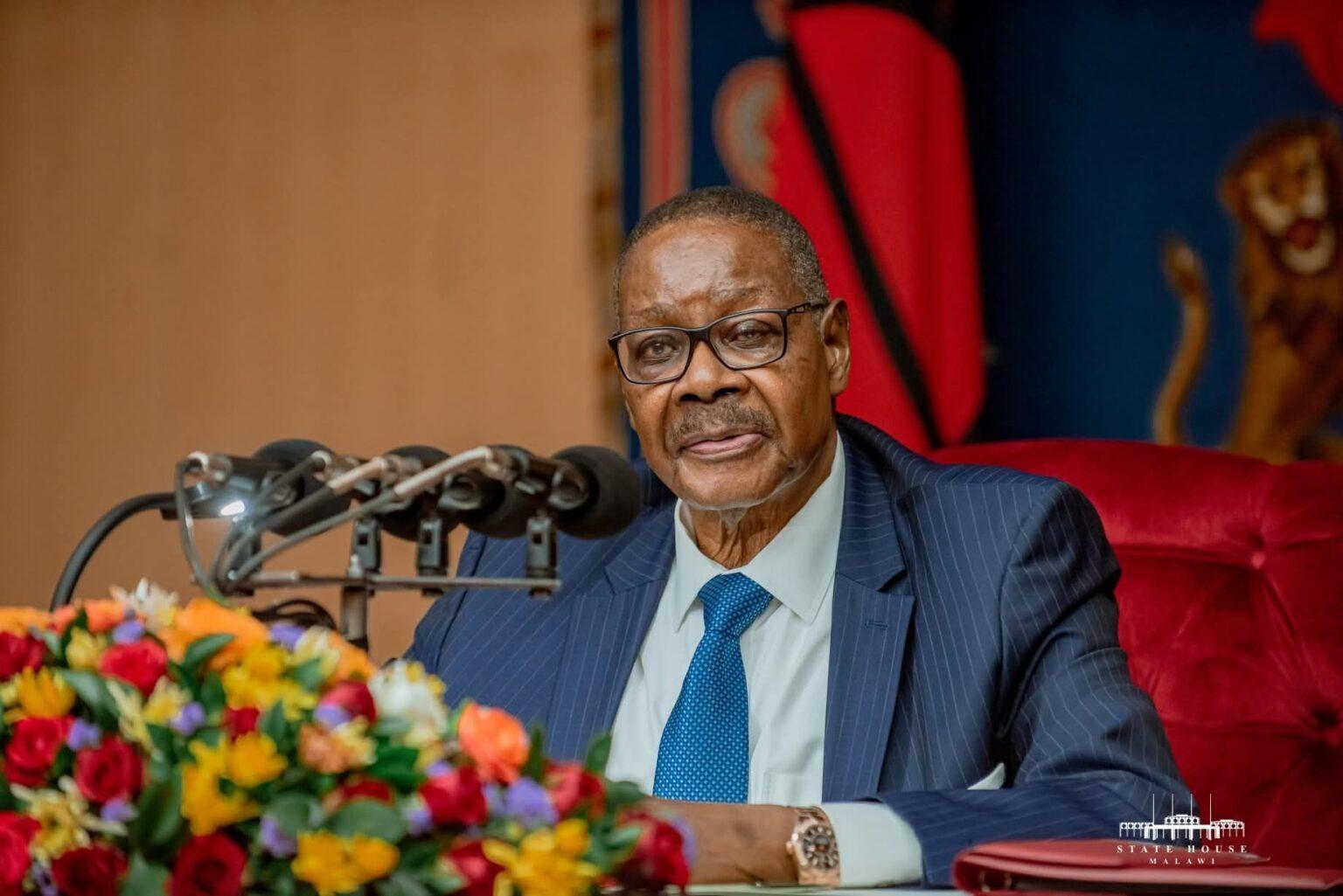
Africa-Press – Malawi. President Arthur Peter Mutharika used his 2026 State of the Nation Address not merely to report on government performance, but to outline a coherent and ambitious political economy for Malawi, one that deliberately departs from the minimalist, donor-driven governance model that has dominated the country since the mid-1990s.
At its core, the speech was a manifesto for what scholars describe as a “developmental state” — a government that does not simply regulate markets, but actively shapes them through strategic intervention, public investment and institutional control.
The economic philosophy underpinning Mutharika’s address is rooted in three central beliefs.
The first is that Malawi’s underdevelopment is not primarily a result of lack of effort or capacity among citizens, but of structural weaknesses in policy, institutions and leadership. By repeatedly describing the economy he inherited as “broken” and “man-made”, Mutharika is shifting blame away from abstract forces such as climate or global markets and placing it firmly on domestic governance failures. This framing is politically important because it legitimises strong state action and extensive reform, while also positioning his administration as a corrective force rather than a continuation of past mistakes.
The second pillar of his philosophy is economic nationalism and self-reliance. Throughout the speech, Mutharika rejects the idea that Malawi should remain dependent on imported fertilizer, foreign-owned mining operations, donor-funded health systems or externally controlled transport corridors.
His emphasis on local fertilizer production, mineral beneficiation, expansion of Malawi Airlines and sovereign wealth management reflects a deliberate attempt to reclaim economic sovereignty. In essence, he is arguing that development cannot be outsourced; it must be built internally, even if this requires short-term fiscal pain and political risk.
The third pillar is decentralisation as a development strategy. The dramatic expansion of the Constituency Development Fund from K220 million to K5 billion per constituency is not simply an administrative reform but a radical reallocation of political power. Mutharika is effectively bypassing traditional ministerial hierarchies and placing enormous financial authority directly in the hands of Members of Parliament and local councils. This reflects a belief that national development emerges from thousands of local projects rather than a handful of mega-investments directed from the capital.
Politically, the SONA constructs Mutharika as a disciplinarian reformer. His repeated warnings that “no one will be shielded” from corruption investigations and that “there will be no sacred cows” signal a leadership style based on moral authority and executive control. This is a clear shift away from Malawi’s historically consensual and often weak presidential culture, where coalition politics and party patronage have frequently undermined accountability. Mutharika is presenting himself not as a mediator between competing interests, but as an enforcer of rules and performance standards.
From a policy perspective, the speech is unusually detailed and internally consistent. The macroeconomic targets for inflation, growth and foreign reserves are aligned with the IMF programme, giving them institutional credibility. The sectoral plans in agriculture, energy, transport, education and health are not abstract aspirations but are supported by specific projects, funding figures and implementation timelines. This suggests a high level of technocratic preparation and strategic planning, which is rare in Malawian presidential addresses that often rely on broad political slogans.
However, the ambition of the agenda also exposes significant risks and contradictions. The first major challenge is fiscal sustainability. Expanding CDF to K5 billion per constituency, financing free secondary education, increasing health budgets, investing in power generation, rehabilitating roads and supporting youth loans simultaneously requires enormous public expenditure. Malawi’s domestic revenue base remains narrow, heavily dependent on consumption taxes and donor support. Without sustained economic growth and improved tax compliance, the state risks overcommitting resources it does not have, potentially leading to inflationary financing or renewed debt accumulation.
The second risk is institutional capacity. Many of Mutharika’s reforms assume a level of administrative competence that Malawi’s public sector has historically struggled to deliver. Managing billions of kwacha at constituency level requires strong procurement systems, transparent accounting and professional project management. In the absence of these, decentralisation may not empower communities but instead entrench local corruption and elite capture. The President’s promise of digital monitoring systems is a step in the right direction, but technology alone cannot compensate for weak institutions and political interference.
The third challenge is political economy resistance. Several of the reforms announced — particularly in mining, fuel procurement, public finance and diplomatic restructuring — directly threaten entrenched interests. Suspending mining licences, banning raw mineral exports and auditing foreign missions will inevitably provoke resistance from powerful domestic and international actors. Sustaining these reforms will require not only executive resolve, but also legal protection, parliamentary support and public legitimacy.
There is also a deeper ideological tension in the speech. While Mutharika advocates a strong, interventionist state, he simultaneously commits to IMF-led fiscal discipline and austerity. These two agendas are not always compatible. A developmental state requires heavy investment, subsidies and long-term public spending, while IMF programmes prioritise budget control, reduced deficits and limited state intervention. The success of Mutharika’s model therefore depends on his ability to navigate this contradiction without either collapsing public services or losing international financial support.
In political terms, the SONA represents a strategic rebranding of leadership authority.
Mutharika is attempting to rebuild the legitimacy of the Malawian presidency by presenting it as competent, decisive and morally upright. His emphasis on discipline, order and performance is a direct response to public frustration with corruption, inefficiency and policy inconsistency. If his government delivers even a portion of what was promised — stable maize prices, reduced blackouts, visible infrastructure and functional health facilities — his political capital will increase significantly.
Yet the danger lies in over-centralisation of responsibility. By framing himself as the primary driver of reform, Mutharika also concentrates blame if targets are missed. In a highly personalised reform agenda, failure cannot be easily attributed to lower officials or external factors. The political narrative he has constructed leaves little room for excuses.
Ultimately, Mutharika’s SONA articulates one of the most ambitious state-led development visions Malawi has seen since the early post-independence era. It seeks to reverse three decades of donor dependency, policy fragmentation and institutional drift by restoring the idea that the state can, and should, actively shape economic outcomes. Whether this vision succeeds will depend less on the elegance of the speech and more on three hard realities: the availability of fiscal resources, the strength of public institutions, and the political will to confront entrenched interests over the long term.
If these conditions hold, Mutharika’s address may come to be remembered as the moment Malawi attempted a genuine developmental reset. If they fail, it will be recorded as another well-crafted speech that promised transformation but collided with the structural limits of the Malawian state.
Source: Malawi Nyasa Times
For More News And Analysis About Malawi Follow Africa-Press