Africa-Press – Malawi. When social media activist Alexious Kamangila bluntly asked how a government can claim to be fighting corruption while its own Attorney General is mired in unresolved corruption allegations, he was not engaging in cheap provocation. He was articulating a question that has quietly haunted Malawi’s legal and political establishment for more than a decade.
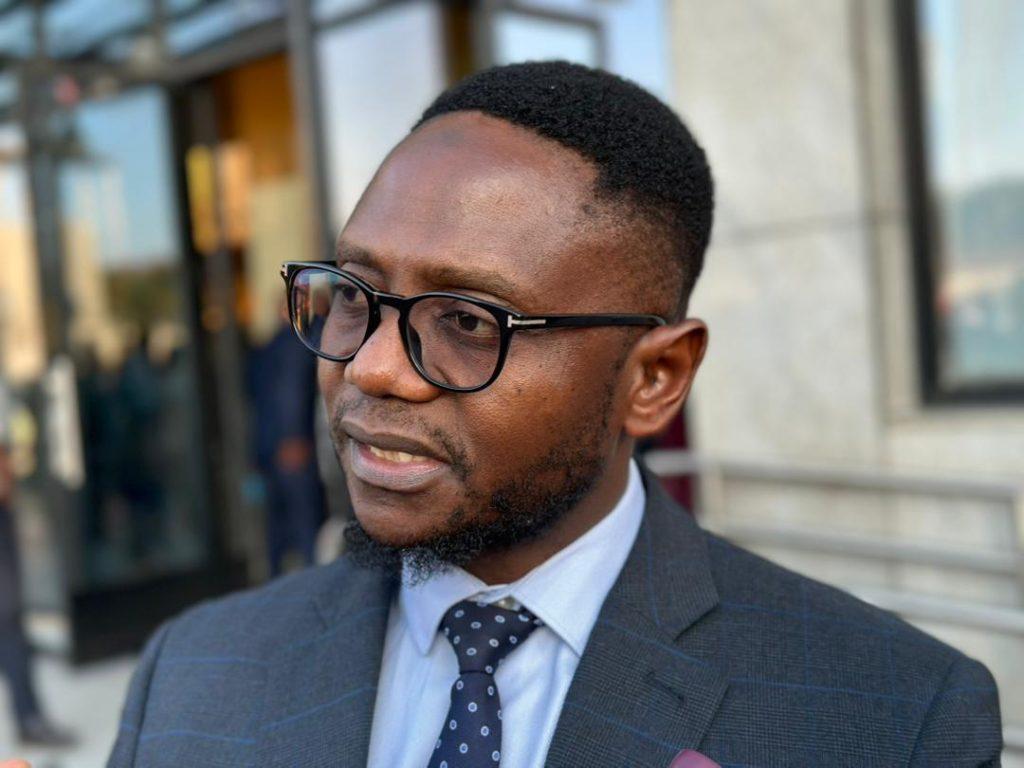
The name at the centre of that question is Frank Mbeta, a seasoned lawyer who rose to the powerful office of Attorney General in October 2025 under President Arthur Peter Mutharika, despite a long and controversial record that includes bribery claims, judicial manipulation, and politically sensitive “dirty deals” that remain legally unresolved.
Mbeta’s public troubles first entered the national spotlight in 2015, when the Anti-Corruption Bureau accused him, then in private practice, of offering MK2 million—about US$2,500 at the time—to a Malawi Revenue Authority ICT manager, Wilson Upindi. The alleged objective was simple and disturbing: to delete computer files relating to a client who was under investigation for tax evasion. The ACB sought to arrest and prosecute Mbeta, and the Director of Public Prosecutions granted formal consent. Instead of facing trial, Mbeta successfully obtained a court injunction that delayed his arrest, buying him years of procedural breathing space.
By 2020 and 2021, courts ruled that the case could proceed through summons rather than arrest, but Mbeta again challenged the move in court. Nearly a decade later, no trial has taken place, no conviction has been recorded, and no arrest has been executed. Yet the legal record is unambiguous: the ACB has never withdrawn the case, and prosecutorial consent remains on file. The case is not closed; it is simply stalled.
What transformed Mbeta from a lawyer facing one serious allegation into a symbol of systemic decay were the revelations that followed.
In April 2016, investigative reports accused him of repeatedly taking high-value debt cases to the same judge, Justice Kenyatta Nyirenda, and securing execution orders with unusual speed. In one case involving AHL Commodities Exchange, sheriffs shut down company offices over a K2 billion claim just days after damages were assessed. Journalists reported that Mbeta allegedly demanded up to 30 percent of the judgment proceeds, and that he used the same judge and court officials in multiple cases to rush outcomes in his favour.
Another case involving a K785 million debt between a bank and Maranatha Ministries followed the same pattern: same judge, same courthouse, same rapid execution. These patterns triggered an ACB affidavit and public suspicion that Mbeta had perfected a system of “judge shopping,” effectively turning the courts into instruments for private enrichment.
The most damaging confirmation of that reputation did not come from activists or journalists, but from the judiciary itself.
In November 2017, High Court Judge John Katsala recorded in an official ruling that former minister George Chaponda had said he could only use Mbeta as counsel because Mbeta “knows how to bribe judges to win cases.” Judge Katsala went further, describing Mbeta as an “expert in judge shopping,” noting that he abruptly abandoned the case rather than proceed alongside another lawyer. Rarely in Malawi’s legal history has a sitting judge placed such a damning character assessment on record about a practicing advocate.
Mbeta’s name resurfaced again in one of the most explosive political trials in modern Malawi: the 2019–2020 presidential election petition bribery saga.
In October 2020, Constitutional Court Judge Mike Tembo testified in the case of ACB v. Thomson Mpinganjira that he had been told by Brown Mpinganjira, then spokesperson of the ruling party, that money was being sent to judges hearing the election case. Judge Tembo explicitly named Mbeta as the alleged conduit, asking whether funds given “through lawyer Frank Mbeta” had reached the judicial panel. The sums discussed exceeded MK100 million, allegedly sourced from businessman Thomson Mpinganjira, a close political ally of the Democratic Progressive Party.
Court records further show that on January 23, 2020, Mbeta’s law firm, Ritz Attorneys, obtained a last-minute court order in Zomba quashing Mpinganjira’s arrest warrant. The ACB publicly condemned the midnight hearing as “legally disgusting” and an abuse of court process. Civil society groups argued that the manoeuvre exemplified how politically connected lawyers could use procedural tricks to shield powerful figures from accountability.
Despite this history, in October 2025 Mbeta was appointed Attorney General, the very office responsible for safeguarding public interest and supervising state litigation. Almost immediately, his decisions raised new questions.
In early 2026, he approved a MK51 million severance package for Bob Chimkango, a former DPP campaign monitor who had been fired from the Housing Corporation over allegations of financial misconduct. The payout included cash and a Toyota Fortuner, even as an ACB investigation into Chimkango’s misuse of allowances was still underway. Civil society leaders described the deal as rewarding political insiders and warned that the Attorney General’s discretionary powers were being used to quietly drain public funds.
Other settlements under Mbeta’s watch, often sealed and opaque, have triggered similar concern. While some hail his revival of a US$309 billion claim against a foreign mining firm as bold defence of national interests, critics fear that the same office has become a gateway for massive financial decisions made without transparency or oversight.
This is the context that gives Kamangila’s question its power. He is not alleging guilt; he is pointing to a pattern. A lawyer accused of bribery in 2015, named in judicial records as a manipulator of courts in 2017, linked to alleged election bribery in 2020, and now signing off multimillion-kwacha settlements in 2026, sits at the apex of Malawi’s justice system. No court has convicted him. No tribunal has removed him. But no institution has cleared him either.
Mbeta continues to defend himself, insisting on due process and dismissing rumours as politically motivated. Legally, he remains innocent. Politically and morally, the case is far more complex. The unresolved nature of his past has become inseparable from the credibility of the state’s anti-corruption agenda.
This is why Kamangila’s challenge resonates so deeply: not because it proves wrongdoing, but because it exposes a contradiction that the government has never convincingly answered. How can a system promise accountability when the gatekeeper of justice carries a decade-long shadow of allegations, judicial criticism, and politically sensitive interventions? Until those questions are addressed with transparency and finality, Frank Mbeta will remain more than an individual lawyer. He will remain a symbol of Malawi’s unresolved struggle between law as principle and law as power.
For More News And Analysis About Malawi Follow Africa-Press