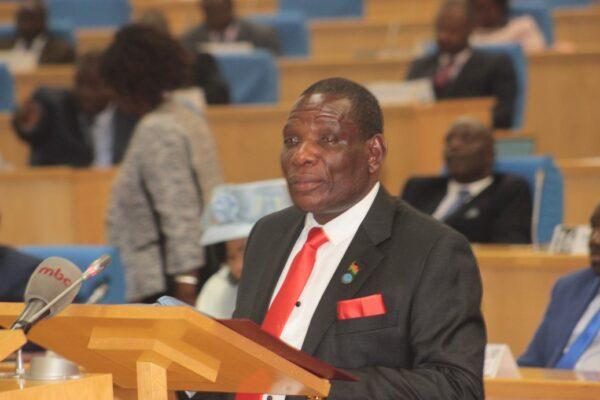
Africa-Press – Malawi. Finance Minister Joseph Mwanamveka is facing mounting scrutiny after failing to directly address detailed allegations by social media activist and lawyer Alex Kamangila linking him to black market foreign exchange dealings.
Kamangila alleges that Mwanamveka handled millions of dollars outside formal banking systems, including an alleged US$8 million transaction, raising serious questions about abuse of access to scarce foreign currency. While no public evidence has yet been produced, the claims have struck a nerve in a country grappling with a deep forex crisis.
Mwanamveka’s response has been swift but narrow.
“I don’t comment on gossip and ill intentioned political propaganda. It is unhelpful and time wasting,” he said, offering a blanket dismissal without engaging the substance of the allegations.
That response has left a gap—one that is quickly being filled by public suspicion.
The core issue is not just the denial, but the absence of detail. Mwanamveka has not explained whether such transactions are possible within his office, whether he had any contact with the alleged deals, or why the specific figures mentioned should be dismissed outright.
In a strained economy where businesses are failing to access forex through official channels, the suggestion that large sums may be circulating outside the system is explosive. For many, the allegations align with lived realities of scarcity, making the minister’s silence on specifics more damaging than the claims themselves.
The situation is further complicated by political undertones.
Mwanamveka is a senior figure in the Democratic Progressive Party and is widely viewed as positioning himself for future leadership, potentially succeeding former president Peter Mutharika. This has turned the controversy into more than just an economic issue—it is now a test of political credibility.
Additional claims that the minister is backed by coordinated social media voices defending his image—though unproven—are reinforcing perceptions of a carefully managed public narrative rather than open accountability.
At this stage, three facts stand out: serious allegations have been made, they have not been backed by verifiable evidence, and the minister has not provided a detailed rebuttal.
That combination is keeping the story alive.
For Mwanamveka, the risk is clear. A simple dismissal may protect him politically in the short term, but without directly confronting the claims, it leaves him appearing unprepared and exposed in the face of a fast-moving public controversy.
In the current climate, where trust in institutions is fragile and economic pressure is high, perception is hardening quickly.
And right now, the perception is that the minister has not fully answered the case against him.
For More News And Analysis About Malawi Follow Africa-Press