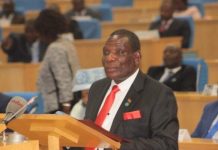
Africa-Press – Malawi. The appointment of Engineer William Kaipa as Chief Executive Officer of Electricity Supply Corporation of Malawi (ESCOM) is facing intense scrutiny after key elements of his publicly presented professional profile failed to withstand independent verification.
Kaipa, who is expected to assume office on April 1, 2026, was introduced as a “distinguished Professional Engineer” with over 37 years of experience tied to some of Southern Africa’s most complex energy and infrastructure projects. However, checks across public records, technical reports, and industry documentation reveal major gaps between the claims and verifiable evidence.
At the centre of the controversy is the assertion that Kaipa served as Lead Mechanical Engineer on the Ingula Pumped Storage Scheme—one of Africa’s flagship energy projects.
The official communication describes Ingula as a R3.5 billion project. In reality, Ingula is widely documented as a US$3.5 billion development—equivalent to over R25 billion—raising immediate concerns about the accuracy of the information presented.
More critically, publicly available project records attribute leadership and engineering oversight to well-documented teams and individuals, with no trace of Kaipa’s involvement. Extensive documentation—from engineering firms to contractor consortia and technical publications—lists multiple engineers and project leads, yet Kaipa’s name does not appear in any credible project record.
A similar pattern emerges in claims linking him to the Majuba Underground Coal Gasification Pilot Plant.
The Majuba project is one of the most documented experimental energy initiatives in the region, with clearly identified technical contributors and research partners. Despite the depth of published material, no engineering paper, conference proceeding, or institutional report connects Kaipa to the project.
The absence is not minor—it is absolute.
Claims of senior engineering roles at Lethabo Power Station also collapse under scrutiny. Operational reports, industry publications, and Eskom-linked documentation from the relevant period list detailed management structures and technical leadership, yet again, Kaipa’s name is missing.
Further assertions that he held senior positions at Airports Company South Africa (ACSA) and global engineering firm Arup have also not been supported by any publicly accessible employment or project records. Both institutions maintain detailed archives of major infrastructure work and senior personnel, but no link to Kaipa can be established.
Instead, the only verifiable professional footprint connects a William Kaipa to South Africa’s public health sector, where he served as Chief Mechanical Engineer and Acting Director of Infrastructure Planning in the North West Department of Health between 2018 and 2020.
Beyond that, the high-level, multi-decade engineering career presented in the ESCOM announcement leaves no measurable trace in the public domain.
That gap is now the core issue.
In engineering and infrastructure development—especially at the level of billion-dollar energy projects—professional involvement typically leaves a clear trail: technical papers, project reports, company records, conference presentations, or media references. In Kaipa’s case, that trail is missing.
The implications are serious.
ESCOM sits at the heart of Malawi’s economy, supplying electricity to millions while grappling with persistent load-shedding, aging infrastructure, and financial strain. Leadership credibility at such an institution is not optional—it is foundational.
Any suggestion that the qualifications of its chief executive may have been overstated or misrepresented risks weakening public trust, unsettling investors, and undermining confidence within the energy sector.
Calls are now growing for the ESCOM board to provide immediate clarity by releasing verifiable documentation, including Kaipa’s full curriculum vitae, academic credentials, professional registrations, and independently confirmed project history.
Without that, the appointment risks being defined not by experience, but by unanswered questions.
And in a sector already under pressure, uncertainty at the top is a risk Malawi can hardly afford.
For More News And Analysis About Malawi Follow Africa-Press