Africa-Press – Malawi. There are moments in a nation’s life when remembering is not optional—it is necessary for survival. Malawi is in such a moment.
As the country prepares for the inaugural Chakufwa Tom Chihana Memorial Public Lecture in Mzuzu on April 12, this is not just another event on the calendar. It is a deliberate act of reclaiming a truth many are slowly forgetting: democracy in Malawi was not handed over politely—it was fought for, painfully, courageously, and at great personal cost.
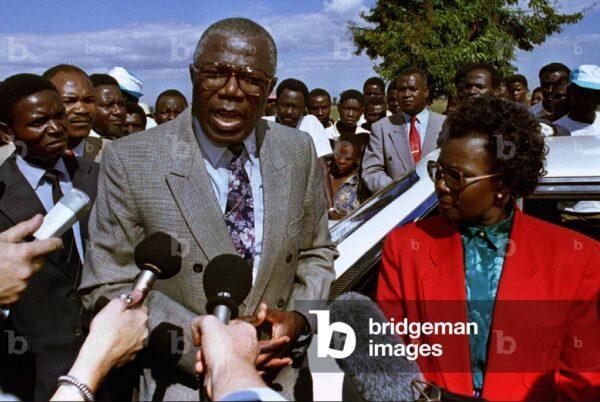
At the centre of that struggle stands Chakufwa Tom Chihana—a man who did not just speak against injustice, but confronted it head-on when doing so was dangerous, even life-threatening.
To understand why his legacy matters today, you have to go back to the Malawi he returned to in 1992.
Under Hastings Kamuzu Banda and the Malawi Congress Party, dissent was not tolerated—it was punished. Fear was not accidental—it was designed. Citizens lived under a system where questioning authority could cost you your freedom, your livelihood, or your life.
Then Chihana did something radical: he told Malawians they deserved a choice.
That single idea—so normal today—was revolutionary then. It was dangerous. It was, frankly, an act of defiance that could have cost him everything.
And it almost did.
He was arrested. Detained. Silenced—at least in theory.
But here is where the story shifts from repression to resistance.
His imprisonment did not weaken the movement; it ignited it. It exposed the cracks in an authoritarian system that depended on fear to survive. It rallied citizens. It drew international attention. It forced a nation to confront itself.
What followed—the 1993 Malawi referendum and the democratic transition that culminated in the 1994 elections—did not happen by accident. It was the result of sustained pressure, sacrifice, and leadership.
Chihana was not just part of that story. He was one of its defining forces.
That is why he is rightly regarded as the father of Malawian democracy.
But here is the uncomfortable truth: remembering him is not about honouring the past—it is about confronting the present.
More than 30 years after that democratic breakthrough, Malawi still has the structure of democracy—but its spirit is under strain.
You can see it.
Civic space tightening. Political intolerance rising. Corruption persisting. Public trust weakening. And perhaps most worrying of all—a generation of young people growing up disconnected from the struggle that secured the freedoms they now enjoy.
That is how democracies decay—not suddenly, but quietly. Not through dramatic collapse, but through gradual forgetting.
This is why remembrance must be intentional.
The Chakufwa Chihana Memorial Public Lecture, under the theme “Legacy of Courage: Anchoring Malawi’s Democratic Future on the Foundations of the Struggle,” is not about nostalgia. It is about re-education. It is about forcing a national conversation that many would rather avoid.
Because democracy does not sustain itself.
It must be taught. Questioned. Defended. Renewed.
If young people do not understand the cost of freedom, they will not defend it. If leaders are not reminded of the standards set by those who came before them, they will lower them. And if citizens forget what was fought for, they will tolerate what should never be accepted.
This is where institutions like Youth and Society step in—not just to remember, but to challenge.
To ask the hard questions:
Are we protecting the freedoms that were won through sacrifice?
Are we strengthening institutions—or quietly eroding them?
Are today’s leaders guided by courage and integrity—or convenience and self-interest?
These are not comfortable questions. But they are necessary ones.
Because a nation that forgets its heroes does not just lose its history—it loses its direction.
And when that happens, democracy becomes hollow. Performative. Fragile.
Chihana’s life offers a different blueprint.
It tells us that real change begins with conviction—the willingness to speak when silence is safer, to act when fear is louder, and to lead when the cost is high.
That is the legacy at stake.
Not just to remember—but to live.
Because if Malawi is serious about its democratic future, then it must do more than celebrate Chihana.
It must become him—in courage, in principle, and in action.
For More News And Analysis About Malawi Follow Africa-Press