Africa-Press – Mauritius. You also get jagged jungle-clad peaks, lush lowlands and endless swathes of sugar cane that produce the rum for candy-coloured cocktails sipped at sunset.
(Like rocket fuel they were, good enough reason to go in themselves.) But no, what I found most interesting was its fascinating and unique cultural mix. Indian and African. French and British. A sprinkling of Chinese. It’s similar to the Caribbean, yet at the same time so very different.
The official language is English, but the de facto tongue is a Patois French called Creole.
The food and religion is mostly of Indian origin, but the music and dancing is African. Everything else seems to be a mix of them all. Here’s what I found in this small island nation – at 790 sq mi it’s the same size as Tenerife – adrift in the Indian Ocean.
A kaleidoscope of folk The people of Mauritius reflect the nation’s colonial past. The island was uninhabited until the Dutch tried to settle there in 1638.
But their attempts were allegedly scuppered by rampaging monkeys brought over by Portuguese sailors (be warned, the descendants of these mischievous macaques are alive and stealing snacks at tourist spots on the island).
The French then had a go from 1715, bringing over enslaved people from Africa and Madagascar to work on the sugar plantations. But Mauritius was seized by the British in 1810 during the Napoleonic Wars and, after slavery was abolished, hundreds of thousands of indentured labourers were brought over from India.
Nowadays, people of Indian origin make up around 67% of the population. Those of African and mixed origin account for 28%, with the rest being French and Chinese.
The main religion is Hinduism – I regularly saw brightly coloured temples breaking out of lush canopies of trees, or heard the hypnotic chanting from afar.
Being half-French myself, it was interesting to see French written everywhere. But even after a week I could only understand the occasional word of the thick Creole used by locals.
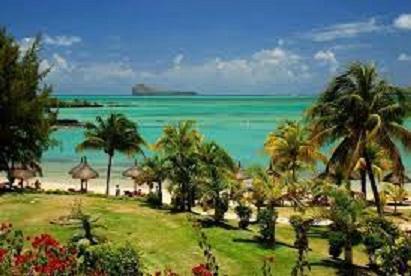
Think of Mauritius, and you think of beaches. Obviously it’s the powder-puff white stuff that makes it to the marketing material, but being a volcanic island, there’s an array of sand and stone on offer.
Plus river mouths can turn the crystalline waters muddy, so check before choosing where to stay. Surrounding most of the island is a giant reef that holds back the ocean, creating shallow coral-laden lagoons between it and land.
This was a tad tricky for a bad swimmer like me who prefers to walk through water, but great for snorkelling and diving and exploring marine life. The east coast is obviously the place to catch sunrises, but the four-hour jet lag meant I was still too busy snoring.
I did catch a couple of hypnotic west- coast sunsets, though, one evening rolling into the tiny town of Tamarin just as the orange orb sank magnificently into the sea, setting the world on fire.
Tamarin also has the most stunning backdrop of all the beaches on the island – the dramatic Rempart mountain and its diamond peak twisting skywards like a mini Matterhorn.
The north is mostly flat, more developed and with better weather. The south is wilder, mountainous and without a reef, meaning the ocean waves directly pound the shore.
For More News And Analysis About Mauritius Follow Africa-Press