What You Need to Know
The School Health Programme (SHP) in Mauritius, launching on March 2, 2026, aims to enhance early detection of non-communicable diseases (NCDs) among secondary school students. This initiative combines systematic health screenings with educational campaigns to promote healthy lifestyles and prevent serious health issues. The program targets approximately 30,000 students annually, providing vital,
Africa-Press – Mauritius. The next School Health Programme (SHP) for secondary schools kickstarts on 02 March 2026 at several secondary schools across Mauritius namely, London College, Rabindranath Tagore Secondary School, Darwin College, Loreto College Mahebourg, and Eden College. This is part of ongoing efforts to safeguard the health of young people. The secondary-level SHP, which was launched on 27 January 2026 at the Mohun Parsad Sharma Jugdambi SSS in Goodlands, will continue across schools nationwide and will conclude in mid-September 2026.
Launched in 2007 as a joint initiative of the Ministry of Health and Wellness and the Ministry of Education and Human Resource, the school-based screening was integrated into the broader mobile clinic services, known as the ‘Caravane de Santé’. SHP combines systematic screening for non-communicable diseases (NCDs) coupled with awareness campaigns, aiming to educate young people about the health risks they face. Through regular health checks, students benefit from early diagnosis, timely treatment, and follow-up care for those identified as having risk factors.
Dr Davina Soobrayen Jhugroo, Medical and Health Officer/ Senior Medical and Health Officer from the NCD, from the Health Promotion and Research Unit at the Ministry of Health and Wellness, emphasises the significance of targeting young people in schools. “Schools provide an ideal platform for health promotion as they reach out young people at a formative stage of life in a structured and supportive environment,” she says.
The SHP thus recognises the challenges adults face in changing long-established lifestyles. Engaging in physical activity, reducing fat intake, or quitting smoking can be difficult later in life. By educating students early, the SHP encourages them to act as ambassadors of healthy living, sharing knowledge on nutrition, hygiene, and exercise with their families.
Early Detection: A Key Strategy
Early identification of at-risk youth is a central component to the SHP. “The rise of NCDs among young people is a serious concern. Screening children early allows us to prevent the development of more serious conditions, such as diabetes,” Dr Jhugroo explains.
The initiative also focuses on health education, equipping young people with the knowledge and habits needed to delay the onset of NCDs. Complementing these measures, Dr Jhugroo recalls that the sale of unhealthy snacks is banned since 2010 under the Regulations on Sale of Foods in School Canteens adding that in 2024, the Ministry of Health and Wellness has extended the list of healthy food allowed for sale in school canteens. Together, these strategies promote healthier school environments and reinforce preventive health practices among adolescents. Numbers Tell the Story
NCDs continue to be a major public health concern. Surveys from 1987 to 2021 show a rising prevalence in risk factors such as obesity, overweight, and sedentary lifestyles. Additionally, Mauritius Nutrition Surveys conducted between 1995 and 2012 reveal a worrying double burden of disease among children and adolescents, with overweight and obesity coexisting alongside underweight. In 2004, 8.15% of children aged 5 to 11 were obese, while 7.7% were overweight. Among adolescents aged 12 to 19, 7.3% were obese and 8.4% overweight. By 2012, underweight had increased, affecting 15.4% of children and 17.1% of adolescents, while overweight and obesity remained significant. The last Nutrition Survey in 2022 showed that children were especially affected by both obesity (13.8%) and overweight (14.6%). Among adolescents, the prevalence of obesity was nearly same as in 2012, at 9.0%, while that of overweight has increased to 14.2%.
Among adolescents aged 12–19, 7.4% had elevated cholesterol, highlighting the need for early prevention and health promotion initiatives. Recent reports also point to a rising prevalence of childhood obesity (around 9% of teens) and pre-diabetes, making personalised counselling for at-risk students a priority to prevent chronic disease in adulthood. Secondary School Screening
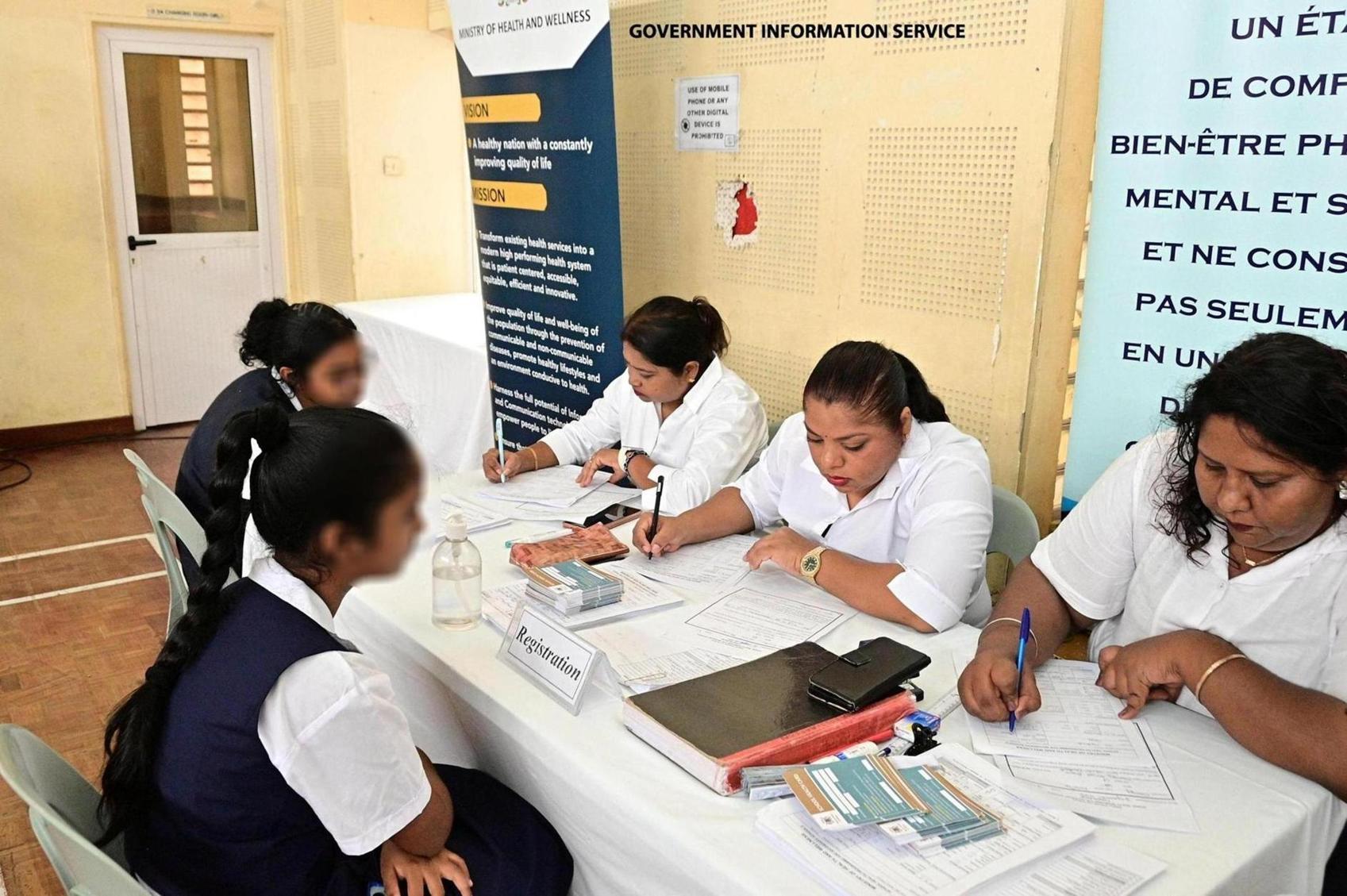
The SHP for secondary schools was initially launched to target Grade 9 and Grade 12 students but was extended to Grade 7 in 2012. Currently, the programme reaches approximately 30,000 students annually across 180 public and private schools. The screening exercise comprises registration, measurement of height and weight to detect underweight, overweight, and obesity, blood pressure checks, blood tests for students with obesity and family history of diabetes, vision tests, consultations, health education, and referral and follow-up of positive cases. Health cards are issued to all participants.
During the programme, students also attend health talks covering nutrition, healthy lifestyles, physical activity, mental health, sexual and reproductive health, and the dangers of smoking, alcohol, and drug use. Last year, 26,197 students in Grades 7, 9, and 12 were screened, identifying 32 diabetic students, 501 pre-diabetic, 3,523 obese, and 217 with high blood pressure. Students with newly diagnosed diabetes are referred to paediatricians at regional hospitals, while pre-diabetic and hypertensive students are referred to primary health care centres, and obese students are referred to nutritionists for weight management. Students with dental caries are directed to dental services in primary health care.
Primary School Initiatives
At the primary level, Public Health Nursing Officers (PHNOs) play a pivotal role in school-based screenings, immunisations, and referrals, ensuring early detection of health conditions, protection against vaccine-preventable diseases, and timely access to specialist care. In 2025, 12,755 pre-primary and 40,418 primary school children were screened. Of these, 11,730 pre-primary and 25,272 primary students were reviewed by medical officers, with 6,444 children referred for further care.
Vision screening reached 8,806 Grade 3 and 12,021 Grade 5 children, while school-based immunisation programmes protected thousands, including 9,209 children for Diphtheria, Tetanus, acellular Pertussis, and Inactivated Poliovirus vaccine (DTaP-IPV), 8,646 for Tetanus, Diphtheria, and Acellular Pertussis vaccine (Tdap), and 7,018 for the HPV vaccine. PHNOs also monitor nutrition pattern, calculate Body Mass Index, and detect conditions ranging from skin disorders, dental caries, visual and hearing impairments, asthma, to speech or learning difficulties, ensuring timely intervention.
Building a Healthier Future
With the implementation of the SHP, schools are transformed into environments that support child development, promote quality education, and strengthen Government’s efforts to ensure a healthy population capable of meeting the many challenges facing our society. By combining early detection, preventive care, and health education, the programme seeks not only to improve the health of individual students but also to instil lifelong habits that will benefit families and communities.
As Dr Jhugroo notes, “By reaching out young people today and shaping healthy behaviours early, we are creating the foundation for a healthier, more informed generation tomorrow.”
The School Health Programme (SHP) was initiated in 2007 as a collaboration between the Ministry of Health and Wellness and the Ministry of Education and Human Resource in Mauritius. It was designed to address the rising prevalence of non-communicable diseases (NCDs) among the youth, integrating health screenings into school activities to foster early detection and health education.
Over the years, the SHP has evolved to include a broader range of health initiatives, reflecting the growing concerns about childhood obesity and related health risks. With ongoing assessments and adaptations, the program aims to create healthier school environments and promote preventive health practices among a