
What You Need to Know
Professor Kian Fan Chung delivered a lecture on chronic cough and asthma at the Shri Bihari Vajpayee Tower in Ebène, Mauritius. He emphasized the need to recognize chronic cough as a distinct disease and discussed recent advancements in asthma management, advocating for patient-centered approaches and multidisciplinary collaboration to improve health outcomes.
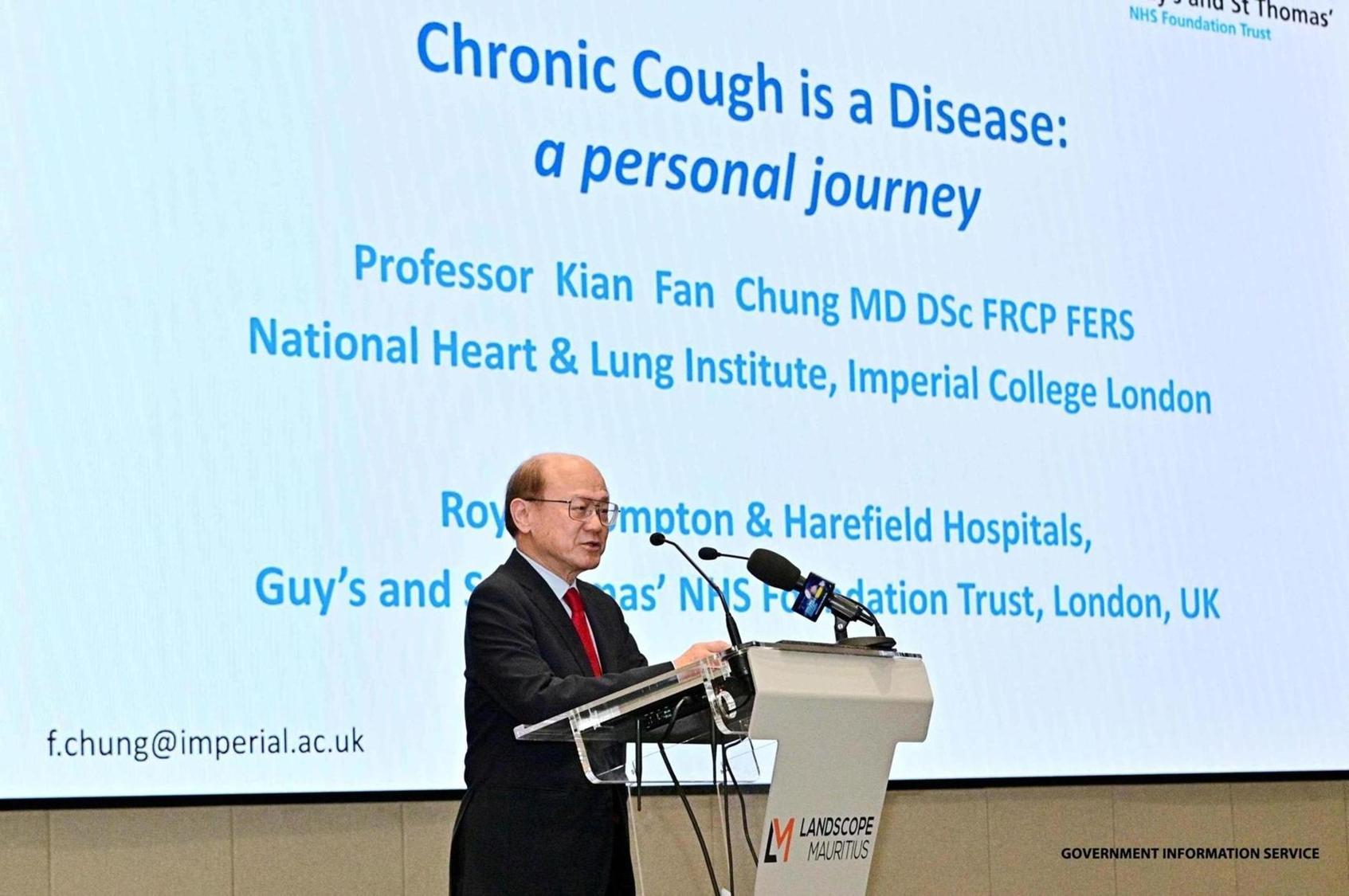
Africa-Press – Mauritius. A lecture titled “Chronic cough is a disease: A personal journey” was delivered yesterday at the Shri Bihari Vajpayee Tower in Cybercity, Ebène, by Professor Kian Fan Chung, a leading authority in respiratory medicine.
Professor Chung serves as Professor of Respiratory Medicine and Head of Experimental Medicine Studies at the National Heart and Lung Institute, Imperial College London. He is also a Consultant Respiratory Physician at Royal Brompton & Harefield Hospitals, part of Guy’s and St Thomas’ NHS Foundation Trust.
The Minister of Health and Wellness, Anil Kumar Bachoo, the Junior Minister of the Ministry, Ms Anishta Babooram, as well as healthcare professionals, were present at the event.
In his address, Professor Fan Chung underscored that chronic cough is often linked to heightened cough reflex sensitivity and complex underlying mechanisms. Drawing from his personal and professional journey in respiratory research, he highlighted breakthroughs in understanding chronic cough and the development of innovative therapies aimed at improving patients’ quality of life.
He stressed the importance of research, multidisciplinary collaboration and patient-centred approaches in tackling respiratory conditions, noting that chronic cough can have profound physical, psychological and social impacts on sufferers.
Professor Fan Chung explained that chronic cough should be recognised as a disease in its own right when it persists for more than eight weeks, particularly in cases where no obvious cause is identified or when it remains refractory to standard treatment. In such situations, the cough is not merely a symptom but represents a distinct clinical entity.
He described this condition as cough hypersensitivity syndrome, often considered a neuropathic disorder in which the sensory nerves of the airway become excessively sensitive. This heightened sensitivity leads to an exaggerated cough response to stimuli that would not normally trigger coughing.
Professor Chung also delivered an insightful lecture on asthma, highlighting the latest advances in the understanding and management of the chronic respiratory condition. Drawing on his expertise in respiratory medicine, he outlined the underlying inflammatory mechanisms of asthma, emerging biologic therapies and the importance of personalised treatment approaches to improve patient outcomes. He emphasised the role of early diagnosis, adherence to medication and public awareness in reducing asthma-related complications, while encouraging continued research and international collaboration to address the growing global burden of the disease.
The lecture formed part of ongoing efforts to promote awareness on non-communicable and respiratory diseases, and to foster dialogue between international experts and local health practitioners.
Chronic cough and asthma are significant public health concerns, affecting millions globally. Chronic cough is often under-recognized, leading to a lack of appropriate treatment. Asthma, a common chronic respiratory condition, has seen advancements in research and treatment, yet it remains a leading cause of morbidity. Awareness and education are crucial in managing these conditions effectively, particularly in regions with limited healthcare resources. The role of experts like Professor Chung is vital in bridging knowledge gaps and fostering local healthcare improvements.