What You Need to Know
The exhibition ‘Esclavage: Réparations et Restitution’ opened at the Nelson Mandela Centre for African Culture, featuring 25 works by Mauritian artists. It commemorates the 191st Anniversary of the Abolition of Slavery and emphasizes the themes of justice, reparation, and cultural remembrance. The event was attended by key government officials.
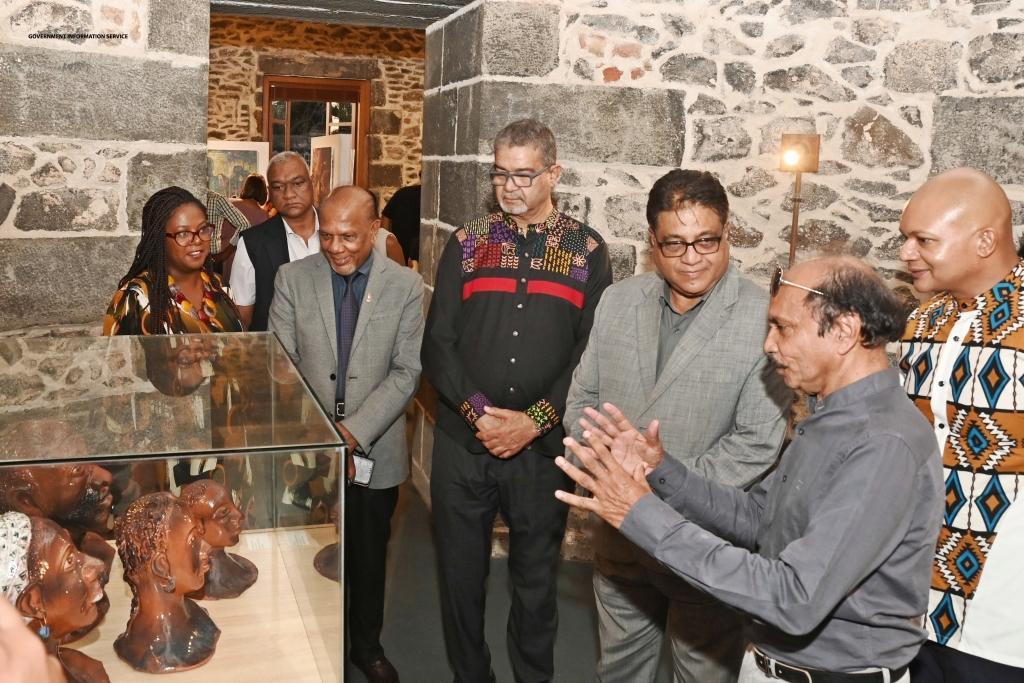
Africa-Press – Mauritius. The vernissage of the exhibition ‘Esclavage: Réparations et Restitution’ (Slavery: Reparation and Restitution) was held, yesterday, at Lespas Lar at the Nelson Mandela Centre for African Culture in La Tour Koenig, in the presence of the Vice-President of the Republic of Mauritius, Mr Jean Yvan Robert Hungley; the Minister of Arts and Culture, Mr Mahendra Gondeea; the Junior Minister of Social Integration, Social Security and National Solidarity, Mr Kuvalayan Kugan Parapen; and other distinguished personalities.
The exhibition, scheduled to run from February to March 2026, is organised by the Nelson Mandela Centre for African Culture in collaboration with the National Art Gallery to commemorate the 191st Anniversary of the Abolition of Slavery.
The launch of the exhibition forms part of the calendar of activities marking the 40th anniversary of the Nelson Mandela Centre for African Culture, further reinforcing the Centre’s commitment to promoting heritage, historical memory and contemporary creation.
Commemorating the abolition of slavery through art constitutes a strong and necessary act, the exhibition is conceived as a space for remembrance, dialogue and resilience, where art becomes a vehicle for transmission, awareness and collective healing.
Centred on this year’s retained theme for the commemorations, ‘Justice for Africans and Peoples of African Descent through Reparations’, the exhibition invites the public to revisit a shared history, to examine the legacies of the past and to reflect on the essential notions of reparation and restitution. Through 25 works — including paintings, sculptures, installations and other contemporary forms of expression — Mauritian visual artists take a stand on the tragedy of slavery and its present-day resonances.
In his address for the occasion, the Vice-President stressed that the commemoration of the abolition of slavery is not merely a calendar date, but a meeting with the collective conscience and a refusal to silence the voices of those who were once treated as objects and furniture. He commended institutions and organisations, including the Nelson Mandela Centre for African Culture, for this regular initiative launched in 2022, where art serves both as a cathartic experience and as a means of educating the population about slavery.
Speaking on the theme of the exhibition, the Vice-President underlined that reparation and restitution go beyond material considerations and legal justice. They are also symbolic, moral and cultural acts through which the nation confronts its history. Mr Hungley noted that the process involves restoring a voice to those who were silenced and placing the human being at the heart of history. He pointed out the importance of transmitting this memory to future generations as a lever for national cohesion and a contribution to ongoing national dialogue.
Moreover, the Vice-President highlighted the need to support the country’s culture and history not only through government policies but also through investment. In that regard, he referred to the Mauritius Art & Culture Investment Summit scheduled for 24 and 25 March 2026, underscoring that such initiatives can help position culture and history as an economic pillar to be further leveraged.
For his part, the Minister of Arts and Culture recalled that the promotion of culture remains a government priority. “Remembering the past,” he said, “honours the ancestors for their suffering, pain, dignity, courage and resistance, all of which form part of the fabric of the nation.”
Referring to the theme of the exhibition, Mr Gondeea affirmed that historical truth, justice and remembrance are essential to addressing the enduring effects of slavery and to ensuring that this legacy is transmitted to future generations. The Minister saluted too the Nelson Mandela Centre for African Culture for its continued endeavours in valorising African culture in Mauritius.
The abolition of slavery in Mauritius in 1835 marked a significant turning point in the nation’s history, leading to the establishment of a multicultural society. This exhibition serves as a reminder of the painful past and the ongoing dialogue about reparations and restitution, highlighting the importance of remembering history to foster national cohesion. The Nelson Mandela Centre for African Culture plays a crucial role in promoting this dialogue through art, encouraging reflection on the legacies of slavery and their impact on contemporary society.