
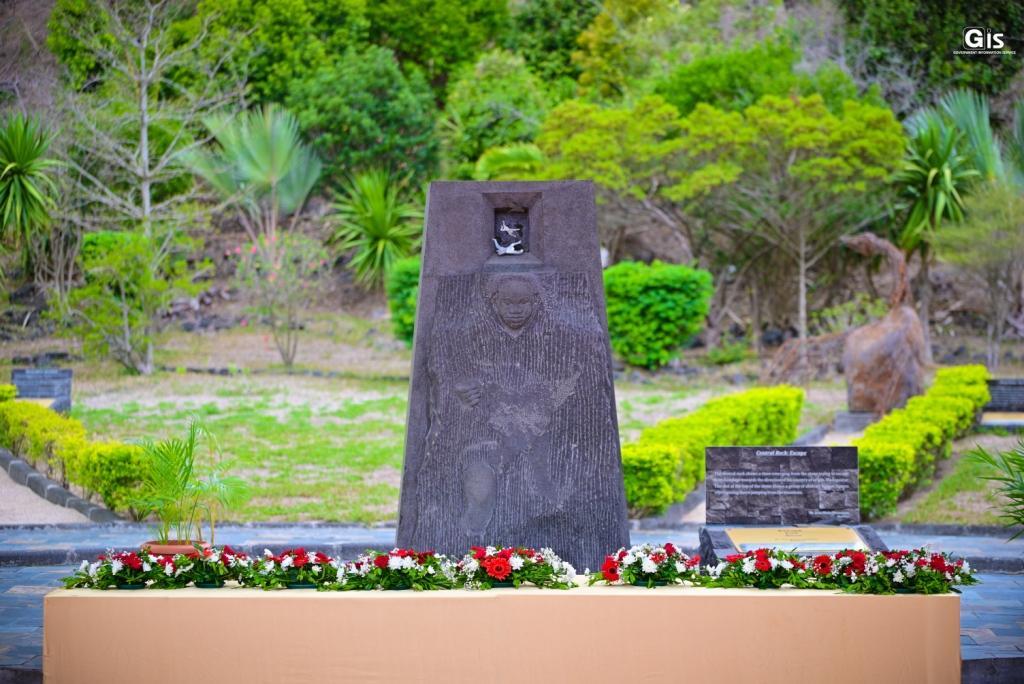
Africa-Press – Mauritius. To mark the 191st anniversary of the abolition of slavery, a wreath-laying ceremony will be held on Sunday 01 February 2026 at the International Slave Route Monument at Le Morne.
The commemoration pays tribute to the memory of enslaved people and reaffirm the nation’s commitment to freedom, dignity and human rights. The ceremony will be held in the presence of several Ministers, members of the National Assembly and the Diplomatic Corps, and other dignitaries. The event will also feature a cultural programme comprising slam performances and a musical homage by several local artists.
The International Slave Route Monument at Le Morne, a site of profound historical and symbolic significance, stands as a reminder of the suffering endured during the dark period of slavery and the resilience of those who fought for emancipation. It forms part of the global UNESCO Slave Route Project, which seeks to preserve the memory of the transatlantic and Indian Ocean slave trades and to honour the resistance and resilience of enslaved peoples. Le Morne is historically associated with maroon slaves who escaped bondage and sought refuge in the mountain as a place of shelter and resistance. The annual commemoration underscores the importance of remembrance, reflection and unity in building a just and inclusive society.
Other activities
On the occasion of the 191st anniversary of the abolition of slavery, the Ministry of Arts and Culture, in collaboration with the Le Morne Heritage Trust Fund, the Nelson Mandela Centre for African Culture, and the National Heritage Fund, will organise several activities. On Saturday 31 January, a wreath-laying ceremony will be held at the Bassin des Esclaves in Pamplemousses, followed by similar ceremonies at the Frederik Hendrick Historical Site in Vieux Grand Port and the Monument des Esclaves in Pointe Canon, Mahébourg.
It is recalled that enslaved people from Africa and Madagascar were brought to the Bassin des Esclaves to bathe before being sold at the Marché aux Esclaves. Owing to their cultural and historical significance, both sites have been designated as National Heritage sites by the Ministry of Arts and Culture.
The Frederik Hendrick Historical Site in Vieux Grand Port is closely associated with the first recorded revolt of enslaved people in Mauritius, led by Anna de Bengale, while the Monument des Esclaves in Pointe Canon, Mahébourg, is dedicated to the memory of enslaved men and women, symbolising their suffering, resilience and enduring contribution to the nation’s history.