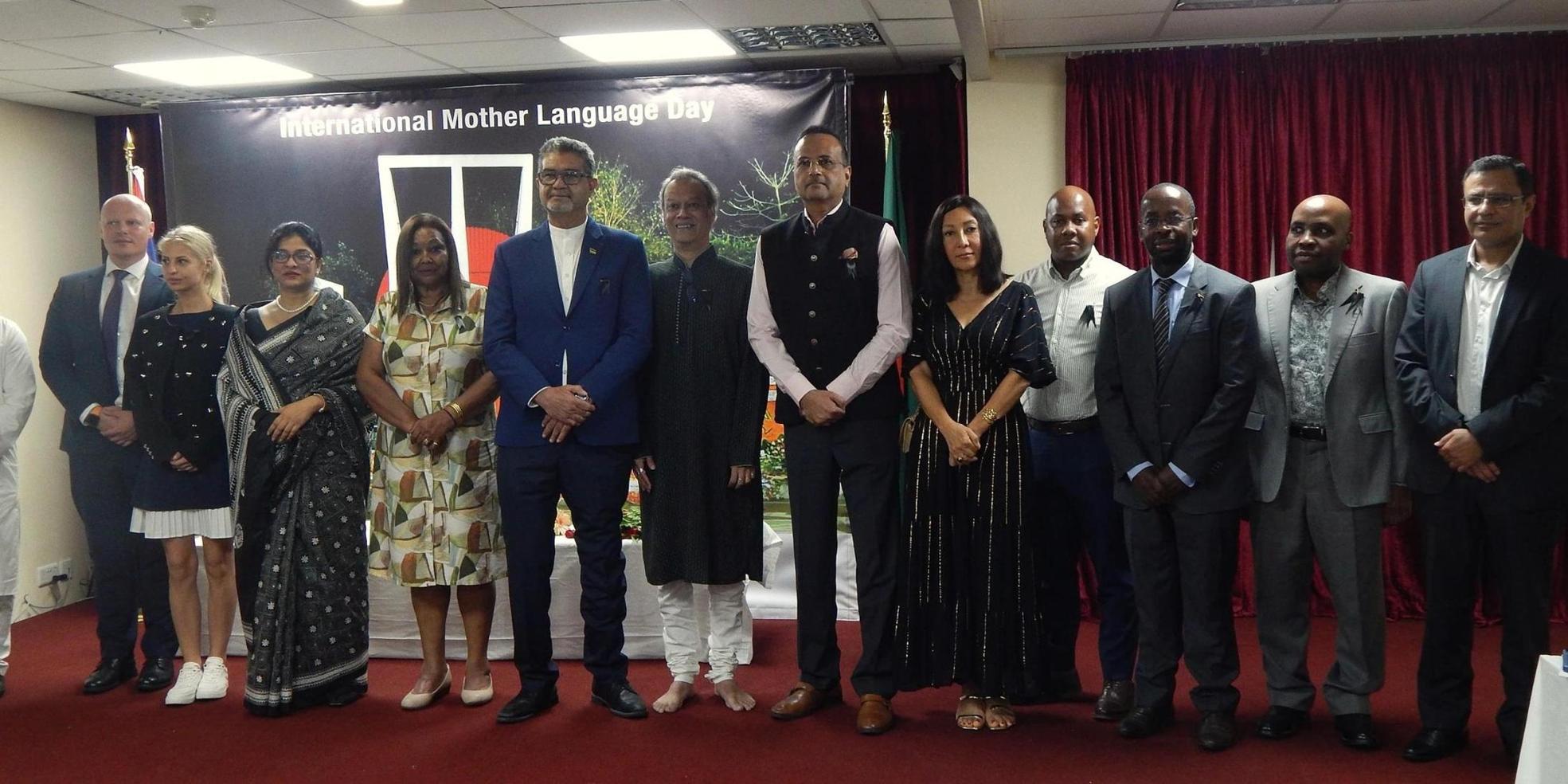
Africa-Press – Mauritius. The Vice-President of the Republic of Mauritius, Mr Jean Yvan Robert Hungley, reaffirmed Government’s commitment to promoting mother tongue education and multilingualism as essential pillars of national identity, social cohesion and youth empowerment.
He was speaking at the commemoration of International Mother Language Day 2026, held under the theme “Youth Voices on Multilingual Education”, at the Bangladesh High Commission in Mauritius in Port Louis. The ceremony was attended by the Bangladesh High Commissioner, Dr Zokey Ahad, members of the diplomatic corps, and representatives of international organisations.
In his address, Mr Hungley highlighted the importance of early childhood education in the mother tongue. According to him, primary instruction delivered in a child’s first language strengthens cognitive development, enhances comprehension and builds self-confidence. Drawing on international research, he pointed out that strong foundations in the mother tongue significantly facilitate the acquisition of additional languages and contribute to improved academic performance.
The Vice-President further observed that Mauritius’ linguistic landscape continues to evolve with the presence of migrant workers from Asia and Africa contributing to increased linguistic diversity within the Republic. While describing this diversity as a source of enrichment, he stressed the need for thoughtful and inclusive policy approaches to ensure that integration promotes mutual respect, inclusion and social harmony.
Mr Hungley reiterated that language policy remains closely aligned with the broader objectives of nation-building. The recognition and respectful treatment of all languages spoken within the national territory reinforces a sense of belonging and shared citizenship among all communities, he said.
Dr Ahad paid homage to the martyrs of the 1952 Language Movement in Dhaka, Bangladesh, and acknowledged the resilience of those who have defended linguistic and cultural rights. The observation of the Day provides a valuable platform to safeguard linguistic diversity globally and to advance mutual understanding and inclusive development, he added.