Africa-Press – Mauritius. While tropical cyclone Batsirai barrels towards Madagascar, the eastern parts of South Africa can expect disruptive rain from today, thanks to a cold front that has pushed moist air over KZN, according to the SA Weather Service in Pretoria.
Informal settlements and roads, including bridges, could be vulnerable, said forecaster Luthando Masimini, defining the target areas as Gauteng, North West, Free State, the eastern parts of the Eastern Cape, KwaZulu-Natal and Limpopo.
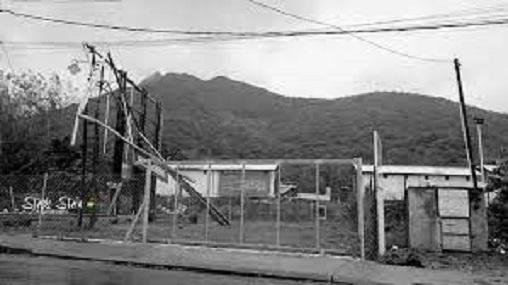
Tropical Cycle Batsirai ripped trees out of the ground in Mauritius, making them look like they had never been planted. Steph Stein.
“We can’t link the weekend rain with the cyclone,” he said, adding that if the cyclone made any impact, it would be from Tuesday onwards.
KZN beaches in the KwaDukuza and eThekwini municipalities have been closed and shark nets removed ahead of the heavy weather. The cyclone could hit the mountainous east coast of Madagascar this morning, according to the weather service.
Yesterday, people on Mauritus were picking up the pieces after it had ripped through the island, bringing winds of up to 120km/h on its westbound path, causing one fatality. It was the first “super cyclone” in 15 years, according to Florian Lepoigneur, a local reporter. About 100 people were still in shelters.
Photographer Steph Stein, who moved to Black River on the west of the Indian Ocean island from Durban last October, said the cyclone was “huge and seemed like it was never going to end”.
“We saw trees being blown horizontally and lifted out of the ground as if they were never planted. The sea has gone from a beautiful turquoise clear colour to a brown colour with waves, which is very unusual for the island.
“We were lucky and were not directly affected except for losing a few trees and a bit of water coming through our garage.
“The biggest thing was losing electricity and all communications.
” Stein said her family in Durban had no way of knowing how they were.
“At the time the cyclone was at Class Three, all communications went down. I was unaware that we were upgraded to a Class Four, except for the obvious sign out the window of the intense wind and rain.
“I finally managed to get hold of family in the north of the island who still had power and communications and managed to contact my husband who was in Durban and let them know we were safe and locked up in our home.
“Up until last night (Thursday), we still had extremely heavy winds and rain coming through. Waking up this morning (Friday) to scattered blue skies and sprinkling of rain every now and again was a welcome sight. ”
Stein said there was a huge police presence to help in any way possible “even before it was a Class Three cyclone”. “The electricity department managed to fix the power lines as soon as all alerts were lifted, making sure a lot of the community were back up and running.
She spoke of “amazing” community help. “They were out as soon as it was safe to start clearing up. I even had my neighbour coming over to help me move all my outdoor furniture inside the house when the cyclone started and made sure I knew what needed to be locked away, this being my first one on the island.
British scientist Simon Luttrell, who teaches science to children all over the world, said that although his home-made antennae were blowing about, he was able to receive weather satellite images.
“All of them learn about weather in their science syllabus, so this was a chance to share the pictures that I received.
Lepoigneur said children at local schools were scheduled to return to class on Wednesday, having done classes online since November because of Covid, but would now go back on Monday.
“Even during the cyclone conditions, some teachers were assisting students,” she said. The Mauritius campus of Britain’s Middlesex University, at Flic en Flac on the west coast, was expected to open once the cyclone passed.
“We planned a welcome-back breakfast for staff, but this was not to be,” said deputy academic director Lee Pheiffer.
“Our teaching and learning continued online, with no student left behind, and we are well-prepared for this eventually.
” Meanwhile, post-cyclone debate on Mauritius has been about reviewing the alert system for cyclones.
The fatality involved a public transport driver going to work after all weather alerts were lifted, said Lepoigneur. “He collided with a fallen tree and died straight away.
Mauritians’ sense of community in a crisis made world news in 2020 when the Japanese oil tanker, MV Wakashio, ran aground on a reef on the south-east of Mauritius, causing a disastrous oil spill.
Lepoigneur said Mauritians would never erase the Wakashio incident from their minds, causing concern when Batsirai caused a Mauritius-registered tanker to run aground in rough seas off nearby Reunion island. Its crew was airlifted off. “It’s a relief it was not carrying any fuel.”
For More News And Analysis About Mauritius Follow Africa-Press