What You Need to Know
The School Leadership and Capacity-Building Programme has been launched in Mauritius to enhance the skills of Rectors, Headmasters, and School Superintendents. The initiative, organized by the Ministry of Education, aims to improve leadership and management competencies among educational leaders, with 363 participants enrolled in various training sessions.
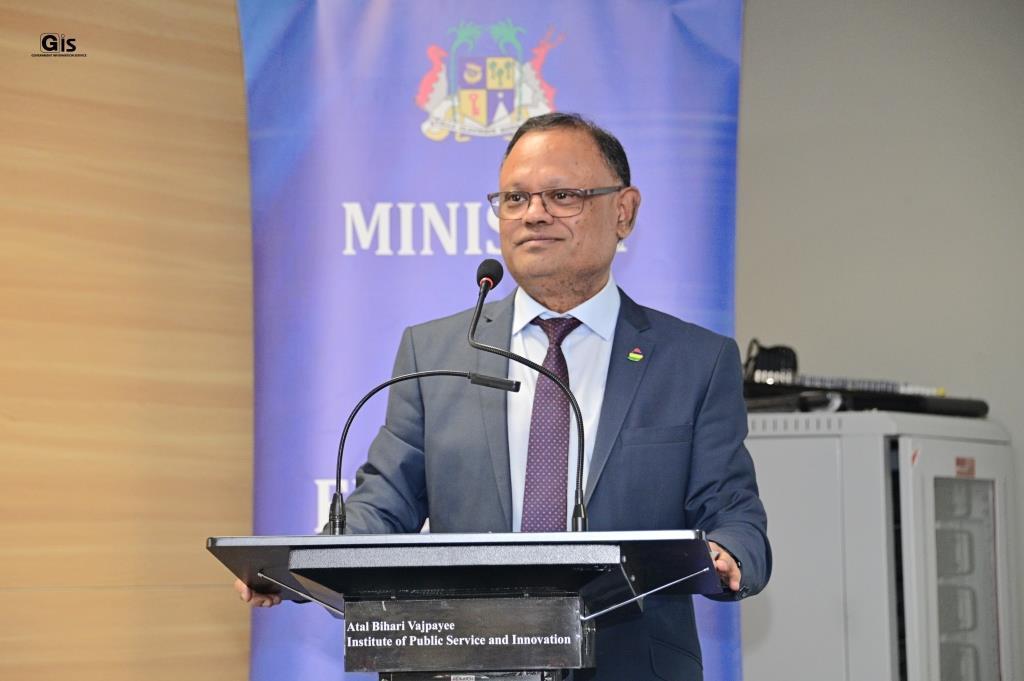
Africa-Press – Mauritius. The launching ceremony of the School Leadership and Capacity-Building Programme for Rectors, Headmasters and School Superintendents, was held yesterday morning at the Atal Bihari Vajpayee Institute of Public Service and Innovation at Côte d’Or Technopole, Réduit.
The initiative is being implemented by the Ministry of Education and Human Resource in collaboration with the Atal Bihari Vajpayee Institute of Public Service and Innovation through the delivery of tailor-made training courses.
The event was graced by the Minister of Education and Human Resource, Dr Mahend Gungapersad; the Senior Chief Executive of the Ministry, Mr Devendre Gopaul; the Chief Technical Officer, Mr Ricaud Auckbur of the Ministry; the Registrar of the Atal Bihari Vajpayee Institute of Public Service and Innovation, Professor Ramesh Durbarry; as well as other distinguished personalities.
The programme aims at further enhancing the efficiency and effectiveness of Rectors, Headmasters and School Superintendents, who bear key responsibilities in the management, administration and leadership of educational institutions. It also seeks to strengthen leadership, managerial and administrative competencies among participants, thereby enabling them to effectively lead their institutions, enhance school performance and support the overall improvement of the education system.
A total of 363 participants are attending the programme, comprising 60 Rectors, 35 Deputy Rectors, 209 Headmasters and 59 School Superintendents. The training will be conducted over varying durations, with the programme for Rectors and Deputy Rectors spanning three days, that for Headmasters lasting six days and that for School Superintendents being run over two days.
In his keynote address, Minister Gungapersad emphasised the importance of fostering a strong culture of collaboration and knowledge-sharing among school leaders. He highlighted that the creation of communities of practice would enable the exchange of good practices, peer learning and mutual support in addressing challenges such as conflict management, curriculum delivery and engagement with parents.
The Minister underlined that leadership in schools has become increasingly complex and demanding, requiring not only managerial competencies but also strong human-centred leadership skills. He pointed out that school leaders are often confronted with sensitive and critical situations, ranging from student wellbeing issues to crisis management and stressed the need for continuous capacity building, mentoring and institutional support to better equip them in their roles.
Speaking about the evolving challenges within the education sector, including student behaviour, social issues and infrastructural constraints, Dr Gungapersad calling for a compassionate and proactive approach towards students, particularly those from vulnerable backgrounds. He also announced that regulations regarding the use of mobile phones in schools would be introduced shortly, clarifying that these are not intended as a blanket ban but rather as a framework to ensure that mobile phones do not hinder teaching and learning. He underscored that while mobile devices may be used for pedagogical or essential purposes, stricter control would be necessary to prevent misuse, particularly the recording and sharing of inappropriate videos within school premises.
On that score, the Minister reiterated Government’s commitment to empowering school leaders, enhancing their wellbeing and strengthening the education system through sustained training, support mechanisms and policy reforms.
The education system in Mauritius has undergone significant reforms in recent years, focusing on improving quality and accessibility. The government has recognized the critical role of school leaders in driving educational success and has initiated various programs aimed at enhancing their skills and competencies. This latest initiative reflects a commitment to fostering effective leadership within schools, addressing contemporary challenges, and ensuring better educational outcomes for students.