What You Need to Know
On Earth Day 2026, Mauritius hosted a technical workshop aimed at improving air quality and promoting sustainable practices. Organized by the Ministry of Environment, the event featured discussions on air quality monitoring and regulatory compliance, alongside an exhibition showcasing clean air technologies. Ministers emphasized the importance of community involvement in environmental protection.
Africa-Press – Mauritius. In an effort to raise awareness and strengthen stakeholders’ engagement on air quality monitoring, regulatory compliance, vehicular emissions, and industrial enforcement, the Ministry of Environment, Solid Waste Management and Climate Change, in collaboration with relevant stakeholders, organised, today, at the Université des Mascareignes in Roches Brunes, a half-day technical workshop focused on clean air and air quality.
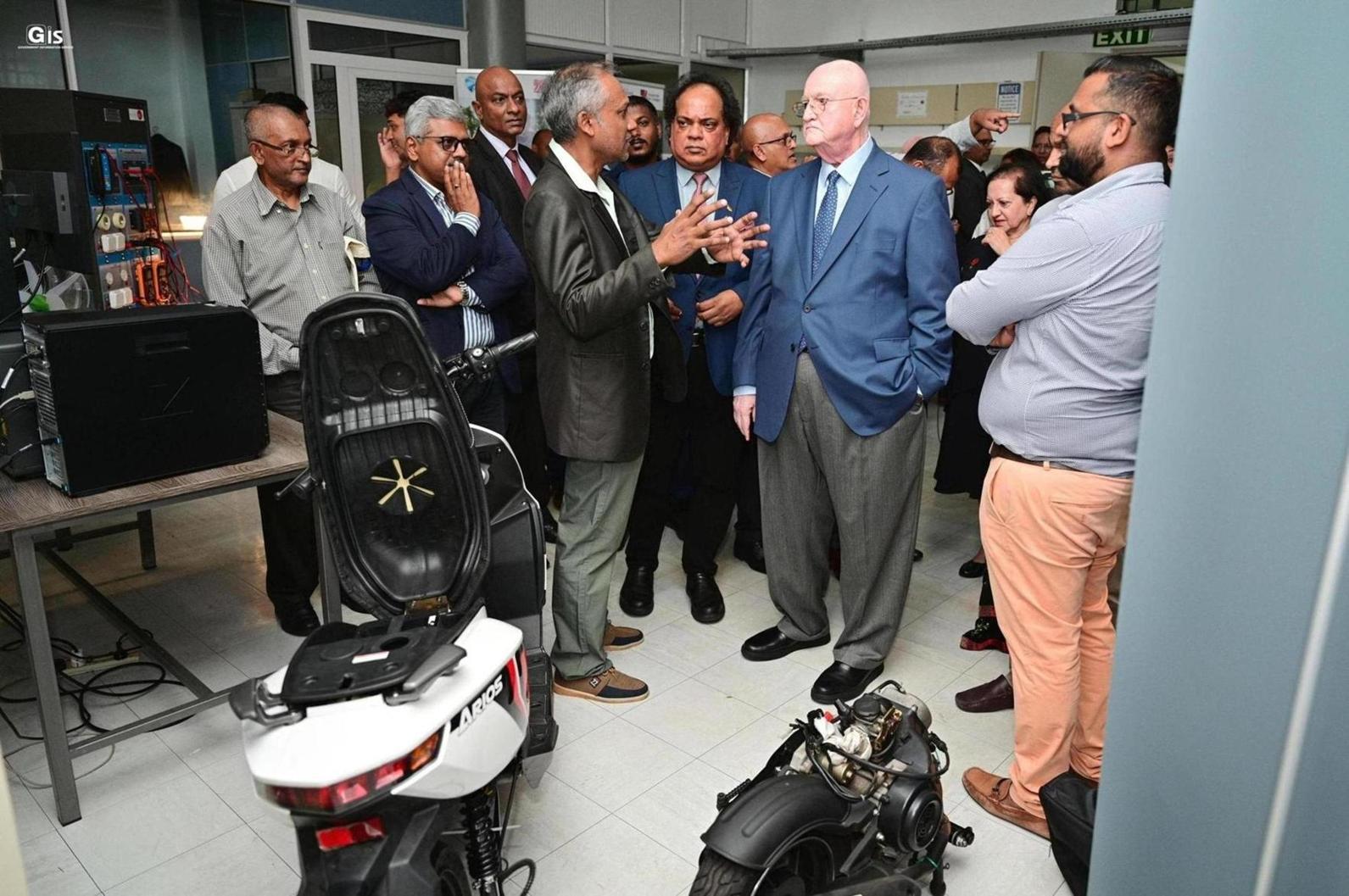
The event, convened in the context of Earth Day, which is celebrated annually on 22 April, also aimed at identifying actions to improve air quality in line with environmental priorities. A one-day exhibition to showcase practical demonstrations of air quality monitoring equipment, vehicular smoke emission testing, stack emission monitoring devices, and cleaner production technologies was also held.
The Minister of Environment, Solid Waste Management and Climate Change, Mr Rajesh Anand Bhagwan; the Minister of Tertiary Education, Science and Research, Dr Kaviraj Sharma Sukon; and other personalities were present at the event.
In his address, Minister Bhagwan stressed the necessity to strike a balance between meeting human needs and respecting the rights of nature. He underlined that sustainable development entails ensuring economic progress and social justice, while safeguarding the environment.
The Minister highlighted as well the importance of clean air and the need to combat air pollution. He pointed out that, in order to protect public health and the environment, Government is introducing new, more stringent standards aligned with those of the World Health Organisation, namely through the forthcoming promulgation of the Environment (Standards for Ambient Air Quality and Stack Emission) Regulations 2026.
Moreover, Mr Bhagwan called on all segments of the population to play their part and make vital choices to transform and safeguard the country’s environment. These include fostering a more responsible industrial sector and cleaner industrial parks, ensuring better-maintained vehicles, promoting the wider use of electric transport, transitioning towards renewable energy, and reducing dependence on fossil fuels, among others.
For his part, Minister Sukon encouraged all citizens to embrace the movement towards sustainable business practices and to think and act differently in contributing to environmental protection and preservation. He talked too of initiative aimed at advancing environmentally friendly practices, namely the review of university curricula in Mauritius to incorporate mandatory modules on sustainable development and the ethical use of Artificial Intelligence. Tertiary institutions have been given a one-year timeframe to complete this review exercise.
Furthermore, Dr Sukon underscored that Earth Day 2026 coincides with the organisation of National Research Week 2026 by the University of Mauritius (UoM), aimed at promoting transdisciplinary approaches for a resilient and sustainable future for the country. He referred to ongoing projects as part of broader efforts to protect the environment, including research on coral bleaching and the multidisciplinary approach underpinning the establishment of an Ocean Studies Centre at the UoM.
Earth Day, celebrated annually on April 22, serves as a global reminder of the need for environmental protection and sustainable practices. In Mauritius, the government has increasingly focused on air quality and pollution control, recognizing the impact of industrial activities and vehicular emissions on public health. Recent initiatives aim to align local regulations with international standards, reflecting a commitment to sustainable development and environmental stewardship. The collaboration between various stakeholders highlights the importance of community engagement in addressing these pressing environmental issues.