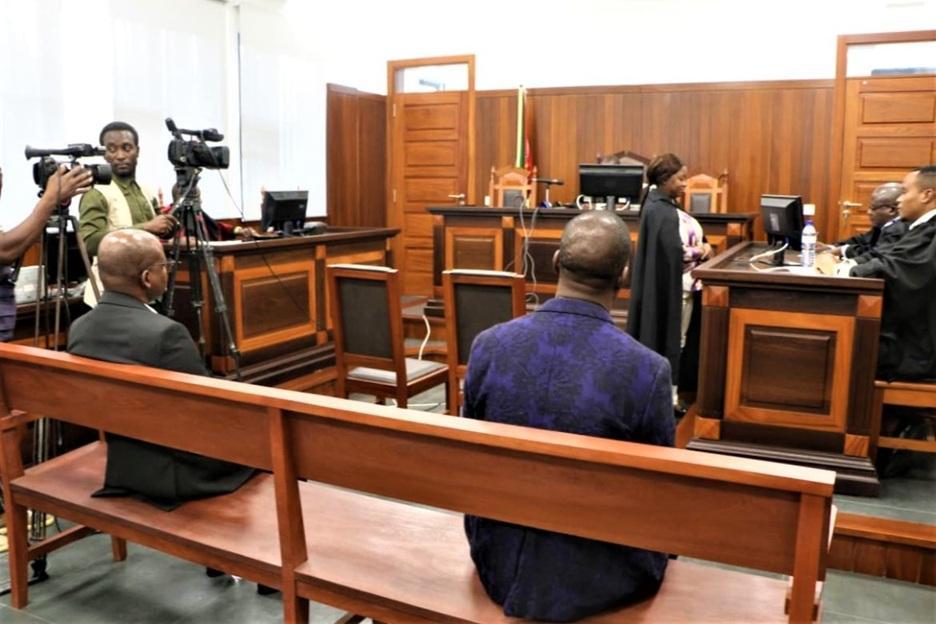
Africa-Press – Mozambique. Alexandre Njovo, former Presiding Judge of Maxixe City Court, in the southern Mozambican province of Inhambane, on Tuesday was sentenced to 10 years in prison for being involved in the embezzlement of 3.2 million meticais (50,000 US dollars at the current exchange rate).
The sentence also includes the payment of a one-year fine and the obligation to compensate the Mozambican State in the amount of approximately three million meticais.
The Third Section of the Inhambane Province Court also sentenced Francisco Cumbane, a court clerk, to 12 years in prison, in addition to the return of 2.7 million meticais to the state coffers.
The case dates back to the period between 2017 and 2018, when an internal audit at Maxixe Judicial Court found out serious irregularities in the management of the institution’s bank accounts.
According to the Attorney-General’s Office (PGR) statement, cited by the independent paper “O País”, Alexandre Njovo and Francisco Cumbane used their privileged access to compulsory deposit accounts to issue fraudulent cheques and make illegal withdrawals. These accounts were intended for sensitive amounts, such as bail, fees, alimony and other sums that, by law, should remain in the custody of the court until a judicial decision.
“In just six months of irregular transactions, the amount withdrawn exceeded 1.25 million meticais. In total, the overall value of the embezzlement reached around 3.2 million meticais. The cheques were issued in the name of the clerk and the amounts were subsequently divided between the two. The audit revealed that the withdrawals occurred repeatedly and in significant amounts”, the court said.
The court also found it proven that the defendants acted in collusion, taking advantage of their positions and the institutional trust placed in them to commit the offences. It was also proven that there was an attempt to conceal evidence, including the deliberate destruction of cheque stubs, manipulation of official documents and preparation of false justifications to cover up bank transactions.
Source: AIM