Africa-Press – Mozambique. The Prime Minister of Mozambique, Benvinda Levi, stated today that the ongoing restructuring in the public water supply and sanitation sector aims to promote “efficiency and equity”, and should “reduce disparities” between urban and rural areas.
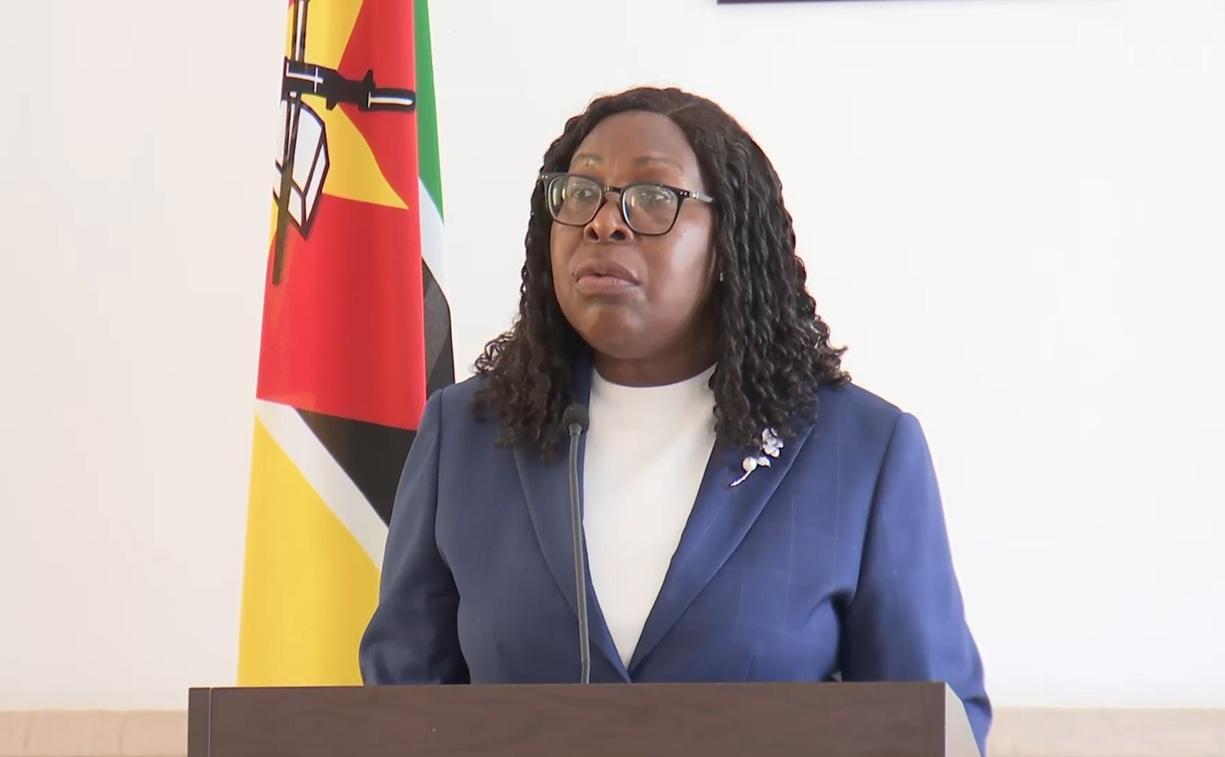
“The process of institutional restructuring of the water supply and sanitation subsector aims to promote efficiency and equity in the provision of these services to the population and to balance the allocation of resources,” said the Prime Minister in Maputo, when inaugurating Miguel Langa as Chair of the Board of the Investment Fund of Water Supply and Sanitation Assets (FIPAAS) and Augusto Chipenembe as Chair of the Board of Águas de Moçambique (AdeM).
These two institutions were recently created under the new legal framework for the Public Water Supply and Sanitation Service and, according to Benvinda Levi, are part of the overall objective of “reducing disparities in water supply and sanitation between urban and rural areas” as well as “promoting sector sustainability”.
“We aim to equip our country with an entity whose main mission is to mobilise financial resources, and to develop and expand the public water supply and sanitation assets across the full chain, thereby reducing regional and rural-urban disparities,” she said when inaugurating Miguel Micas Langa as Chair of the FIPAAS Board.
As for AdeM, the Prime Minister said it should “ensure the management of public water supply and sanitation assets across the full chain”. The institute’s first Board Chair, also inaugurated today, is João Domingos Chipenembe.
The Prime Minister asked the newly sworn-in FIPAAS Chairperson to ensure that public infrastructure planning in the sector “is carried out in close coordination and articulation with decentralised governance bodies, local authorities and other relevant stakeholders”, alongside investment programmes prepared in a “transparent and rigorous” manner, taking into account the “technical and financial sustainability of the sector”.
Levi also emphasised the need to foster “an attractive environment for the involvement of both national and foreign private sector investment” in these infrastructures.
Regarding the new AdeM management, the Prime Minister said she expected it to be proactive in “promoting strategies for sector sustainability” and “improving service quality”, while also expanding the water supply network across the country.
The Mozambican Government approved the creation of 12 public institutions on 18 November at the Council of Ministers to strengthen water supply for the population, aiming to meet sector targets and achieve estimated annual savings of €8 million.
The AdeM public institute replaces the Administration of Water and Sanitation Infrastructure (AIAS), and among the new institutions are the water and sanitation companies for Maputo, Gaza, Inhambane (south), Sofala, Manica, Tete, Zambézia (central), Nampula, Niassa and Cabo Delgado (north).
According to Government estimates, this reform will save at least 600 million meticais (eight million euros) annually, including a reduction of at least 10 top management positions across the boards.
Data from 2024 indicated that water supply coverage in urban areas of Mozambique was 87.9% and in rural areas 51.2%, while basic sanitation coverage was 68.4% and 21.4%, respectively. This corresponded to approximately 20.7 million people covered by the water supply network and 13 million by basic sanitation.
Source: Lusa