What You Need to Know
The Confederation of Business Associations (CTA) in Mozambique has urged the government to prevent the closure of the Mozal aluminium smelter, citing potential severe social and economic repercussions. The smelter’s future hinges on negotiations for a new electricity contract, which is critical for its operation.
Africa-Press – Mozambique. Mozambique’s Confederation of Business Associations (CTA) has called on the government to avoid “at all costs” the closure of the Mozal aluminium smelter, on the outskirts of Maputo.
CTA chairperson Alvaro Massingue, cited by the German agency DW Africa, warned that there would be “severe social and economic consequences” from any closure of the smelter.
“It should be a common objective to avoid, at all costs, the closure of Mozal”, said Massingue. He feared that closure would have a knock-on effect, pushing dozens of other companies that supply Mozal into bankruptcy, with massive redundancies.
The key problem is that, like all aluminium smelters, Mozal’s main input is electricity. The contract under which Mozal purchases electricity expires in March, and it has so far proved impossible to negotiate a new contract.
The Mozal chairperson, Samuel Samo Gudo, told a Maputo press conference last week that without agreement on the electricity tariff, Mozal is in danger of shutting down.
According to a report issued by the Maputo-based Zitamar News Service, the maximum tariff that the majority shareholder in Mozal, the Australian company South32, is willing to pay is 6.4 US cents per kilowatt hour
But the Mozambican government points out that 6.7 cents per kilowatt hour is the minimum that should be charged to cover the costs of generating the 950 megawatts of power that Mozal uses.
0.3 US cents may not seem very much, but over a year it would amount to 25 million dollars, The government regards this as a subsidy and does not see why Mozambique should pay an annual subsidy of 25 million dollars to an Australian company.
Mozal’s current plan is to put the smelter on a basic maintenance schedule. It would not be shut down, but Samo Gudo said it would take 12 months to put Mozal back into operation,
Mozal is the largest factory in Mozambique and is a key part of the government’s industrialisation strategy. But if Mozal closes, then Mozambique is facing, not industrialisation, but de-industrialisation.
Mozal employs 1,100 people directly, and about 5,000 indirectly. Losing all these jobs would be a devastating blow – hence the government has a strong incentive, even at this late hour, to negotiate a deal with South32.
Massingue said the CTA regards Mozal as “a strategic asset” and suggested extending the current electricity purchase contract for a further six or 12 months. Massingue believed this would create space for further negotiation and perhaps for “sustainable agreements”.
Already companies that supply Mozal have been reducing the size of their workforce. The impact on the Beluluane Industrial Park, which was set up precisely to support Mozal could be devastating.
Feliciano Augusto, manager of C and S Engineering, said that his company has laid off 40 per cent of its workforce. “Reinventing ourselves will not be easy”, he said.
Mozal had an excellent reputation for paying its suppliers on time. Companies wanted to sell goods to Mozal, because they would be sure of payment. But if the smelter closes, that certainty disappears.
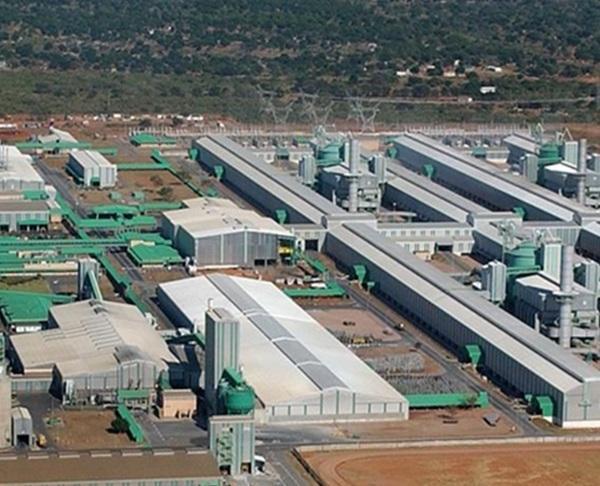
Mozal, located near Maputo, is the largest factory in Mozambique and plays a crucial role in the country’s industrialization strategy. Established in the late 1990s, it has significantly contributed to the local economy by providing thousands of jobs and attracting investment. However, the smelter’s reliance on a stable electricity supply has become a pressing issue, especially as its current electricity contract nears expiration, raising concerns about its operational viability.
The aluminium smelter has faced challenges in negotiating favorable electricity tariffs, which are essential for its continued operation. The ongoing discussions between Mozal and the government highlight the fragm