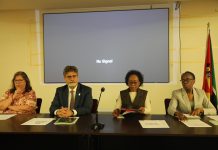
Africa-Press – Mozambique. The East African Community (EAC) has unveiled the Regional Bio-economy Strategy 2021/22-2031/32 at the EAC Headquarters in Arusha region.
The strategy will offer an opportunity for partner states to achieve their individual aspirations, making use of the region’s abundant natural resources, including underutilised agricultural waste materials, to produce value-added products with applications in many sectors including food, health, energy and industrial goods.
Among the key interventions proposed in the strategy that was unveiled by the EAC Deputy Secretary General in charge of Planning and Infrastructure, Eng Steven Mlote, on behalf of the Secretary General, is the creation of new forms of sustainable bioenergy, and the conversion of waste materials to useful products.
The strategy further seeks to ensure the transformation of economies and place innovation in bio-based products and processes at the centre, with a bio-based circular economy as the organising framework.
In addition, the strategy will contribute immensely through effective, efficient and sustainable production and use of bio-based materials, products, processes and business models to drive the sustainable development in the region.
Speaking at the event, Eng Mlote said that bioeconomy growth offers an opportunity for countries in Eastern Africa to achieve many of the Sustainable Development Goals by 2030, making use of the region’s abundant natural resources to produce value added products, thereby creating jobs, improving health and food security, generating wealth, and connecting smallholder farmers to new bio based value chains.
“Today, more than 65 per cent of the population in Eastern Africa depends on biological resources for food, energy, medicine, and other uses. They frequently use these biological resources in their raw form and dispose of significant portions as biological waste. There is therefore huge potential to add value to these biological resources through the development of bioeconomy,” said Eng Mlote.
Eng Mlote further said that the development of a modern bioeconomy in Eastern Africa has significant potential to support several critical development goals and targets for the region, and will help deliver the different outcomes including: sustainable industrialisation, job creation and green growth; improved food security; health; the the creation of new bio based products and linking farmers and bio entrepreneurs to local, national, regional and international markets opportunities.
In his remarks, the Executive Secretary of the East African Science and Technology Commission, Dr Sylvance Okoth, said the Bioeconomy Strategy is aligned to expressed commitments to environmental sustainability, climate change adaptation and mitigation aimed at reversing unsustainable policies and practices.
“This strategy is anchored on four thematic areas; Food security and sustainable agriculture; Health and wellbeing; Sustainable Energy, and bio-based Industrial Development,” said Dr Okoth.
The Executive Secretary further noted that the strategy will enhance the transformation of economies and place innovation in bio-based products and processes at the centre, with a bio-based circular economy as the organising framework.
For More News And Analysis About Mozambique Follow Africa-Press