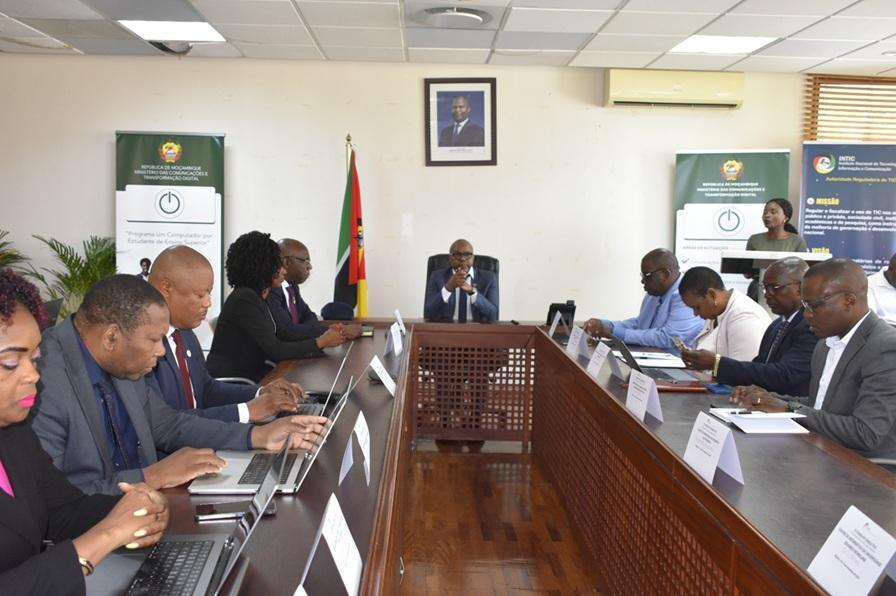
Africa-Press – Mozambique. The Mozambican government wants to end impunity and the lack of authority in cybercrime through physical and digital infrastructure and human capacity building, said the Minister of Communications and Digital Transformation Américo Muchanga.
“We must put an end to the feeling of impunity and lack of State authority in the challenges of cybersecurity, cybercrime and data protection in Mozambique,” said the minister, quoted on Tuesday by the media.
According to Minister Muchanga, Mozambique’s National Institute of Information and Communication Technologies (INTIC) must organise itself to respond to cyber challenges in the country, strengthening human and technological resources and physical and digital infrastructure.
Mozambique is preparing and expects to have a data protection law ready by June 2026, which will strengthen the digital ecosystem and economic and social development.
“We are certain that with the approval of these new laws, INTIC’s role in supervising, auditing and monitoring digital society will be even more important,” Américo Muchanga stressed.
On 5th December, INTIC President Lourino Chemane said that the approval of this instrument will mean a “major change” by contributing to the country’s economic and social development.
“We believe that by June 2026, as per our plan, this document will be presented to the Cabinet for approval, administration and implementation,” he said, adding that “if, in fact, data is the gold of this century, it means that it is another resource available to Mozambique, like natural resources, to contribute to economic and social development.”
The Mozambican Minister of the Interior, Paulo Chachine, previously considered the country’s accession in October to the United Nations Convention on Cybercrime, whose ratification request is still to be submitted to parliament, to be a “turning point” and an “important step”.
Mozambique signed the Convention in Hanoi, Vietnam, where the minister considered cybercrime to be a transnational crime, hence the need to “join forces to combat it”.
The convention needs to be ratified by at least 40 member states of the United Nations (UN) to enter into force, a process that involves internal approval and ensuring that national laws are aligned with its requirements.
In September, the Mozambican government approved a draft bill on cybercrime, which it will also submit to parliament, providing for substantive and procedural criminal provisions, including the collection of evidence of crimes in electronic form.
Cybercrime in Mozambique grew by 16% last year compared to 2023, Deputy Attorney General Amabelia Chuquela warned on 5th June, attributing this to insufficient resources and public awareness of the problem.