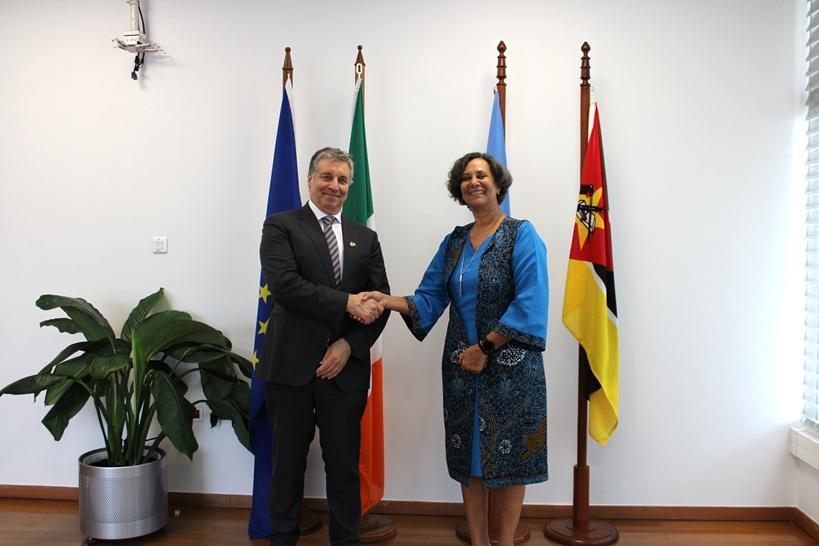
Africa-Press – Mozambique. The Irish government has provided €6 million through the United Nations Population Fund (UNFPA) to expand access to family planning in Mozambique and strengthen access to sexual and reproductive health services.
“With a contribution of €6 million from Ireland, this two-year initiative will strengthen access to essential sexual and reproductive health services for women, adolescents and young people across the country, with a particular focus on the provinces of Niassa, Nampula, Sofala and Inhambane,” reads a statement from the United Nations (UN) agency.
According to UNFPA, the new project “Access and Choice – Family Planning for Health, Rights and Development,” created to expand access to family planning in Mozambique, is part of Ireland’s global support for the provision of family planning products in countries with the greatest needs.
The main objective is to ensure that women, men, couples, adolescents and young people have access to the information and family planning methods (injectables, pills, implants, intrauterine devices and condoms) they need to make informed choices and decisions about their future,” it said.
According to the humanitarian agency, Mozambique has made remarkable progress in expanding access to family planning services in recent years, with the use of modern contraceptive methods increasing from 11% in 2011 to 25% between 2022 and 2023.
This scenario has contributed to a significant reduction in maternal mortality, from 408 to 233 per 100,000 births (live births), and infant mortality, from 101 to 39 per 1,000 births (live births).
“With the current challenging context for investment in the health sector with domestic and external financial resources, the “Access and Choice” project aims to contribute to responding directly to specific challenges related to sexual and reproductive health rights, with a focus on making at least five modern family planning methods available and distributing them in health units and communities,” the note explains.
UNFPA also states that the implementation of the initiative, in coordination with the Ministry of Health (Misau), the Central Medicines and Medical Supplies Agency, and provincial and district health services and directorates, aims to lead to the acquisition of contraceptives, covering 34% of national needs in 2026, and support the distribution of contraceptives and other medicines to the most remote places, “ensuring they reach health facilities and communities in the four target provinces.”
The project will also strengthen national logistics information systems through training, improve data quality, and use digital tools to monitor the supply chain in real time, according to the UN agency.
Patrick Empey, Ireland’s ambassador to Mozambique, quoted in the document, said that the African country has a high fertility rate and that investing in family planning can be considered a “strategic” development intervention with medium and long-term benefits.
“This contribution reinforces Ireland’s commitment to the health sector in general, and to the health of women, adolescents and young people in Mozambique in particular, representing an important step in supporting the efforts of UNFPA and Misau in accessing health services so that no one is left behind,” he said.
For the UNFPA representative in the country, Nélida Rodrigues, also quoted in the statement, investing in family planning is investing in the country’s future, because ending family planning needs is “essential” not only for health but also for the sustainable development of Mozambique.