Africa-Press – Mozambique. Mozambique is among the countries likely to be hardest hit by rising food prices and the cost of living due to a reduction in fertiliser imports, caused by disruptions to traffic through the Strait of Hormuz, the United Nations has warned.
In the document “Strait of Hormuz disruptions: Implications for global trade and development”, released on Monday, the United Nations Conference on Trade and Development (UNCTAD) notes that the interruption of transit through the Strait of Hormuz “could worsen access to fertilizers for some of the poorest countries”, highlighting global consequences arising from the halt in the transport of supplies through this channel.
“The escalation of the conflict affecting the Strait of Hormuz region (…) is increasingly reflected in fertilizer markets, linking disruptions in energy and shipping to agricultural markets, future food supply and trade,” the organisation warns.
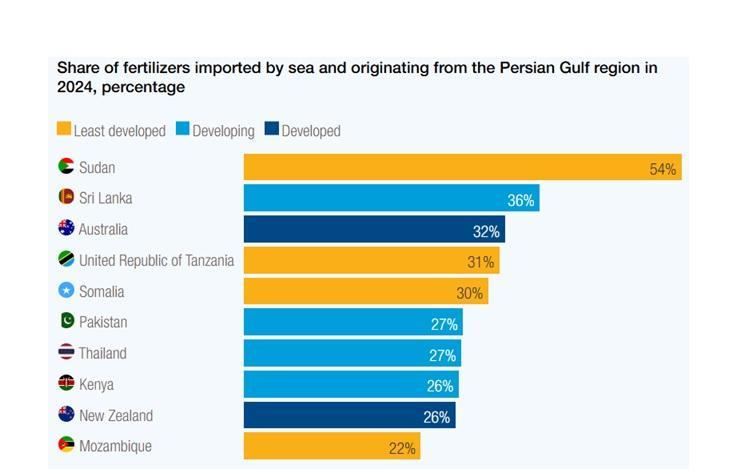
UNCTAD further states that Mozambique imported, in 2024, a total of 22% of its fertilisers through this channel, originating from the Persian Gulf, in a list that also includes New Zealand (26%), Kenya (26%), Thailand (27%), Pakistan (27%), Somalia (30%), Tanzania (31%), Australia (32%), Sri Lanka (36%) and Sudan (54%).
“Increases in energy, fertiliser, and transport costs — including freight, maritime fuel prices, and insurance premiums — can raise food prices and intensify pressure on the cost of living, particularly for the most vulnerable,” the document indicates.
When oil prices rise, food prices tend to increase accordingly, and “when gas prices go up, fertilizer prices often go up,” it adds. “The effects are already visible. Prices for nitrogen-based fertilizers have risen significantly, with smaller but noticeable increases in phosphatic fertilizers.,” the report states.
The Strait of Hormuz is crucial for the global supply of fertilisers, both as a trade route and because it lies within a region of producing countries, UNCTAD emphasises.
“The region’s role goes beyond energy. It is also a major producer of key inputs such as sulphur, used in phosphatic fertilizers, and a central hub for global fertilizer trade. Around one third of global seaborne fertilizer volumes pass through the Strait,” it stresses.
“For major importing countries, particularly in Asia, disruptions to energy and fertilizer flows are closely linked. Reduced access to natural gas and higher costs can directly affect fertilizer production, availability and trade,” reads the UNCTAD report.
“Fertilizer trade is highly concentrated, increasing exposure to disruption. Countries in the region account for 13% of global exports of nitrogen and 9% of phosphate fertilizer nutrients,” UNCTAD notes.”Disruptions to both fertilizer inputs and trade flows are already pushing prices higher, particularly for nitrogen-based fertilizers, with more moderate increases in phosphatic products,” it adds.
Globally, UNCTAD points out, a third of the world’s maritime trade in fertilisers passes through the Strait of Hormuz, totalling around 16 million tonnes of fertilisers imported by various countries from the Persian Gulf via this channel, of which 67% is urea, 20% diammonium phosphate, 9% monoammonium phosphate, and the remaining 4% other types of fertilisers, according to 2024 data.
The United States and Israel launched a military attack against Iran on 28 February, which Iran retaliated against by closing the Strait of Hormuz and carrying out attacks on targets in Israel, US bases, and other infrastructure in regional countries.
The Strait of Hormuz, which connects the Persian Gulf to the Gulf of Oman, is also the transport route for around 20% of globally traded oil and a significant portion of liquefied natural gas shipped by sea, according to data from the US Energy Information Administration and the United Nations.