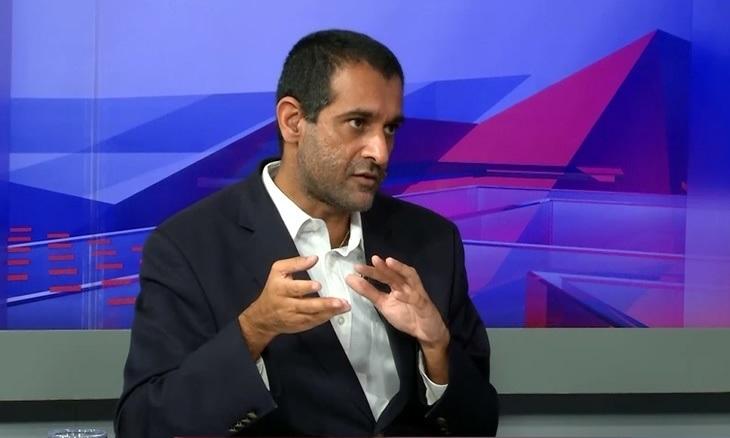
Africa-Press – Mozambique. If the current restrictive measures imposed by the government prove unable to limit the spread of the Covid-19 respiratory disease, then more draconian measures will be required, warned Ilesh Jani, director of Mozambique’s National Health Institute (INS), in an interview published in the latest issue of the independent weekly “Savana”.
Jani said that the indicators used by the INS classify the pandemic in five levels – level one being of low transmission of the virus, and level five being of very high transmission. Currently, Mozambique is at level four.
In April and May, after the end of the second wave of the pandemic, Mozambique was at level two. But then came the third wave, with a sharp increase in the number of cases, hospitalisations and deaths.
If Mozambique reaches level five, “that will require more restrictive measures to control the pandemic”, stressed Jani. “We must understand that a wave of high transmission of disease overburdens not only hospitalisation capacity, but also other actions in response to Covid-19, such as diagnosis, surveillance activities, and communication”.
Furthermore, an avalanche of Covid-19 patients “may interfere in the provision of routine services, such as vaccination, ante-natal consultations, elective surgery – and that, in turn, could lead to the collapse of the health system”, he added.
Asked if this would force the country into “medicine of catastrophe” (when doctors have to decide who will live and who will die), Jani said “the health system is obliged to make choices. With the level of hospitalisations we have reached, we have to make choices. No health system in the world has unlimited resources”.
That meant that, if the health system is to provide the services demanded by the pandemic, something else would have to be sacrificed, with resources diverted from routine services. “This has costs for the country, in terms of the quality of the services that the health system provides for the population”, he said.
The World Health Organisation (WHO), Jani pointed out, has already noted that the pandemic has reduced routine (i.e. not Covid-19 related) vaccination across the world. Something similar had happened during the ebola epidemic in West Africa: concentration on ebola led to reduced vaccination against measles. The result was a measles epidemic with thousands of deaths.
Thus reducing the transmission of the coronavirus that causes Covid-19 “is important, not only to control the virus”, said Jani, “but because waves of high transmission can impact on the provision of routine services which are vital for keeping the public healthy”.
Level five, Jani warned, would lead to “a very high rate of bed occupation, lack of sufficient diagnostic resources (such as Covid-19 tests), and of sufficient personal protective equipment because of the sheer number of patients the system has to bear”.
“That’s why we have to implement restrictive measures early”, he said. “And we did decree preventive measures early in the third wave, in an attempt to staunch the spread of the virus and reduce the height of the peak of the wave. We are always talking about flattening the curve, so that the peak is not very high, so that we don’t have many patients, and so that the third wave ends with fewer patients than would have been the case without applying the preventive measures”.
The third wave did not start across the country at the same, and so the peak would be reached at different times in different provinces. Jani believed that the peak would be reached first in Tete and in Greater Maputo. “These difficulties make it difficult for us to define exactly when the third wave will reach its peak”, he said.
“Other waves will come”, he added. “We don’t know how many there will be, but the fact is that this virus will become endemic. The virus is already established in the human population of all continents, so it is a virus that we will have to live with”.
The idea that the pandemic would only last for a short period has proved completely wrong. “Today we understand that this pandemic is not a 100 metre sprint”, said Jani. “It’s a marathon, and to win this race requires us to run with a strategy”.