What You Need to Know
The United States has introduced significant reforms to its funding of United Nations humanitarian operations, aiming for improved efficiency and accountability. This policy shift, announced by U.S. Ambassador Mike Waltz, will affect several countries, including Kenya, as the U.S. transitions to a consolidated funding model managed by OCHA, enhancing resource allocation for life-saving activities.
Africa-Press – Mozambique. The United States has announced sweeping changes to how it will finance the United Nations humanitarian operations in a policy shift expected to have implications on several countries, including Mozambique.
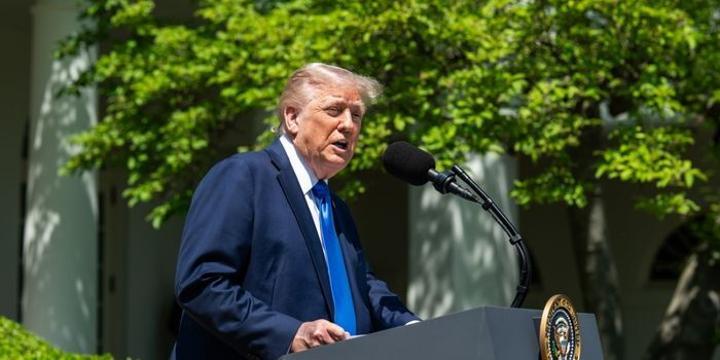
U.S Representative to the United Nations Ambassador Mike Waltz made the announcement on Tuesday, December 30, with the changes stemming from a new Memorandum of Understanding (MoU) signed in Geneva between the U.S Department of State and the UN Office for the Coordination of Humanitarian Affairs (OCHA).
“Today, the State Department and the United Nations signed a groundbreaking agreement to overhaul how the U.S. funds and oversees UN humanitarian programs,” a statement from Waltz read. in what U.S officials have described as a “new paradigm” for funding UN humanitarian assistance worldwide.
Under the new agreement, the US will move away from funding large numbers of individual, project-based grants. Instead, humanitarian assistance will be channeled through consolidated, flexible pooled funds managed by OCHA at the country or crisis level.
According to U.S officials, American voluntary contributions to UN humanitarian agencies have risen sharply in recent years, reaching an estimated Ksh 1 trillion (USD 8billion) annually amid concerns about the effectiveness of these programmes.
“While annual U.S. contributions to the UN have skyrocketed in recent years, many UN bodies have abandoned their mission,” the State Department said in its statement, citing what it described as “bureaucratic inefficiencies, duplication, and ideological creep.”
The pooled funds will, going forward, operate under a comprehensive country-level policy agreement to align with U.S priorities. Among the priorities the U.S wants to take a special focus on are what the country describes as “hyper-prioritised life-saving activities, including food assistance, emergency health care and protection of vulnerable populations.
Kenya is among the countries that will be impacted by this change as the country hosts extensive UN humanitarian operations linked to drought response, refugee assistance and regional instability.
Before the new MoU, U.S humanitarian assistance to UN agencies in Kenya was largely delivered through a project-by-project grant system. Funding for drought response, for example, would be negotiated and managed individually with agencies such as the World Food Programme (WFP), UNHCR, UNICEF, among others.
One of the biggest cons of this system was that multiple UN agencies ended up operating in the same locations with overlapping mandates.
The new MoU will thus replace this system with a country-level pooled funding administered by OCHA, effectively allowing resources for Kenya to be allocated more flexibly across agencies and sectors.
According to the State Department, the new funding model is intended to “nearly double the life-saving impact of each U.S. dollar spent” on UN-administered humanitarian aid, while significantly reducing indirect costs.
US officials now estimate that the increased efficiency and tighter prioritisation could potentially save American taxpayers Ksh245 billion (USD1.9 billion) compared with previous funding models.
As part of the agreement, the U.S. has pledged an initial Ksh258 billion (USD2 billion) to fund life-saving humanitarian assistance in dozens of countries in 2026.
“At a moment of immense global strain, the United States is demonstrating that it is a humanitarian superpower,” UN Under-Secretary-General for Humanitarian Affairs and Emergency Relief Coordinator Tom Fletcher said. “It shifts U.S. funding of UN humanitarian work onto clearly defined, accountable, efficient, and hyper-prioritized funding mechanisms.”
Historically, U.S. humanitarian assistance to UN agencies has been delivered through a project-based grant system, which often resulted in overlapping efforts by multiple agencies in the same regions. This approach has faced criticism for inefficiencies and lack of coordination, particularly in crisis situations like droughts and refugee assistance in countries such as Kenya. The new Memorandum of Understanding aims to streamline funding processes and enhance the effectiveness of humanitarian aid delivery.