Africa-Press – Namibia. The prosecutor general (PG) must pay N$150 000 to a South African man acquitted on charges of trafficking in persons after the state’s case crumbled during his trial.
This was ordered by the Supreme Court yesterday.
The court made the order at the end of a judgement on an appeal by South African citizen Pieter Groenewald against a High Court judgement in which his claim against the PG dismissed in October 2021.
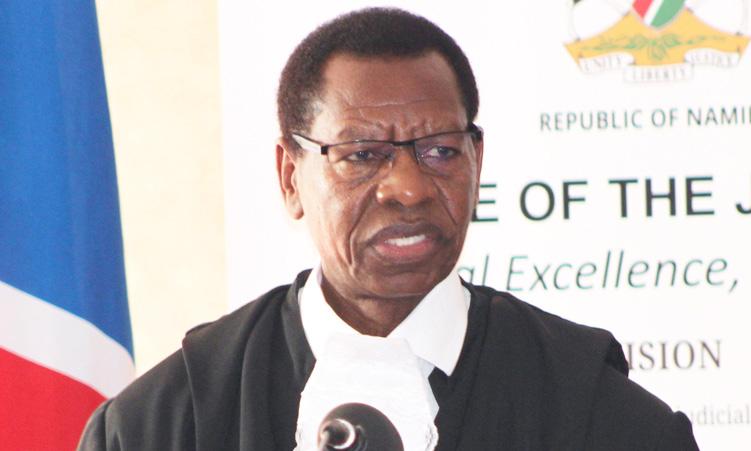
In the Supreme Court’s judgement, chief justice Peter Shivute, deputy chief justice Petrus Damaseb and appeal judge Dave Smuts found that there was sufficient evidence on which a prosecutor based at Rundu decided to prosecute Groenewald on charges of trafficking in persons and attempted trafficking.
However, the court also found that the prosecutor should not have continued the prosecution against Groenewald when crucial state witnesses denied allegations made in their witness statements, which were recorded by the police, and exonerated Groenewald on half of the 19 charges he was facing.
The prosecutor continued with Groenewald’s trial in the Rundu Regional Court, though, until Groenewald and his then fiancée, Elmarie Greeff, who was also prosecuted, were both found not guilty after the state’s case had collapsed.
Groenewald and Greeff both sued the then minister of safety and security, as the Cabinet member responsible for the Namibian Police, and the PG for alleged unlawful arrest and malicious prosecution after they were acquitted in July 2015.
Groenewald’s claim was dismissed in the Windhoek High Court in October 2021, but Greeff’s claim for alleged malicious prosecution succeeded and the court ordered that the PG should pay N$50 000 to her.
Groenewald and Greeff were arrested at Rundu at the start of April 2013.
They were arrested after Groenewald had visited the western part of the Zambezi region to recruit 12 men from the Khwe San community to be employed by him in South Africa.
The men were told they would be employed by a close corporation of Groenewald, Wildlife Investigation and Protection Services CC, as trackers and game rangers.
The chief justice, who wrote the Supreme Court’s judgement, recounted that according to an initial intelligence report received by the police, Groenewald was recruiting young men for military training in South Africa.
“It was, therefore, not surprising that the police approached the matter with a heightened sense of security, albeit tinged with a dose of overzealousness,” Shivute remarked.
Before he recruited the 12 men, Groenewald had previously also recruited 10 Khwe men in Namibia to work for his business in South Africa for a six-month period.
WITNESSES’ U-TURN
In the charges against Groenewald and Greeff, the state alleged that they recruited and transported people from the Khwe community for the purpose of exploitation, which is an offence in terms of Namibia’s Prevention of Organised Crime Act.
During the trial, though, state witnesses who had worked for Groenewald’s business in South Africa retracted allegations of financial exploitation and mistreatment made against him in their police witness statements. This left “the state’s case perilous and in a state of confusion”, Shivute said.
He added: “While in their previous statements some of the men alleged that they had been ill-treated and in effect exploited during their stay in South Africa, in court they painted a rosy picture of their stay and working conditions in that country, showering [Groenewald] with praise of being a model employer who treated them with courtesy and consideration and repeatedly asserting that they would return to his employment should another opportunity present itself.”
Witness statements in the police docket of Groenewald’s case when the decision to prosecute him was made show there was sufficient information on which he could be put on trial, with the statements indicating that the recruited men were in effect employed to provide cheap labour, which would constitute exploitation, Shivute said.
However, the witnesses who had worked for Groenewald in South Africa retracted allegations made against him in their witness statements when they were consulted by the prosecutor before they testified, Shivute noted.
After the witnesses told the prosecutor the allegations of exploitation against Groenewald were wrong, there was no evidence implicating him and the prosecutor did not have grounds to continue to prosecute him, the chief justice indicated.
Groenewald sued the police and PG in the High Court for a total amount of nearly N$3.4 million.
Shivute reasoned that Groenewald was entitled to recover half of his expenses for legal representation during his trial. Those expenses amounted to about N$200 000.
The court also awarded him N$50 000 for general damages.
Damaseb and Smuts agreed with Shivute’s judgement.
Groenewald was represented by legal counsel Albert Strydom in the appeal.
Sisa Namandje represented the PG and minister of safety and security.
For More News And Analysis About Namibia Follow Africa-Press