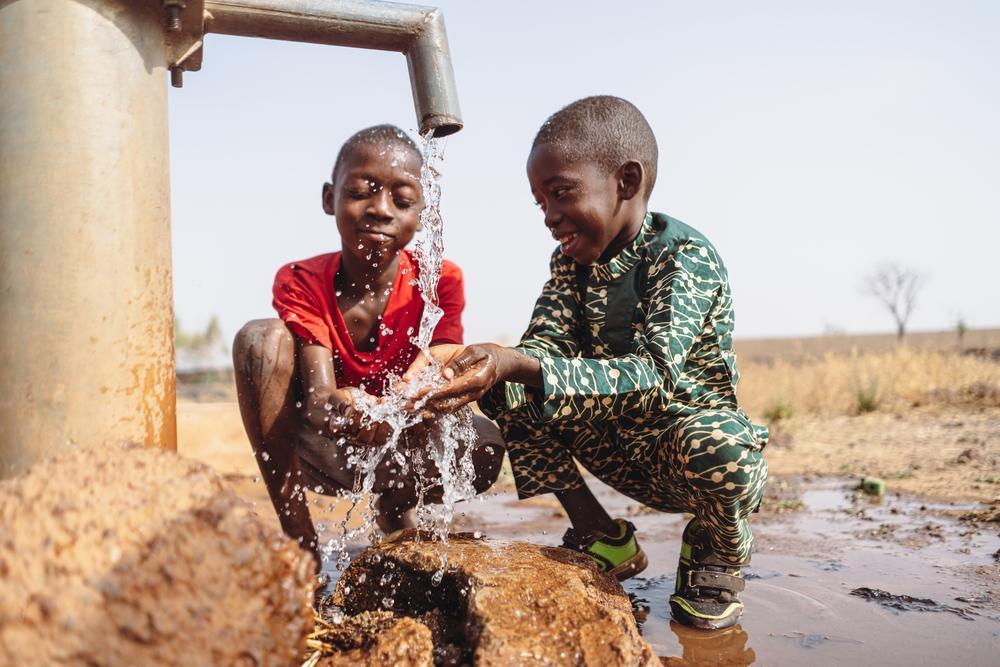
Africa-Press – Namibia. Government has expanded the country’s water supply network, following the successful drilling and installation of 94 new boreholes and 137 water units across various points in all 14 regions.
Implemented through the water ministry, boreholes and water units will further strengthen Namibia’s water security and access for human consumption, agricultural production and industrial development.
Through the extensive boreholes drilling and rehabilitation programme, the Kunene, Zambezi and Omaheke regions were the biggest beneficiaries of the programme, as the highest number of the new boreholes and water supply units were drilled and installed in their various supply points.
In addition, 51 existing boreholes were rehabilitated, while 21 boreholes were cleaned and restored to ensure continued water supply and improved yield.
To bring water closer to households, the ministry also constructed 55 short pipelines and enabled 2 886 private water connections, particularly in the Oshikoto, Ohangwena and Omusati regions.
“These investments have significantly reduced the distance rural families travel to access water and have contributed to improved living conditions. To strengthen water availability for livestock and rural communities, the ministry completed three earth dams in the current financial year, namely Mbone and Hameyi in Kavango West and Oshekaka in Oshana region,” agriculture minister Inge Zamwaani highlighted.
Key expansions
Alongside community-level infrastructure, government has also accelerated several strategic bulk water development projects under the Namibia Water Sector Support Programme (NWSSP), implemented with funding from the African Development Bank.
A major milestone during the year was the inauguration of the Ohangwena II Wellfield in 2025, which provides a critical new water source for north central Namibia.
Progress has also been made in expanding the drinking water treatment capacity.
The Rundu Water Treatment Plant extension has reached 76% completion and is scheduled for completion in November this year, while the Oshakati Water Purification Plant upgrade has reached 18% completion following the commencement of construction in 2025.
More efforts to strengthen sanitation and hygiene across the country to improve public health and dignity are also being made by government, which has seen open defecation declining slightly from 40% to 39.4%.
Access to basic sanitation services has increased to 36.2% nationwide.
“During the reporting period, 1 676 sanitation facilities were constructed for vulnerable rural households, 90 communities were mobilised under the Community-Led Total Sanitation programme, and 181 national awareness campaigns were conducted to promote improved hygiene practices and behavioural change”.
“These initiatives are particularly important to ensure water supply security and meeting the Sustainable Development Goal 6 on clean water and sanitation for a country as arid as Namibia, where access to reliable water remains essential for community well-being, agricultural production and sustainable economic growth,” Zamwaani underscored.
One of the most notable achievements was the increase in rural access to safe drinking water from 83.5% to 84.9%, reflecting continued government investment in both local water infrastructure and major bulk water supply projects.
Progress
Total water use in Namibia was estimated at 300 million m3 in 2000, with the municipal sector, including tourism and related industries, taking up 73 million m3, while the bulk of water use went towards the agriculture and livestock sectors.
The United Nations evaluated in 2011 that Namibia has improved its water access network significantly since independence in 1990.
Furthermore, in rural areas, access is sometimes limited by the long distance between residences and water points.
As a result, many Namibians prefer the traditional wells over the available water points far away.
For More News And Analysis About Namibia Follow Africa-Press