Africa-Press – Namibia. Namibia has refused to allow the commencement of Phase 2 of the South Africa-Lesotho Highlands Water Project due to irrefutable scientific data and realities of climate change.
This is the position of the Ministry of Agriculture, Fisheries, Water and Land Reform.
The ministry also dismissed any suggestions that its refusal to issue a ‘No Objection’ was based on political theatrics.
Namibia has in recent weeks made international headlines, particularly in South Africa and Lesotho, where it has been reported as sabotaging Phase 2 of the multi-million-dollar water project.
It aims to cater to South Africa’s water needs and serve as revenue generation for Lesotho.
The ministry’s spokesperson Simon Nghipandulwa yesterday affirmed that the Namibian government supports, appreciates and fully understands the economic and social importance of the South Africa- Lesotho Highlands Water Project.
He, however, hastened to maintain that certain key transboundary issues around the project must be first addressed.
“In light of the potential negative impacts on Namibia as a downstream riparian state, it was considered appropriate not to issue a ‘No-Objection’ until concerns relating to the anticipated impacts of the further development of Phase 2 had been satisfactorily addressed, and until a firm commitment had been provided by South Africa regarding the joint development of the Noordoewer–Vioolsdrift Dam on the Lower Orange River as a mitigation measure,” said Nghipandulwa.
Concerns
One of Namibia’s biggest concerns is the slow progress or lack of commitment from South Africa to proceed with the planned construction of the Noordoewer– Vioolsdrift Dam on the lower margins of the Orange River.
Nghipandulwa said the envisaged dam will serve as a mitigation measure.
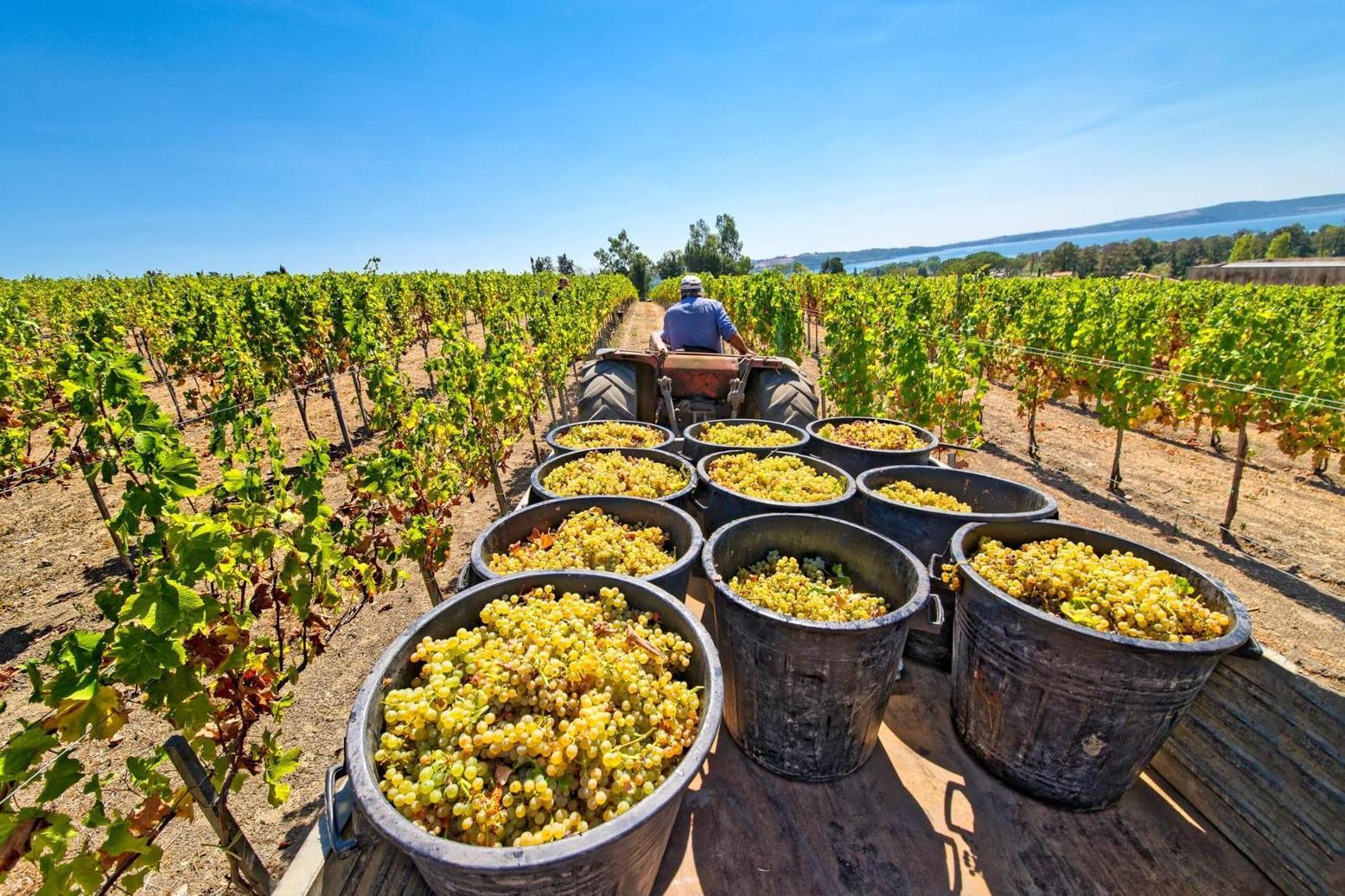
Should phase two of the South Africa-Lesotho Highlands Water Project continue, it will negatively affect Namibia’s major economic activities in the southern end of the border along the Orange River, which includes multi-billion-dollar projects such as irrigation schemes, table grapes for export, mining of zinc and diamonds, as well as related power generation projects like the Kudu gas field.
Namibia has also raised concern that, should phase two of the project proceed, it will significantly reduce the flow of water at the downstream end of the Orange River, a point at which Namibia relies on for people and farming.
Explainer
The ongoing water supply project, which has a hydroelectric power component to it, is a development between Lesotho and South Africa.
It comprises several large dams and tunnels throughout Lesotho, and delivers water to the Vaal River System in South Africa.
In Lesotho, it involves the rivers Malibamatso, Matsoku, Senqunyane and (Orange River) Senqu.
It is Africa’s largest water transfer scheme. The purpose of the project is to provide Lesotho with a source of revenue in exchange for the provision of water to South Africa, as well as generate hydroelectricity for Lesotho.
As of 2015, royalties paid by South Africa to the Lesotho government amounted to N$780 million, equivalent to about 5% of Lesotho’s state income outside of taxes.
The hydroelectric power has enabled Lesotho to become self-sufficient in electricity production.
Context
The Orange River is shared between Lesotho, South Africa, Botswana and Namibia.
It rises in the Lesotho highlands, where it is known as the Senqu River, and then flows 2 300 km towards the Atlantic Ocean through all four countries. For the last 600 km before entering the Atlantic Ocean, the lower Orange River runs along the border between Namibia and South Africa.
Of the river’s total flow of 11 300 million cubic metres per year, South Africa withdraws about 63%, making it the largest water user among the Orange River riparian states. Mostly relying on groundwater, downstream Namibia uses only 1.3% of the water.
Upstream Lesotho, with its plentiful water supplies, withdraws a mere 0.2%.
Following the completion of the project’s feasibility study in 2019, Namibia was requested to confirm its ‘No Objection’ to the proposed development in Lesotho. Upon thorough review, Namibia determined that issuing such confirmation would be premature due to potential adverse effects on the country as a downstream riparian state along the Orange (Senqu) River system. Notably, concerns persist about the anticipated impacts of Phase 2 on downstream water flows.
Namibia has consistently maintained that a ‘No Objection’ can only be considered once these issues have been satisfactorily resolved and a firm commitment is provided by South Africa concerning the joint development of the Noordoewer- Vioolsdrift Dam on the Lower Orange River, which is regarded as an essential mitigation measure.
“The government is confident that compromise can be reached through effective mitigation measures that protect downstream interests while promoting sustainable development within the basin.
All interactions are guided by international law and principles governing shared watercourses, particularly equitable and reasonable utilisation as well as the obligation to prevent significant harm,” he further stated.
Conflict resolution
Ongoing dialogue between the countries has for years continued to take place through the Orange- Senqu River Basin Commission (ORASECOM), which comprises Botswana, Lesotho, Namibia and South Africa.
Other bilateral platforms, such as the Permanent Water Commission (PWC) and the Bi-National Commission (BNC) between Namibia and South Africa, also attend to this issue, where discussions are focused on identifying consensus and mutually acceptable solutions with relevant authorities and stakeholders.
From 1915 to 1990, Namibia was under the South African apartheid administration, and the lower Orange River was managed by South Africa. Consequently, there were few, if any, opportunities for interstate disputes over water allocation.
However, South Africa’s 75-year rule in Namibia ended in 1990, and has left behind a legacy of ambivalence in bilateral relations.
Since Namibia gained independence and has moved in leaps and bounds to develop its southern region, several water-related disagreements have arisen between it and South Africa.
These mainly concern the location of a shared border, water allocation and pricing, and the Lesotho Highlands Water Project.
Climate change has the potential to further exacerbate water scarcity, as it has complicated equitable and sustainable water-sharing in the basin.
Thorny border
The Orange River forms the international border between South Africa and Namibia.
However, the two countries disagree over the exact location of this border.
A treaty between Britain and Germany, concluded in 1890, sets the demarcation at the high-water level of the northern bank.
During the run-up to Namibia’s independence, promises were made that the border would be moved from the northern bank to the middle of the Orange River.
This location of the border is also enshrined in the Namibian Constitution. However, no formal agreement has ever been concluded between Namibia and South Africa to fix the new border location.
At the time of Namibian independence, in 1990, it was agreed that Namibia would receive a certain amount of water from existing infrastructure in South Africa to meet its water demands downstream.
Namibia would receive this share of water, which it regards as its “historical allocation”, free of charge. Over the years, however, Namibia has sought to develop its southern region. However, the only possibility to promote socio-economic development in the south would be by utilising a greater share of the Orange River waters.
To meet these water requirements, Namibia has asked for an additional temporal allocation of water from South Africa.
That country has reportedly suggested that any additional water allocations to Namibia should be charged at full cost, according to South African water tariffs.
“Namibia reaffirms it s commitment to ensuring that all development activities within the Orange (Senqu) River Basin are carried out responsibly without negative consequences for other riparian states, and with a focus on the sustainable management of shared water resources for the collective benefit,” Nghipandulwa stated.
For More News And Analysis About Namibia Follow Africa-Press