Africa-Press – Namibia.
Chief Justice Peter Shivute said the shortage of judicial officers has reached crisis proportions, with available judges dealing with a minimum of 600 cases annually.
Shivute laid this reality bare while speaking at the official opening of the legal year yesterday.
During the 2024 legal year, a civil bench of 13 judges managed a total of 4 987 cases, with an average workload of approximately 384 cases per judge.
In 2025, the reduced civil bench managed 4 295 cases. He said, although the overall number of cases declined, the average workload per judge rose sharply to approximately 614 cases per judge. “This represents an increase of nearly 60% in the average workload per judge,” Shivute said.
Outlining the most significant challenges encountered in the past year, he stated that inadequate resources, especially in human resources, remain one of the Judiciary’s most immediate and pressing challenges.
“Judicial officers and support staff are required to manage not only increasing caseloads but also the ancillary administrative, technological and procedural demands of a modern justice system,” he added.
The retirement of two seasoned jurists in the Supreme Court and two others in the High Court has worsened the situation, particularly in the civil stream.
Shivute stated that the civil stream has been operating under severe and sustained constraints in judicial capacity.
“Excluding the deputy judge presidents, the civil bench stood at seven judges. In the Northern Local Division, a single judge carried responsibility for the entire civil stream,” Shivute said.
He noted that the conditions have placed exceptional demands on judicial officers and the institutional support structures of the court. Shivute said this is a clear indication that judicial officers have been required to carry significantly heavier caseloads to maintain the effective functioning of the court. He added that they have also done so to avert the accumulation of backlogs.
“This level of productivity has been achieved at a cost, with clear institutional implications,” he continued.
He said the implications are unavoidable, and that judges in the High Court in both the criminal and civil streams have been working under immense pressure.
At the lower courts, the situation is similar, with the backlog remaining the most critical challenge confronting the magistrates’ courts.
“The combined backlog increased from 57 090 cases at the end of 2024 to 63 679 cases in December 2025, representing an 11.5% increase,” said Shivute.
He noted that the growing backlog is occurring against the backdrop of persistent shortages of magistrates, resulting in unsustainable caseloads per judicial officer.
Additionally, the situation is compounded by inadequate staffing levels among administrative personnel, which continue to create bottlenecks in case processing and delay the progression of matters through the system. “These pressures are further exacerbated by ongoing budgetary constraints, which limit the courts’ ability to respond effectively to rising demand,” the chief justice noted.
Mitigation
Steps have been taken to address this challenge, starting with the Aspirants Judges Training Programme that was revived last year. Other measures, such as a memorandum of understanding, were signed with sister countries to draw support and insight to advance the country’s ongoing reform initiatives. The chief justice called upon those qualified for judicial service to come forward.
He stated that a judiciary weakened by lack of capacity affects every sector of society.
Official
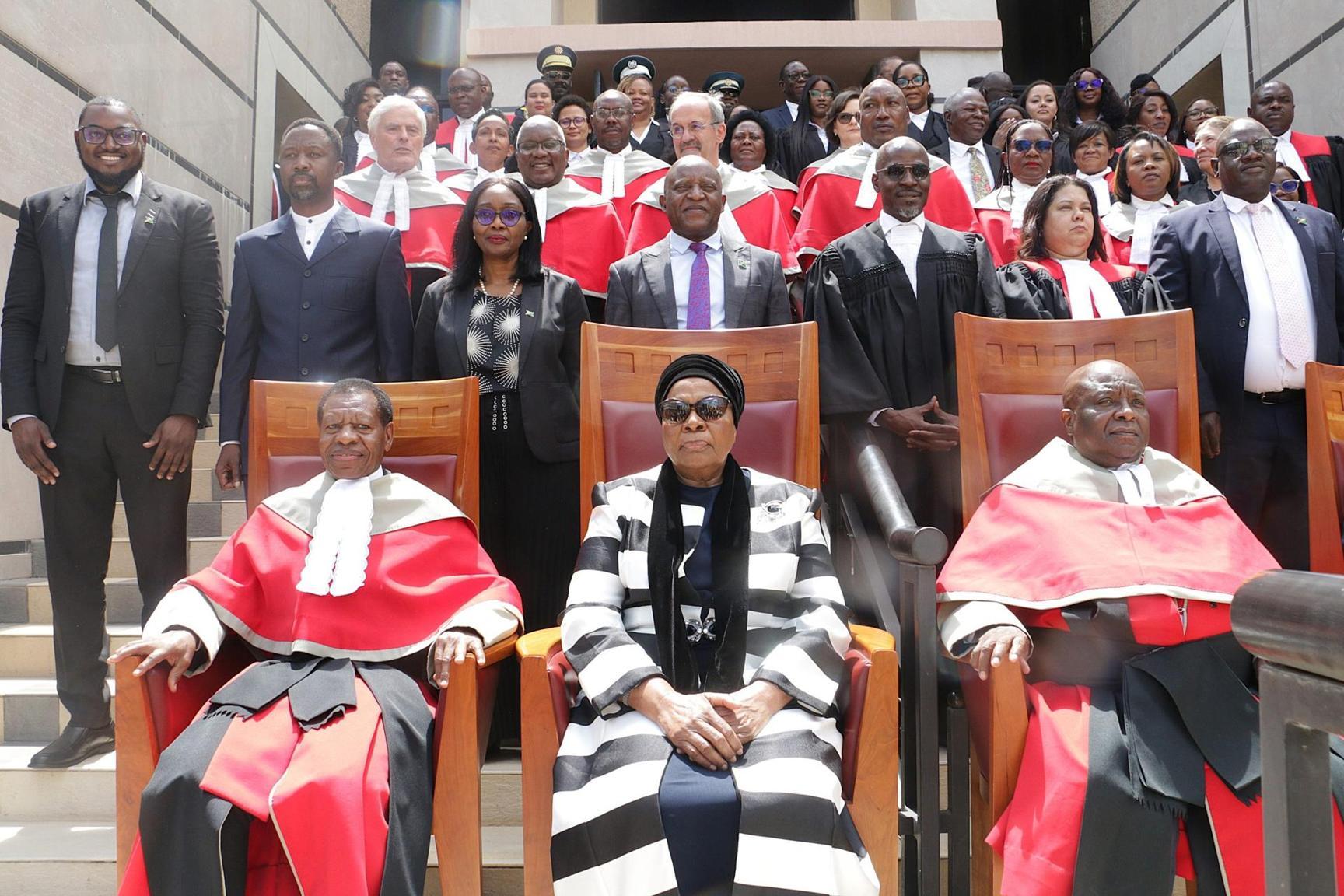
On the day, President Netumbo Nandi-Ndaitwah presided over the opening of the legal year.
Addressing the legal fraternity, she stressed that social and economic progress cannot take root in the absence of justice.
Accordingly, constrained and unequal development undermines social stability and erodes public confidence in institutions of governance, she added.
She highlighted that the rule of law remains the foundation of national development.
“A strong judiciary fosters an environment that is conducive to investment, innovation and opportunity,” Nandi-Ndaitwah said. She said it reassures investors, protects the vulnerable and enables the realisation of the country’s developmental aspirations. “Where the rule of law is weakened, corruption, crime and impunity find space to grow, and public trust begins to falter,” the President said.
It is for this reason that access to justice, as a fundamental human right, must be guaranteed for all, regardless of any circumstance, she said. “Justice must not only be done, but it must also be seen to be done,” she added.
For More News And Analysis About Namibia Follow Africa-Press