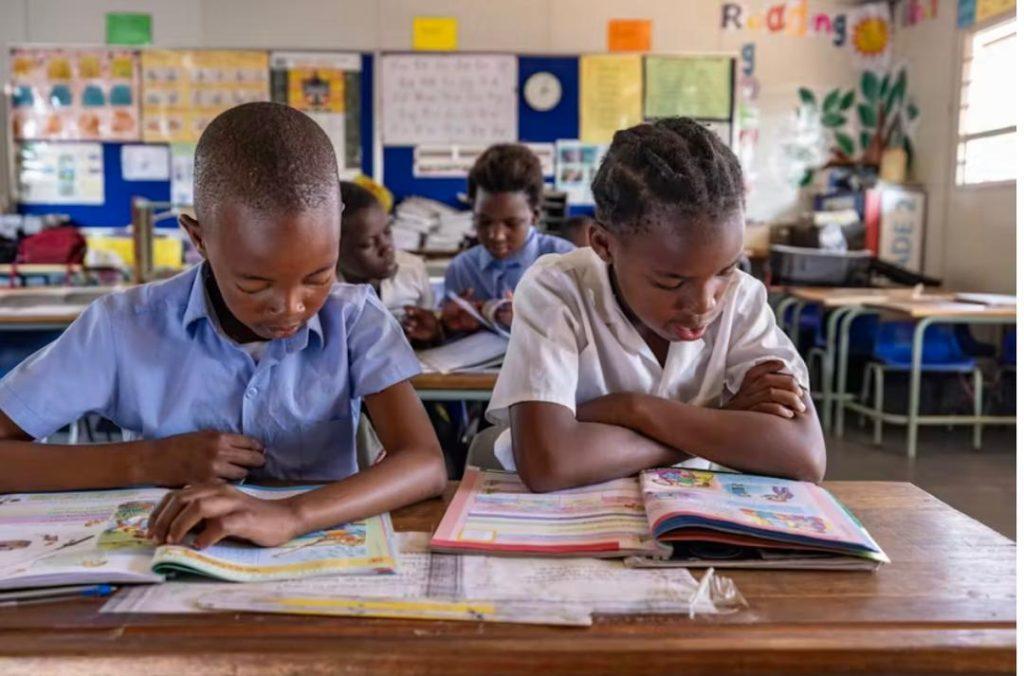
Africa-Press – Namibia. Education, innovation, youth, sport, arts and culture minister Sanet Steenkamp says the ministry continues to struggle to find qualified teachers to teach Khoekhoegowab, Setswana, and Afrikaans.
Steenkamp revealed this during the official opening of the sixth Nama Cultural Festival at Keetmanshoop on Friday.
She called for more scholarships for teachers pursuing studies in Khoekhoegowab, Setswana and Afrikaans.
“We do not just need doctors and engineers, they are important, yes, but we need to have the cornerstone of education cemented with strong, qualified, caring and loving teachers coming from our communities. To the parents, you are the first teachers, and it is the decision of the parent to ensure that their child is raised with a mother tongue and has access to a class in his or her mother tongue. I appeal to you, you have the choice, and many choose English as a medium for their children,” she said.
She highlighted that the government’s commitment to incorporating indigenous languages into the formal curriculum is not symbolic but a strategic move to ensure that the youth grow up with pride in their heritage, alongside the tools to navigate an interconnected, digital world without losing their sense of self.
“We are seeing increasing integration of these elements into our educational systems, which aligns with the broader national vision to restore dignity through education, to empower through identity, and to build a future that is anchored in our roots,” she said.
Steenkamp emphasised that the work of reclaiming and preserving cultural identities is not only a community effort but should be a national imperative.
The minister further said in recent years Namibia has witnessed a transformative change, not only in educational reform, but also in the growing embrace of diverse heritage, shared histories, and layered identities. This indicates that the country is on a journey that demands remembrance, reckoning, and renewal.
“Through festivals like this, through the ancestral rhythms of our dancers, the truths spoken by our elders, the creative expressions of our artists, and the convictions of our youth, we preserve, protect, and promote a culture that refuses to be erased. And in doing so, we are reclaiming our voice, our history, and our future,” she added.
For More News And Analysis About Namibia Follow Africa-Press