Africa-Press – Namibia. THE Ministry of Mines and Energy yesterday concluded a four-week geological mapping training programme for trainees from several African countries, including Namibia.
THE Ministry of Mines and Energy yesterday concluded a four-week geological mapping training programme for trainees from several African countries, including Namibia.
According to the coordinator of the programme in Namibia, Claudia Mutongolune, the international project, PanAfGeo2, is targeted at the practical improvement and capacity building of staff for geological surveys of African states.
“The training was conducted by local and international experts, with trainees from 16 African countries participating,” she says.
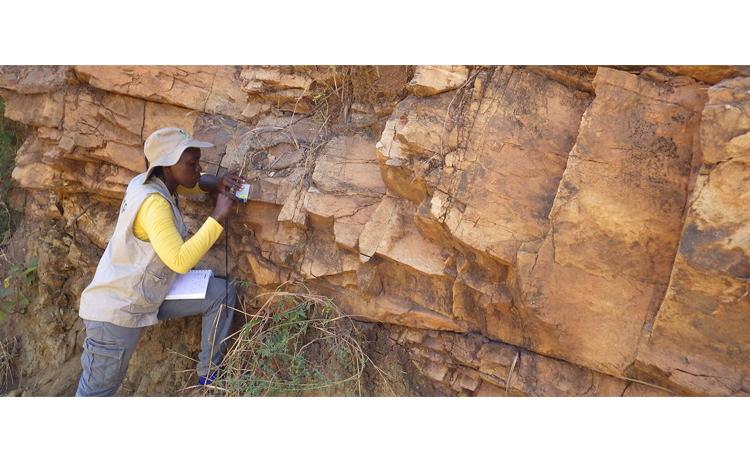
Mutongolune says the training involves geological mapping during which experts study rocks, identify them, and then compile a geological map of where the rocks are to be found.
“This information is for the assessment of the country’s mineral stock,” she says.
The training has been held on a rotational basis in Africa, she says.
It is supported by the European Union and is co-financed by 12 European geological surveys, united under EuroGeoSurveys.
The training in Namibia launches the second phase of the programme in Windhoek.
The first instalment training of the second phase of the field geoscientific mapping programme took place from 31 August until yesterday, and covered theoretical work in Windhoek.
The field part was held in a geologically varied area at the Etusis and Abbabis formations of the Damara belt.
The area south of Karibib represents ideally exposed and geologically variegated terrain, famous for numerous mineralogical occurrences and a rich mining history.
The training was coordinated by the Czech team and launched by experts from the Czech Geological Survey, Portugal Geological Survey, and the Geological Survey of Namibia (GSN), supported by local independent experts.
A total of 25 trainees representing 13 African countries took part in this course, accompanied by junior GSN staff members.
Email: [email protected]
According to the coordinator of the programme in Namibia, Claudia Mutongolune, the international project, PanAfGeo2, is targeted at the practical improvement and capacity building of staff for geological surveys of African states.
“The training was conducted by local and international experts, with trainees from 16 African countries participating,” she says.
Mutongolune says the training involves geological mapping during which experts study rocks, identify them, and then compile a geological map of where the rocks are to be found.
“This information is for the assessment of the country’s mineral stock,” she says.
The training has been held on a rotational basis in Africa, she says.
It is supported by the European Union and is co-financed by 12 European geological surveys, united under EuroGeoSurveys.
The training in Namibia launches the second phase of the programme in Windhoek.
The first instalment training of the second phase of the field geoscientific mapping programme took place from 31 August until yesterday, and covered theoretical work in Windhoek.
The field part was held in a geologically varied area at the Etusis and Abbabis formations of the Damara belt.
The area south of Karibib represents ideally exposed and geologically variegated terrain, famous for numerous mineralogical occurrences and a rich mining history.
The training was coordinated by the Czech team and launched by experts from the Czech Geological Survey, Portugal Geological Survey, and the Geological Survey of Namibia (GSN), supported by local independent experts.
A total of 25 trainees representing 13 African countries took part in this course, accompanied by junior GSN staff members.
Email: [email protected]
For More News And Analysis About Namibia Follow Africa-Press