Africa-Press – Namibia.
Thousands of Namibians are preparing for death than for daily life, as funeral insurance continues to outpace medical cover across the country.
For many families, dignity, respect and collective responsibility at the time of death take priority. Thus, funeral insurance has become a cultural and financial safety net, ensuring loved ones receive a dignified send-off.
Meanwhile, medical insurance has increasingly become the neglected “stepchild” of financial planning, often overlooked despite the rising cost of healthcare and growing burden of chronic illness.
For Josephine*, this reality became painfully clear when her 79-year-old grandmother passed away last year.
In her final months, the retired teacher battled a chronic illness at home. According to Josephine, the family was informed that the State had run out of the essential medication she needed. With no medical insurance, the family struggled to secure consistent treatment.
“She had no medical cover,” Josephine told New Era. “But she had a funeral cover. Almost every family member also had her on their funeral cover,” she added.
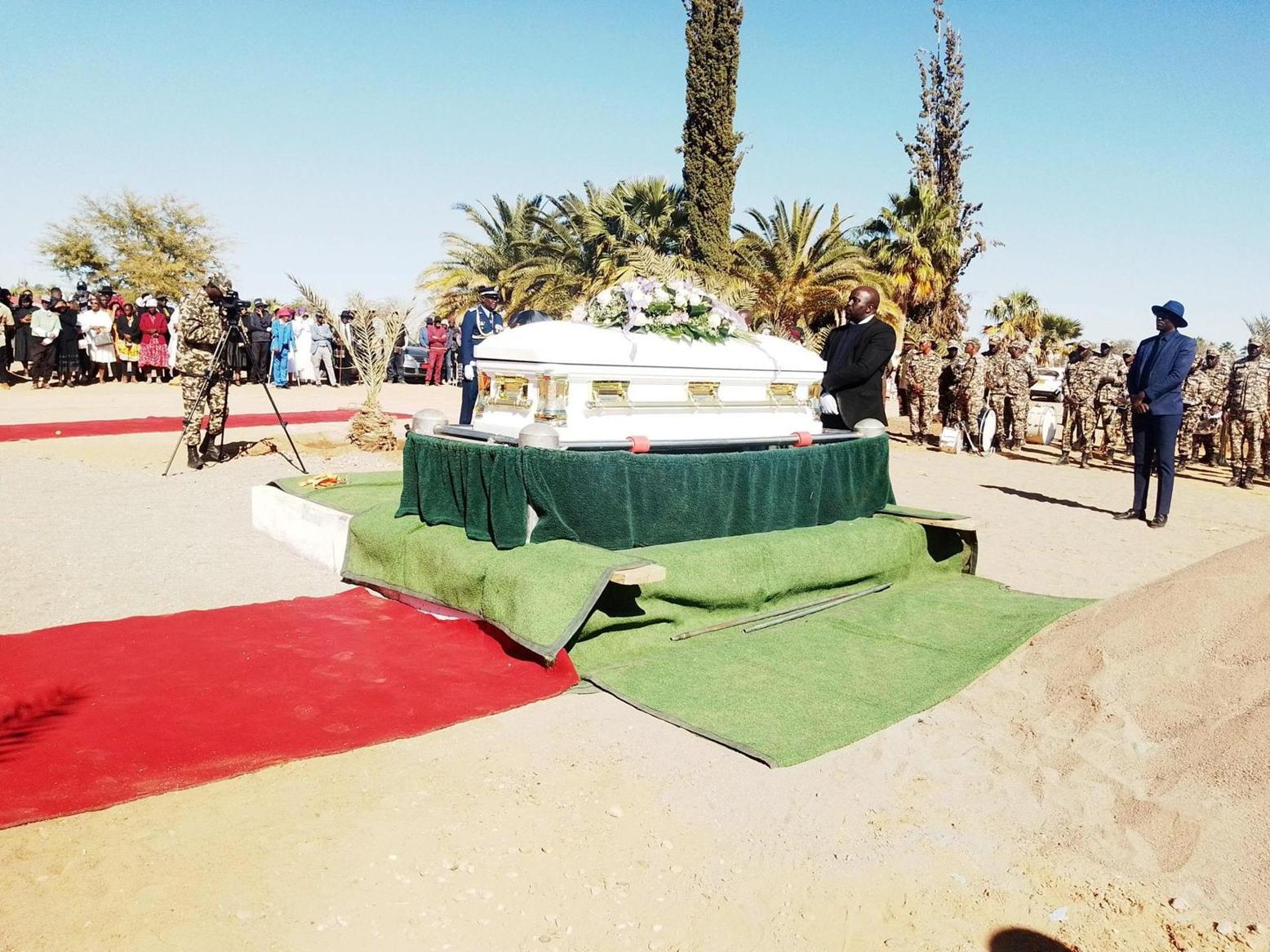
Although the family could not guarantee her access to critical medication, they were able to give her what Josephine described as a “dignified and top-class send-off.”
“There were some family members that contributed a huge amount of money”, she recalled. In August 2025, the Minister of Health and Social Services confirmed in a memo that Namibia was facing a critical shortage of essential medication for chronic conditions such as HIV/AIDS, hypertension, diabetes, psychiatric illnesses, and even vitamin A supplements for infants. Data from the Namibia Financial Institutions Supervisory Authority (Namfisa) paints a striking picture: more Namibians are financially prepared for burial than for illness.
Namfisa’s 2025 Annual Report shows that only 219 790 people were covered by medical aid schemes. Approximately 1.2 million Namibians, roughly 70% of the population, have no health insurance and must pay for medical care out of pocket.In contrast, 72% of insured Namibians hold funeral insurance policies, while only 30% have health insurance.
During the financial year ending 31 December 2024, the insurance industry’s net claims increased by 10.5%, reaching N$1.5 billion, further highlighting the scale of financial activity in the sector.
Afterlife vs Life
Medical practitioners are increasingly urging Namibians to reconsider their priorities.
Dr Jurgen Hoffmann, chief executive officer (CEO) of the Namibia Private Practitioners Forum, recognises that funeral cover plays a significant cultural and financial role.
Nonetheless, he emphasises that medical insurance is vital from a health standpoint.
He mentioned that, despite Namibia’s public health system being the main source of care for most citizens and offering essential services at relatively low costs, it is under increasing pressure. Infrastructure issues, staffing shortages, financial difficulties, and rising demand have all strained the delivery of services.
As a result, Hoffmann often faces limited access to timely diagnostics, specialist care, and consistent follow-up treatment.
“For uninsured individuals, this frequently leads to delayed care, interrupted treatment and late diagnosis of chronic illnesses such as hypertension, diabetes and cancer. What begins as a manageable condition can quickly escalate into a medical emergency resulting in higher costs, poorer outcomes and long-term disability,” Hoffmann said.
He stressed that investing in medical insurance does not only supports individual wellbeing but also keeps people economically productive, reduces avoidable complications, and limits the long-term burden on families and the public healthcare system.
Dr Nelson Makemba shared similar concerns, stating that, “Healthcare providers are committed to offering the best possible care,” but emphasised that “the absence of medical insurance significantly limits what can realistically be provided.”
He explained that when patients cannot afford diagnostic tests, medication, or follow-up care, clinicians are forced to make difficult compromises that fall short of optimal medical practice.“The risk of living without health insurance in the current healthcare environment includes severe financial ruin, medical debt, poor health outcomes and delayed care,” Makemba said.
While State facilities remain an option, he noted that high patient volumes often lead to long wait times, depending on the urgency of the condition.
Healthcare providers also face challenges when treating uninsured patients. Cost constraints may limit investigations needed for accurate diagnosis. Long-term management of chronic illnesses becomes inconsistent due to affordability issues. In some cases, healthcare providers must write off unpaid bills, leading to financial losses.
Dr David Emvula maintained that medical coverage is important, even in a country with an accessible public healthcare system, if one can afford it.
He argues that while public facilities provide essential and often high-quality care, the private sector generally operates under less pressure, with shorter waiting times and improved convenience.
“However, there is no clear evidence that the quality of clinical care is necessarily superior in the private sector, as many doctors practise in both public and private settings. The main advantage of medical cover, therefore, lies not in better doctors, but in improved access, reduced waiting times, and greater flexibility in managing one’s healthcare needs,” he said.
Health legislation
The Namibian government is in the process of enacting a Universal Health Coverage (UHC) Bill to establish a National Health Insurance (NHI) Fund.
According to the Ministry of Health and Social Services, the landmark legislation aims to ensure that all Namibians can access essential health services without financial hardship.
Health minister Dr Esperance Luvindao told Parliament that the proposed legislation builds on the National Policy on Universal Health Coverage approved in 2025.
It incorporates ongoing health financing reforms, including the National Health Equity Fund and the National Health Micro-Contribution.
When asked whether the proposed NHI Fund could provide a sustainable solution for uninsured citizens, Hoffmann responded cautiously.
“In principle, a well-designed national health insurance system could improve access to healthcare for those who are currently uninsured,” he said.
“However, international experience shows that such systems are only sustainable when supported by strong public financial management, predictable revenue streams and efficient administrative capacity,” he added.
He added that a USAID-supported review of Namibia’s health financing system identified several prerequisites for a successful UHC model, including fiscal stability, effective purchasing mechanisms and reliable reimbursement of healthcare providers.
He, however, stresses that, “Ongoing delays in reimbursing healthcare providers under PSEMAS, which uses tariffs last revised in 2014, highlight the operational risks of expanding coverage without first strengthening the underlying systems.”
Hoffmann warns that any expansion of coverage in Namibia must prioritise not only pooling funds but also strengthening governance, infrastructure, administration, and service delivery to ensure sustainability and maintain public trust.
For More News And Analysis About Namibia Follow Africa-Press