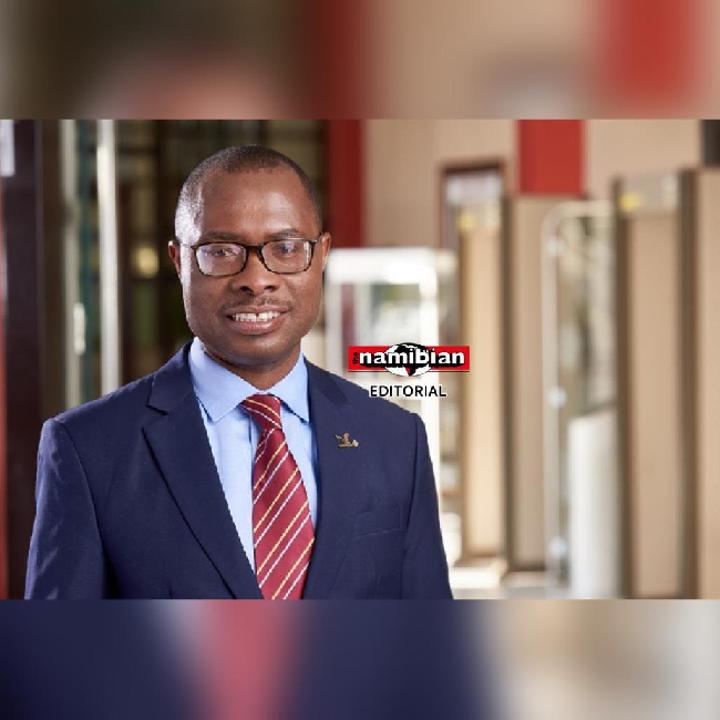
Africa-Press – Namibia. FINANCE minister Iipumbu Shiimi tried hard to put a positive spin on the state of affairs in the country when tabling the budget in parliament yesterday.
But, as he pointed out, the problems in Namibia will neither be solved within one budget year, nor over the three-year projection called the medium-term expenditure framework (MTEF). Shiimi dedicated the 2022/23 budget and the longer-term MTEF to the youth.
He pointed to spending N$50 million on fixing the badly broken Independence Stadium, creating policies to allocate government purchases in favour of young people, and supporting small and medium enterprises as among the intentions to serve the young. That is somewhat encouraging.
Disappointingly, however, Shiimi and the government has fallen short of providing a road map on how the bulk of the country’s resources will be deployed to make a meaningful impact on the youth, who make up a substantial percentage of Namibia’s population.
Government leaders know by now it is not enough to rehash the tired remarks that the biggest chunk of the budget goes towards education and that the money needs to be used efficiently. If the more than 20% that goes to education was adequate, what exactly is getting in the way of it being used efficiently?
Last week’s school-leaving results showed that 81% of Grade 11 pupils failed to qualify for university and similar tertiary education – that leaves 38 000 young people hanging in a state of uncertainty about their future.
The fact that more than N$874 million is budgeted for veterans, while the youth ministry gets N$331 million is evidence that the budget’s so-called focus on youth is not good enough.
When engaging the public, Ministry of Education, Arts and Culture officials sound defeated. If it’s not about a lack of money to cater for teaching materials, it’s about urging trade unions to ensure the performance of teachers.
What is clear is that the failure of so many pupils points to a failure of the system. In fact, the education ministry has often highlighted the concern that more than 80% of its allocation is used for the salaries and related remuneration of its 40 000 employees.
Three quarters of the education budget goes to teachers. The remainder is not enough to even afford a sufficient number of textbooks. When he was the governor of the central bank, Shiimi once highlighted concerns over the government’s ballooning salary bill.
Speaking at a Bank of Namibia symposium this week, economist Salomo Hei pointed out that Namibia’s spending on employee compensation is the highest in the world as a percentage of gross domestic product.
Hei said it’s good that public servants are paid well, but raised doubts about whether taxpayers are getting value for their money. In his budget speech, Shiimi skirted the issue of the huge salary bill, saying only that non-essential positions that become vacant will not be filled.
Shiimi and fellow government leaders need to address the problem head-on: Prune the public service of redundant and non-performing employees so that resources can go towards rebuilding the country.
The budget does not even address how to make e-learning reach the majority of students countrywide. An information superhighway that matches spending on roads will show that the government leaders deeply care about the youth, and are not merely paying lip service.
Unless leaders focus on fixing structural deficiencies on how state resources are used for the majority and most vulnerable sections of society, we may as well forget about digging ourselves out of the hole of poverty and inequality.
For More News And Analysis About Namibia Follow Africa-Press